Too many marketing systems are built to force a yes – rushing people through pressure, urgency, and manipulation in the name of “high conversion rates.”
But, if your funnel doesn’t give people the space to say no, it’s worth reexamining.
Permission-based marketing flips the script, putting autonomy and consent at the center. And while it may not lead to sky-high conversions overnight, it lays the groundwork for something way more valuable – mutual respect, sustainable growth, and a community that chooses to be there.
Let’s talk about why giving people permission to walk away might just be the most powerful way to invite them in.
The gist: Permission-based marketing is an approach that asks before it assumes, giving people clear information and real choices about how and when they engage with your business. The trust it builds tends to bring fewer refunds, more referrals, longer client relationships, and less burnout, even if conversions grow more slowly at first.
What is Permission-Based Marketing?
At its core, permission-based marketing is exactly what it sounds like – marketing that asks before it assumes. That means no bait-and-switch lead magnets, auto-enrolls into aggressive email sequences, or guilt-tripping people into saying yes when they’re clearly unsure or not ready.
Instead, this approach respects boundaries. It invites people into your ecosystem and lets them decide how and when to engage. It’s about informed choice, clear communication, and trust that doesn’t require trickery.
Many folks – especially neurodivergent individuals – need more time, more clarity, or more control over how they consume and respond to content. Permission-based marketing honors that. It removes the overwhelm and replaces it with options.
There’s no shortage of formulas and templates that promise six-figure funnels. But if those systems rely on urgency timers and fake scarcity, they’re not built to last. Permission-based marketing builds a foundation of consent and connection. And that’s what turns audiences into communities.
The concept of “permission marketing” is closely associated with Seth Godin’s 1999 book Permission Marketing – and Just Marketing® expands the idea with accessibility and consent layered in.
Why Saying “No” is Just as Powerful as Saying “Yes”
In traditional marketing funnels, a “no” is seen as a failure. Something to overcome. A leak to patch. But in permission-based marketing, no is part of the process.
When someone says no to an offer, a download, or an invitation, they’re telling you what they actually need. That’s valuable insight, not a missed opportunity. And when people feel safe to say no, they’re far more likely to come back when the time is right.
This is especially true for neurodivergent audiences or anyone burned by high-pressure marketing tactics. When someone feels overwhelmed, manipulated, or backed into a corner, they shut down – or worse, disengage for good. But when they feel respected? That’s when curiosity and connection can grow.
Sure, this approach might lower your short-term conversion rates. But it increases trust, and that’s the metric that actually moves your business forward in a sustainable, aligned way. Because the people who say yes after you gave them full permission to say no… They are likely to become your most loyal fans.
What Does a Permission-Based Funnel Look Like?
Most funnels are built like trapdoors. Once someone enters, they’re nudged, pushed, and prodded toward a single outcome – usually a purchase. There’s rarely room to breathe, much less opt out gracefully. But it doesn’t have to be that way.
Permission-based funnels are designed with agency in mind. They make it just as easy to walk away as it is to move forward.
Ethical funnels prioritize clarity, choice, and consent. They may look softer on the surface, but don’t be fooled – they’re powerful systems for building genuine connection. When people feel respected and in control, they don’t just click. They commit.
And that commitment is worth more than any forced “yes.”
How Do You Build a Permission-Based Funnel?
Let’s talk real-world application. Because permission-based marketing isn’t just a nice idea – it’s a practice you can start implementing today, without blowing up your whole system.
Start here:
- Use clear, honest copy. No hiding terms behind asterisks or using misleading urgency like “only 3 spots left” when that’s not true.
- Use soft, honest calls to action – Instead of “Only 24 hours left!” try “If now’s the right time, I’d love to support you.” Same offer. More integrity.
- Let people choose their own pace, and offer multiple paths – Build in options like “Not ready? Follow along on Instagram,” or “Prefer to just get the blog posts? Cool, here’s that list.”
- Create opt-out points without shame – Include “no thanks” buttons that are just as visible as your “yes” buttons. Let people feel good about leaving – so they’ll feel safe coming back.
- Segment based on consent, not assumptions – Ask what people want to hear about when they join your list. Don’t auto-drop them into every funnel you’ve got. They’ll thank you – and they’ll stick around longer.
This is about being intentional. You’re still guiding the journey – you’re just doing it in a way that leaves room for agency, consent, and accessibility.
And the best part? You’ll start attracting people who are more aligned, more loyal, and far less likely to ghost you halfway through a sales cycle. Because they’re choosing you – on their terms.
Does Permission-Based Marketing Hurt Sales?
Let’s be honest. The idea of lowering conversion rates on purpose can feel terrifying – especially if you’ve been taught that your business lives or dies by the numbers. It’s a valid fear. But the truth is: not all conversions are created equal.
High-pressure tactics can bump up your numbers in the short term, but they often attract the wrong-fit clients. Folks who don’t fully understand what they’re signing up for. People who ghost after one session, ask for refunds, or drain your energy because the relationship wasn’t rooted in mutual alignment.
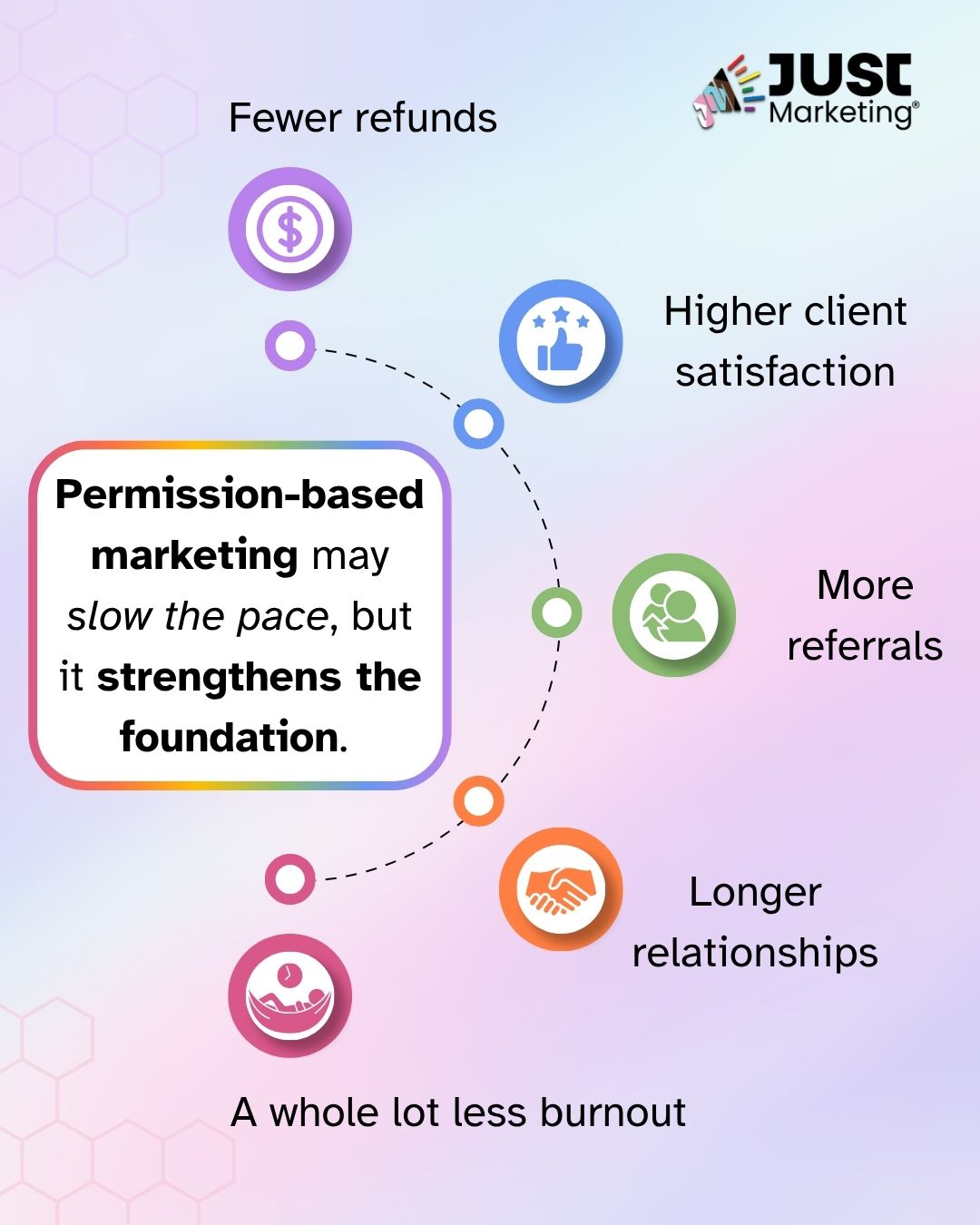
When someone says yes after they’ve been given full permission to say no, that yes is solid. It’s considered. It’s enthusiastic. That kind of yes leads to:
- Fewer refunds
- Higher client satisfaction
- More referrals
- Longer relationships
- A whole lot less burnout
This is especially important for service-based entrepreneurs – coaches, consultants, creatives – who work closely with their clients. You want to build partnerships, not chase transactions.
And let’s not forget, ethical marketing is still marketing. You can – and should – sell your offers. You’re just doing it in a way that respects your audience’s autonomy. You’re shifting the focus from quick wins to sustainable success.
Because when trust is your strategy, sales still happen… They just feel better – for everyone.
Trust Over Tricks
You don’t have to rely on scarcity, urgency, or guilt to grow a successful business. Funnels don't have to be built like pressure cookers or manipulate people into making decisions before they’re ready. You can choose trust over tricks, and relationships over transactions.
Permission-based marketing might not win the conversion race. But it will help you build a business that reflects your values, honors your audience, and actually feels good to run. That matters. Especially for those of us who care deeply about justice, inclusion, and accessibility.
Letting people say no is a sign of respect.
Let’s Keep the Conversation Going
Let’s build marketing systems that feel like an invitation – not an ultimatum.
If this resonates with you, I’d love to connect:
- Say hey on LinkedIn or Instagram – I share tips, stories, and behind-the-scenes real talk about ethical marketing.
- Curious about what it’s like to work together? Learn more about my approach here.
- Want more insights like this? Join my email list for permission-based strategies, ADHD-friendly systems, and gentle reminders that it’s cool to be kind.
FAQs
Permission-based marketing is an approach that centers consent, inviting people to engage with your business on their own terms. The term was popularized by Seth Godin, and Just Marketing® builds on it with a focus on autonomy, accessibility, and honest communication.
Traditional funnels often guide everyone toward a single outcome using urgency and pressure. Permission-based funnels offer clear information, multiple paths, and easy ways to opt out, so people can choose what fits their needs and timing.
Conversions may grow more slowly at first. The people who do say yes tend to be well-informed and genuinely aligned, which often means fewer refunds, more referrals, and longer client relationships.
Use honest calls to action, make “no thanks” options as visible as “yes” buttons, and offer multiple ways to stay connected, like following on social or reading the blog. Asking subscribers what they’d like to hear about keeps your emails aligned with their interests. Learn how to build a consent-based funnel step by step.
Many neurodivergent people need more time, clarity, or control when making decisions. Permission-based marketing offers that space, along with sensory-friendly design choices like skipping autoplay audio and keeping funnels simple. Learn how to make your marketing more cognitively accessible.
A soft call to action invites people without pressure, like “If now’s the right time, I’d love to support you.” It shares the same offer while leaving the decision fully in the reader’s hands. Learn how to write calls to action that feel honest and inviting.


