We’ve all heard it – measure what matters. But what happens when the things we’re taught to measure don’t actually reflect our values?
In mainstream marketing, metrics like open rates, conversion percentages, and ROI get treated like gospel. They're often held up as the ultimate proof that your strategy is “working.” But when you dig into how those numbers are achieved, it gets murky fast. Manipulative countdown timers, fear-based emails, pressure-heavy CTAs. If those are what drive conversions… should we really be chasing them?
For values-driven entrepreneurs – especially those navigating the world with ADHD or other forms of neurodivergence – traditional marketing metrics can feel not just irrelevant, but harmful. They create pressure to perform, optimize, and extract… often at the cost of trust, accessibility, and authenticity.
This post breaks down the most toxic marketing metrics – why they’re harmful, how they got normalized, and what to track instead if you want your marketing to reflect your values and feel good to create.
Toxic Marketing Metrics: What’s Makes Them So Bad?
Not all metrics are inherently harmful – but some of the most commonly celebrated ones are built on shaky ethical ground. They often prioritize performance over people, and when left unexamined, they quietly reinforce the kind of marketing most of us don’t want to be doing.
Here are a few of the biggest offenders:
Conversion Rate
It sounds innocent. Who doesn’t want more people to say “yes?” But conversion rates alone don’t tell the full story. High conversions achieved through false urgency, manipulative copy, or neurotypical pressure tactics aren’t wins – they’re red flags. A number that goes up while trust goes down is not success.
Open & Click Rates
These are often used to justify spammy subject lines or misleading link bait. They measure the action, not the impact. Did someone open your email because they were excited – or because you tricked them into thinking something bad happened? These numbers don’t capture consent or clarity.
Follower Count & Vanity Metrics
More followers doesn’t mean more connection. Chasing likes, shares, or views can push creators to prioritize trends over values and noise over nuance. Algorithms love virality – but your dream clients don’t want to be marketed at. They want to be spoken with.
Abandoned Cart Metrics
These often trigger follow-up sequences loaded with guilt: “You left something behind!” “Don’t miss out!” While it’s okay to remind someone once, there’s a fine line between helpful and pushy. Neurodivergent buyers especially may need more time, clarity, or quiet – not more emails yelling “last chance!”
ROI as the Only Success Measure
Return on investment matters – but when it's the only thing being measured, we ignore the long game. ROI doesn’t account for reputation, relationships, or how aligned and joyful your marketing feels. If the numbers look good but the strategy makes you cringe, it’s not worth it.
If these metrics are so problematic, why are we still using them?
Simple. They work – at least in the short term – and they’re easy to track. Many of the most common marketing metrics were shaped by systems that value control, speed, and profit over consent, context, and care. And if you’ve ever felt like you were “doing it wrong” because you didn’t want to use a countdown timer or fake scarcity… you’re not alone.
The System Rewards Pressure
Tactics that create urgency, confusion, or fear get rewarded with clicks and conversions. That reward system trains marketers to repeat those patterns – often without questioning the harm it may cause. For folks who are neurodivergent or trauma-informed, these tactics can be especially triggering, making them feel unsafe or manipulated.
Efficiency Over Empathy
Automated metrics make it easy to measure what happened, but not why. They flatten complex human behavior into yes/no data points and ignore emotional nuance. It’s faster to send a sequence that converts than to build relationships that evolve over time – but “fast” isn’t the same as “good.”
Everyone Else is Doing It
This is one of the most quietly coercive reasons these metrics stick around. Marketing advice is often recycled without critique, and it’s easy to fall into the trap of “best practices” even when they don’t sit right. Especially when you’re trying to grow a business, it can feel risky to break the mold.
What to Track Instead: Metrics That Prioritize Trust & Alignment
Letting go of toxic metrics doesn’t mean giving up on measurement altogether. It means being intentional about what you track and why. Ethical marketing still values data – but it looks for signs of connection, clarity, and consent instead of coercion.
Here are some metrics that better reflect sustainable, values-aligned growth:
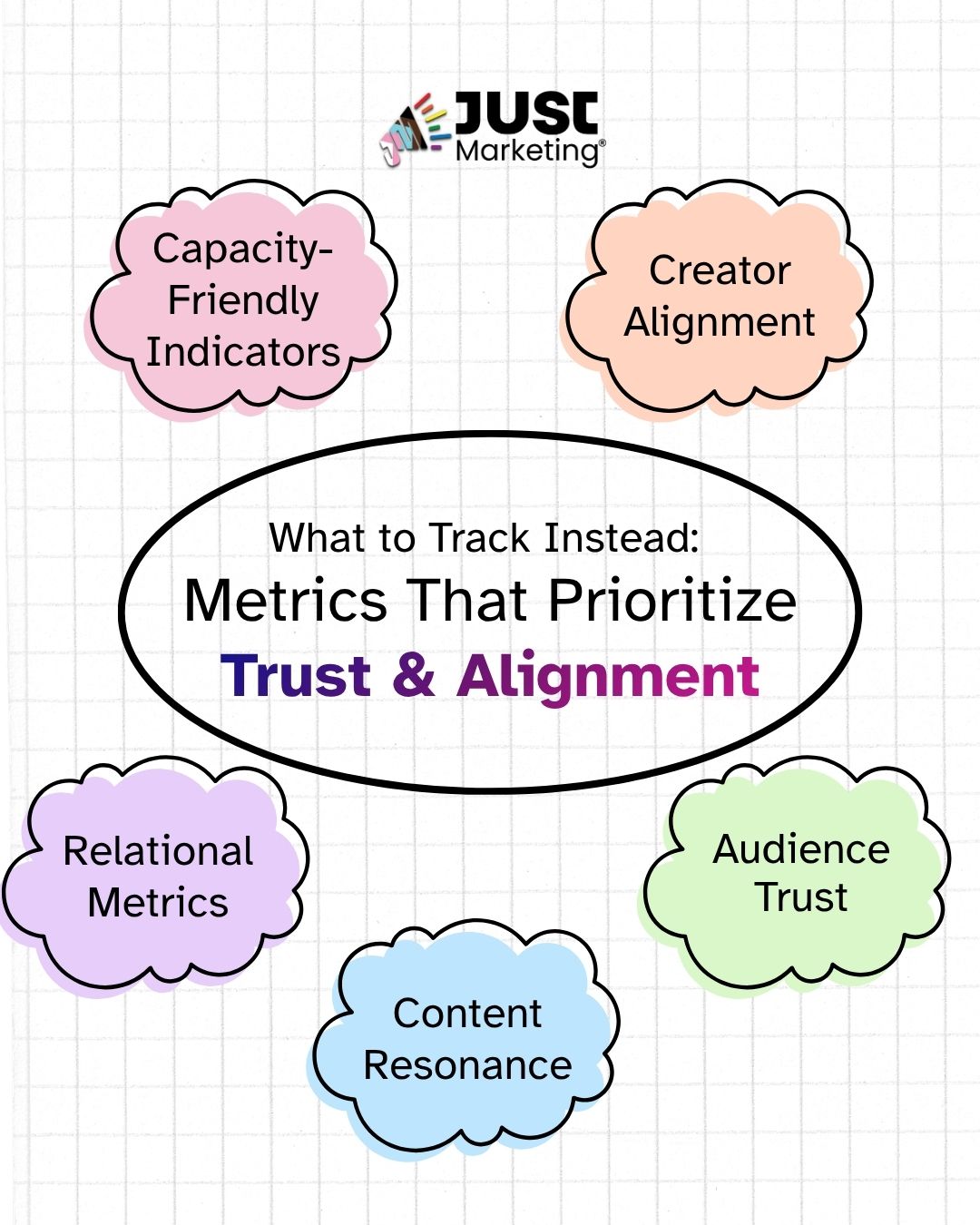
Audience Trust
- Direct messages that lead to real conversations
- Client referrals or repeat buyers
- Unsubscribes (people opting out is helpful data)
- People sharing your work without being asked
These show that your audience feels safe and seen. When people trust you, they stick around – or they leave with respect, which is still a win.
Content Resonance
- Time spent on page
- Posts being saved or shared
- Thoughtful comments or replies
- Email responses (not just clicks)
These signal that your content is actually landing. Not just being skimmed – but absorbed, appreciated, and acted on.
Relational Metrics
- Invitations to speak, teach, or collaborate
- Mentions or tags from people in your community
- Repeat collaborations or project referrals
- Testimonials that reflect emotional and practical impact
This is the “relationship ROI.” It shows your presence is creating ripple effects beyond clicks and sales.
Creator Alignment
- Are you proud of what you're putting out?
- Does your content reflect your voice and values?
- Are you feeling energized – or drained – after launching?
- Would you sign up for your own emails?
These aren’t always quantifiable, but they matter. Your energy and integrity are key performance indicators.
Capacity-Friendly Indicators
- Was this sustainable to create and share?
- Did you honor your energy and needs in the process?
- Is this something you can repeat without burning out?
Success doesn’t have to mean doing more. Sometimes it’s about doing less, more intentionally.
How to Shift Your Tracking System
You don’t have to overhaul everything overnight. Rebuilding your relationship with marketing metrics is a process – and it works best when it starts with curiosity, not shame. Here’s how to begin making the shift, one step at a time:
1. Pick One Toxic Metric to Release
Start by identifying the metric that feels most misaligned. Maybe it’s obsessing over open rates, or letting follower count dictate your self-worth. You don’t have to ignore it entirely – but try deprioritizing it for a month and see what changes.
2. Choose One Aligned Metric to Focus On
Swap in something that feels more values-aligned. Maybe you track how many DMs turn into real convos. Or how many people reply to your emails instead of just opening them. Focus on depth, not scale.
3. Set Reflective Goals, Not Just Numerical Ones
Instead of “grow by X%,” try:
- “I want this post to spark conversation.”
- “I want this offer to feel calm and clear.”
- “I want to leave this launch with my energy intact.”
These intentions can guide strategy just as powerfully as data.
4. Check In With Yourself Monthly
Create a practice of asking:
- What felt good to create?
- What content got meaningful engagement?
- Where did I feel most aligned?
- What would I do differently next time?
This type of reflection is especially powerful for ADHD entrepreneurs who thrive on pattern recognition over rigid systems.
5. Remember: You Can’t Measure Everything That Matters
Some of your best work will be invisible.
- The person who’s been silently binge-reading your content.
- The lurker who finally reaches out.
- The quiet trust that builds over time.
These may not show up in your metrics – but they’re real.
You’re Allowed to Measure What Matters to You
Letting go of toxic metrics doesn’t mean giving up on strategy. It means rewriting the rules so your marketing reflects your values, respects your audience, and supports your long-term vision.
You’re not behind for rejecting pressure tactics. You’re building something more sustainable – something rooted in trust, clarity, and connection. And that’s what actually creates long-term growth.
You get to define what “working” looks like. Not every win will show up in a spreadsheet. Some will look like peace of mind, some will sound like a thank-you DM, and some will feel like finally being proud of the way you’re showing up.
So the next time someone tells you to chase conversions or optimize for clicks, pause and ask – is that what matters to me?
If not, you know what to do.
Let’s Keep This Conversation Going
- Let’s connect on Instagram or LinkedIn – I’d love to hear your take on the metrics you’re letting go of (and what you’re tracking instead).
- Curious what it’s like to work together? Explore my services or drop me a message to start a conversation.
- Want more insights on ethical marketing that feels good and works long-term? Join my email list for fresh, values-aligned tips in your inbox.