Ever felt a little icky about building a funnel?
You’re not alone.
For so many mission-driven entrepreneurs – especially those of us who are neurodivergent, anti-oppression-oriented, or just plain tired of shady marketing tactics – the idea of shoving people through a “sales funnel” feels more like coercion than consent.
But here’s the good news: You can market your offers in a way that feels good for you and for the people you serve.
The gist: A consent-based funnel is a marketing path that guides people from first contact to purchase through informed choice and transparency. It starts with a genuinely useful opt-in and builds trust through clear, honest emails before any invitation to buy. Along the way, people can say “not now” or unsubscribe without guilt or consequence.
A consent-based funnel puts relationship, transparency, and choice at the center – while still guiding folks toward becoming aligned clients or customers. It's not about manipulating behavior; it’s about making the path to working with you clear, ethical, and accessible.
In this post, I’m breaking down exactly how to build a consent-based funnel step by step – perfect if you’re just starting out or shifting away from hustle-y strategies that never felt right. We’ll cover how to:
- Attract values-aligned leads (without relying on tricks),
- Nurture relationships with integrity,
- And convert with confidence, not coercion.
Let’s ditch the guilt tactics and build something better – together.
What Is a Consent-Based Funnel?
Let’s start with a little funnel detox, shall we?
In traditional marketing funnels, the goal is often to move people through a predefined path – from lead magnet to email sequence to limited-time offer – with urgency, scarcity, and pressure leading the way. There’s usually a lot of “trick them into clicking” and “sell before they can say no” energy baked in.
A consent-based funnel, on the other hand, flips that script.
It’s built on informed choice, mutual respect, and transparent communication. It doesn’t just convert – it builds trust, deepens connection, and supports autonomy at every step of the customer journey.
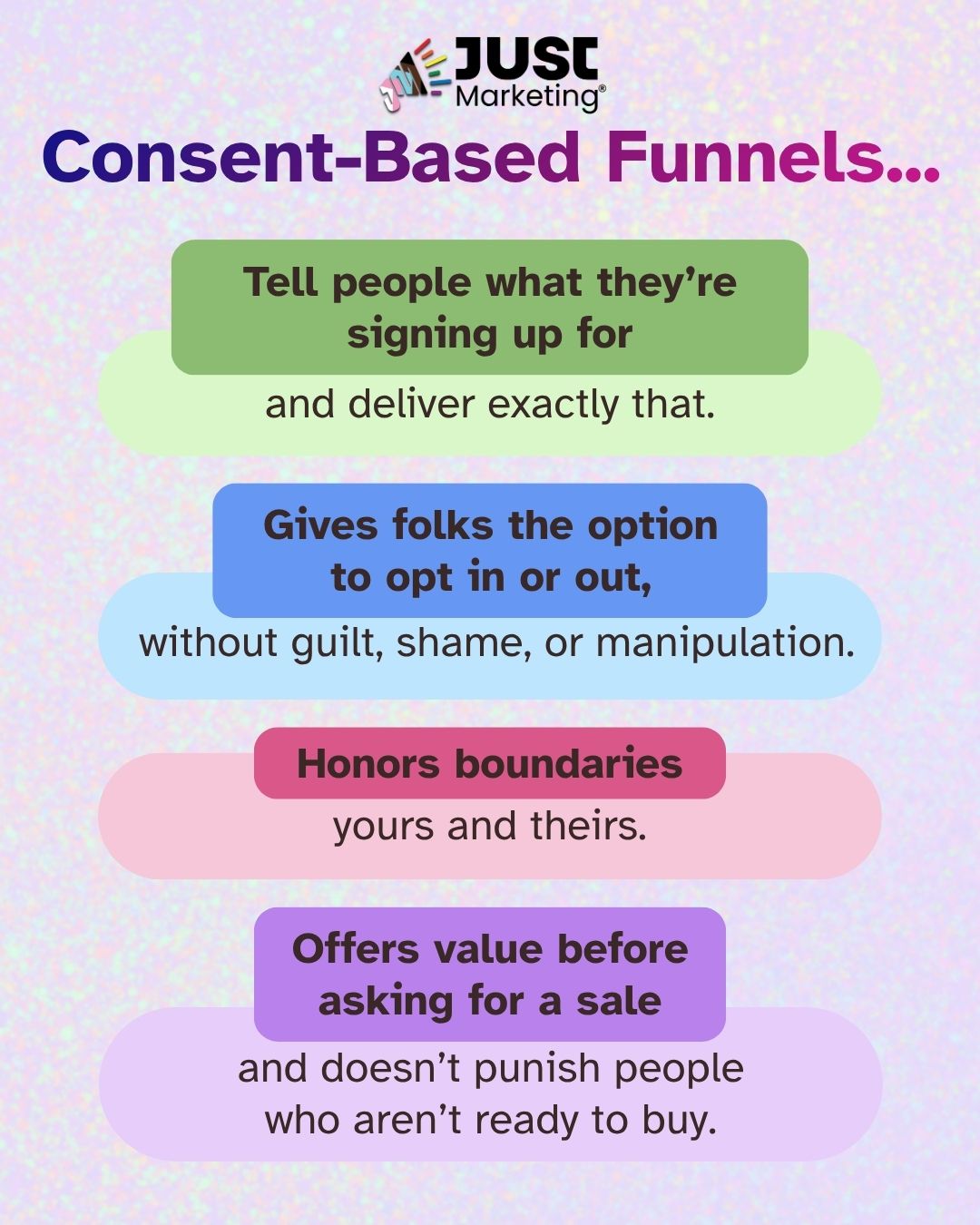
Why it matters – especially for values-driven, neurodivergent, and justice-focused entrepreneurs:
If your work centers on equity, inclusion, or healing (and especially if your audience includes marginalized folks), then consent isn’t just a nice-to-have – it’s non-negotiable.
Your marketing should reflect the same ethics and compassion that guide your actual services. Otherwise, there’s a disconnect that not only feels off – but can actively harm trust with your community.
And let’s be real: many of us have experienced being marketed to in ways that felt pushy, manipulative, or overwhelming. The last thing we want to do is recreate that experience for someone else.
Consent-based funnels offer a different path – one where safety, clarity, and agency lead the way.
And yes… they still work (more on that later).
How Do You Build a Consent-Based Funnel?
Ready to build a funnel that actually feels good to create and good to go through?
Here’s how to do it – one step at a time, with consent and clarity baked in.
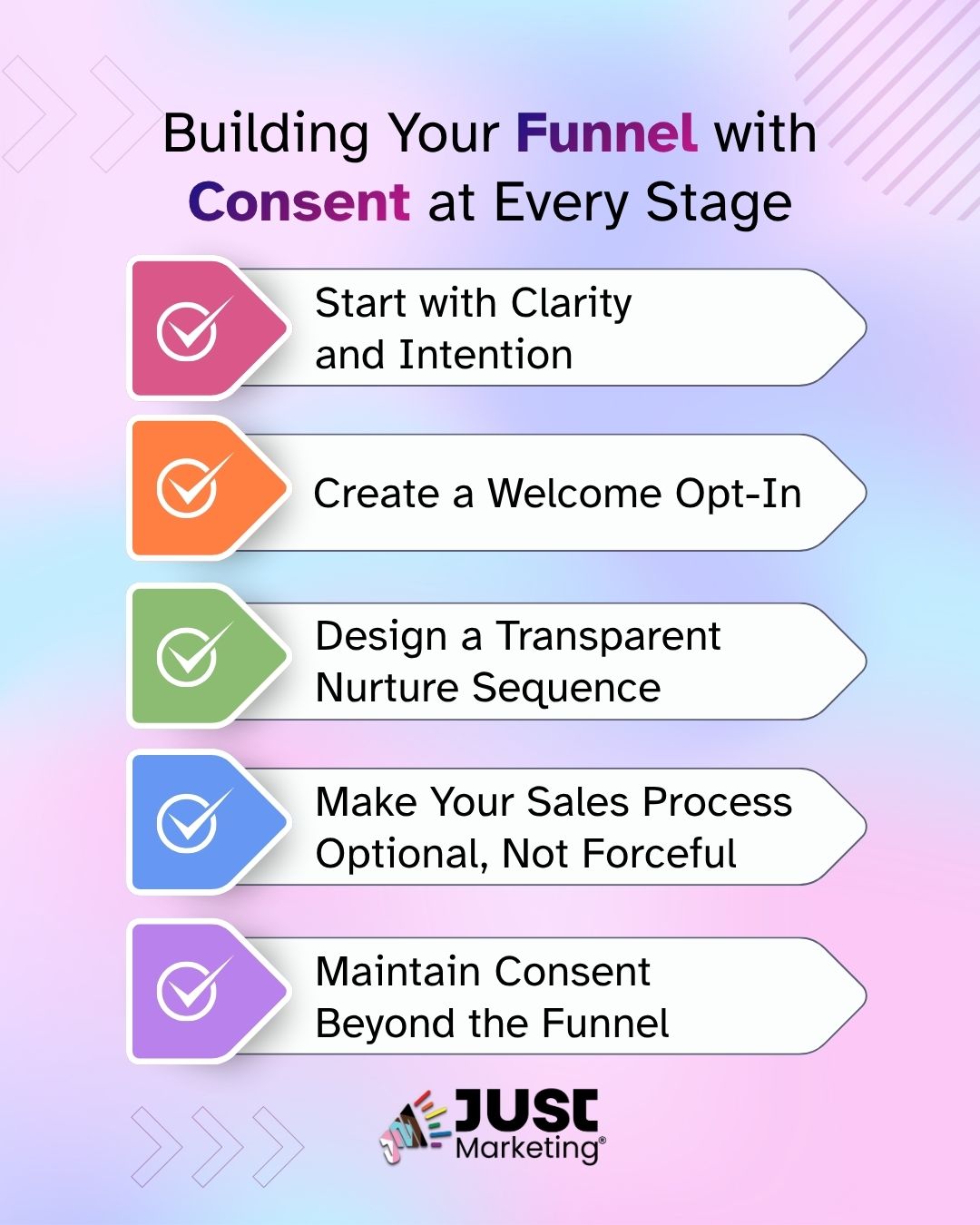
1. Start with Clarity & Intention
Before building anything, get grounded in what you’re offering – and why. This isn’t just about defining your niche; it’s about aligning your funnel with your values from day one.
Ask yourself:
- What transformation am I offering?
- Who am I best equipped to support?
- How do I want people to feel as they move through my funnel?
Consent Tip: Let people know upfront what they’re stepping into. When you're clear about what you offer, how you help, and what to expect, you're giving them the power to make an informed choice.
2. Create a Welcome Opt-In (Freebie or Entry Point)
This is your first yes moment. Whether it’s a downloadable guide, a short video series, or a checklist, your opt-in should provide real value – and stand on its own, even if someone never buys from you.
Make sure it’s:
- Easy to access and consume
- Genuinely helpful
- Clearly connected to your paid offer
Accessibility Tip: Offer it in multiple formats when possible (e.g., video and transcript, audio and text). This supports neurodiverse folks and makes your funnel more inclusive overall.
Consent Tip: Clearly state what folks are signing up for when they join your list – how often you’ll email them, what kind of content they’ll receive, and how to opt out at any time (with no hard feelings!).
3. Design a Transparent Nurture Sequence
This is where trust-building really happens. A nurture sequence is a set of emails that introduces your new subscriber to who you are, what you do, and how you can help.
In a consent-based funnel, your nurture sequence should:
- Use plain, conversational language
- Focus on building relationship, not just selling
- Include clear, respectful CTAs like “Want to learn more?” instead of “Only 2 hours left!!”
Encourage two-way connection by asking thoughtful questions or inviting replies. People are more likely to buy when they feel seen.
4. Make Your Sales Process Optional, Not Forceful
Here’s where traditional funnels go off the rails – right into pushy territory. But your sales pitch doesn’t have to scream urgency to be effective.
Instead, focus on:
- Inviting people to buy, not pressuring them
- Making your offer clear, values-aligned, and accessible
- Offering transparency about pricing, timelines, and what’s included
Skip the shady stuff: No fake scarcity. No “only 3 spots left” unless that’s truly the case. No guilt-trip emails like “I guess you don’t care about your future if you don’t join…”
Consent Tip: Let people say “no” or “not now” without consequence. That’s part of consent too. Respect their decision and keep showing up with value.
5. Maintain Consent Beyond the Funnel
Your funnel shouldn’t end when someone becomes a client – or decides not to.
Build trust over time by:
- Checking in periodically: “Still want to be on this list?”
- Making unsubscribing super easy (and drama-free)
- Continuing to lead with clarity, accessibility, and care
Remember: The goal isn’t just to convert – it’s to build a sustainable, consent-based relationship that lasts well beyond a single launch.
But Does It Work? (Spoiler: Yes.)
Let’s dig into why it works – and why it may even outperform traditional funnels over time (especially for values-aligned, service-based businesses like yours).
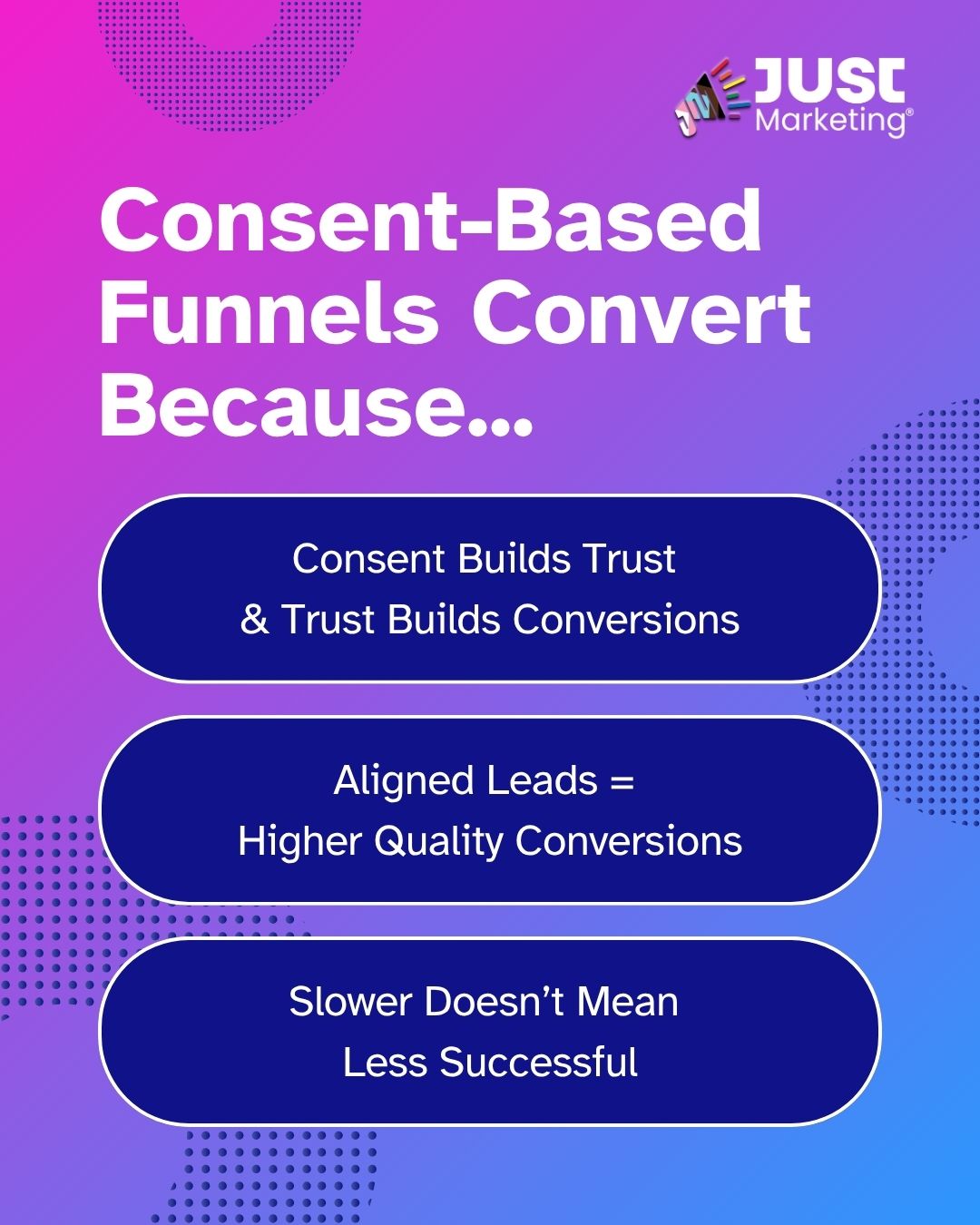
1. Consent Builds Trust (Which Builds Conversions)
People buy from people they trust. And trust isn’t built through pop-ups, countdown timers, or psychological pressure – it’s built through honesty, consistency, and respect.
When your audience knows you’re not going to manipulate them…
They feel safe saying “not yet” without being ghosted or guilt-tripped…
And when your emails are genuinely helpful and easy to opt out of…
They’re more likely to stick around.
They’re more likely to refer you.
And, they’re more likely to buy when they’re ready.
2. Aligned Leads = Higher Quality Conversions
Consent-based funnels may attract fewer leads than flashy, fear-based ones – but the quality of those leads?
These are people who:
- Truly resonate with your values
- Are more likely to engage and respond
- Often become long-term clients, collaborators, or champions of your work
You don’t need a giant list – you need a relationship with the right people.
3. Slower Doesn’t Mean Less Successful
Consent-based marketing often works at a slower, more sustainable pace. And that’s a good thing – especially if you’re neurodivergent, managing chronic illness, caregiving, or simply tired of burnout culture.
Slower funnels allow you to:
- Make thoughtful, intentional tweaks
- Show up consistently without over-extending
- Create deeper connections instead of chasing conversions
Over time, this creates a ripple effect of referrals, return clients, and values-aligned visibility – without compromising your ethics or energy.
So, Yes, It Converts
Whether it’s a client signing up for your coaching program after months of engaging with your emails… Or someone DMing you on Instagram to say “I finally feel seen – how can I work with you?”…
Consent-based funnels absolutely convert. Because they honor the human behind the inbox.
How Can You Build an ADHD-Friendly Funnel?
Even the best-intentioned funnel strategy can fall apart if it’s overwhelming, complicated, or built on “shoulds.”
If you’re neurodivergent (or just juggling a million things), you need a funnel that’s simple, flexible, and won’t fry your executive function.
Here’s how to build one that works with your brain and your life:
1. Start Small & Stack Slowly
You do not need a 12-email sequence, 3 lead magnets, and a multi-tiered launch funnel right out of the gate. Start with:
- One offer
- One opt-in
- One simple email sequence (3–5 emails tops)
Once that’s working? You can build from there.
Small steps are sustainable steps – and consistency > complexity.
2. Use Templates & Checklists
Decision fatigue is real. Reusing systems can help you preserve brainpower for the stuff that really matters.
- Use email templates with fill-in-the-blank sections.
- Create a funnel checklist you can reuse with every new offer.
- Batch-create graphics or copy when you’re in a focus zone.
Pro tip: Store everything in a central folder or system (Notion, Google Drive, Airtable – whatever works for your brain). Make it easy to find and easy to reuse.
3. Automate the Right Things (Not Everything)
Automation can be magical when it reduces friction. But don’t feel pressured to automate every little thing – especially if you thrive on human connection.
Start with:
- An automated welcome email after opt-in
- Scheduled emails in your nurture sequence
- A gentle sales invitation near the end of your sequence
Skip anything that feels robotic, overly complex, or disconnected from your values. You’re allowed to keep it human.
4. Build In Breaks + Re-evaluation
Sustainable funnels aren’t “set it and forget it” – but they also don’t require constant babysitting.
- Schedule check-ins every few months to see what’s working.
- If something feels off, tweak it.
- Give yourself permission to pause or update sequences as your capacity shifts.
Your funnel should evolve with you – not become another thing you're “failing” to keep up with. (Spoiler: you're not failing. You're adapting.)
5. Keep Consent-Centered Marketing Front and Center
Even if you simplify every system, your values still lead. Being neurodivergent isn’t a barrier to ethical marketing – it's an advantage when you create processes that work for you.
You’re allowed to:
- Do things your way
- Take your time
- Market with care, clarity, and creativity
Your people will feel that. And they’ll want to work with you because of it.
You Can Market with Consent and Confidence
Marketing doesn’t have to feel manipulative, exhausting, or out of alignment with your values. You don’t have to trick, trap, or pressure people into working with you.
When you build a consent-based funnel, you’re creating a pathway that feels safe, clear, and genuinely supportive – for both you and your potential clients.
It’s not about sacrificing conversions.
It’s about redefining success on your terms:
- aligned clients
- sustainable systems
- and relationships built on trust, not tactics.
Whether you’re just starting out or shifting away from old-school strategies that never felt quite right, you can create a funnel that works – and that works ethically.
You’ve got this… And you don’t have to do it alone.
Let’s Keep the Consent-Based Marketing Momentum Going:
Want to connect more? Come hang out with me on LinkedIn or Instagram – I’m always sharing bite-sized tips, behind-the-scenes peeks, and real talk about inclusive marketing that doesn’t suck.
Curious what it’s like to work with me? Learn how I support ethical entrepreneurs in building sustainable, values-aligned marketing strategies.
Join my email list. Get weekly(ish) insights, trainings, and resources to help you show up consistently without the overwhelm or ick. Always consent-based, never spammy.
FAQs
Both guide people from first contact toward a purchase. A traditional funnel often leans on urgency and pressure to speed that up, while a consent-based funnel relies on transparency and real value so people can decide on their own timeline. The result is often fewer leads who are a better fit.
Three to five emails is a great starting point, especially if you're building your first funnel. That's enough to introduce yourself and share real value before extending a gentle invitation. Here's how to write welcome sequences that nurture without manipulating.
In the U.S., the CAN-SPAM Act requires a clear way to unsubscribe and that you honor opt-out requests promptly. If you have subscribers in the EU, GDPR generally requires clear opt-in consent before you email them. A consent-based funnel already aligns with these rules, though it's wise to check the requirements for your specific audience.
A good opt-in solves one specific problem and is useful on its own, even if someone never buys from you. It should connect naturally to your paid offer and be easy to access, ideally in more than one format. A short checklist or a quick video with a transcript works well for many service-based businesses.
Choose a rhythm you can sustain, whether that's weekly or every other week, and tell subscribers what to expect when they sign up. Consistency matters more for trust than frequency. You can always adjust as your capacity changes.
Share clear details about your offer, including the price and what's included, and invite people to reply with questions. Skip fake deadlines and guilt-based language, and let “not now” be a perfectly good answer. Here's a guide to psychological pricing tactics worth leaving behind.