“You’ve only got 10 minutes to grab this deal – or it’s gone forever!”
Sound familiar? 🙄
Countdown timers are everywhere in online marketing. Whether it’s a flashing popup, a shrinking clock on a sales page, or a ticking timer embedded in an email… this tool is designed to create urgency and drive conversions fast.
The gist: A countdown timer is a visual clock on a sales page or email that ticks down to a deadline, like a cart closing. Timers are ethical when the deadline is real and explained, with clear info about what happens after. They become manipulative when they reset on reload or pair with shame-based copy.
And hey, urgency can be helpful. It can motivate action, support procrastinators (hi, ADHD fam), and provide clarity around launch windows or limited-time offers.
But when it’s misused – or straight-up deceptive – urgency turns into manipulation.
Countdown timers become just another way funnels pressure people into making decisions they’re not ready for. For neurodivergent folks, trauma survivors, and anyone trying to be more intentional with their time, it can feel like coercion disguised as marketing.
In this post, we’re unpacking the ethics of countdown timers:
- When they’re helpful vs. harmful
- Why fake urgency breaks trust
- What inclusive, consent-based urgency looks like
- And how to create sales funnels that convert without manipulating your people
Let’s build marketing that respects time – and honors autonomy.
What Are Countdown Timers & Why Are They Used?
A countdown timer is exactly what it sounds like: a visual clock ticking down the seconds, minutes, or days until something expires – like a sale, a cart closing, or a “limited-time” offer.
They're popular in digital marketing because they tap into a well-known psychological principle: urgency drives action. When people see a deadline approaching, they’re more likely to make a decision quickly. That can reduce decision fatigue and help folks who struggle with procrastination (again, shoutout to the ADHD crew).
Marketers love timers because they convert.
You’ll often see them:
- On sales pages or checkouts (“Offer expires in 15 minutes!”)
- In launch emails (“Only 3 hours left to enroll!”)
- In webinar replays or limited-access content
- In evergreen funnels that look like live events
The intention is usually to motivate a faster decision. And in some cases – like when there’s a real deadline – that’s completely valid.
But here’s where things get sticky…
Timers are easy to fake, and when marketers misuse them to manufacture urgency that doesn’t actually exist? That’s when things tip into manipulation.
Real-life example: A course page says “This special bonus disappears in 10 minutes!” You close the tab, come back later… and boom. The timer resets. Same bonus. Same offer. Suddenly, it doesn’t feel so “special,” does it?
When Are Countdown Timers Manipulative?
Not all countdown timers are created with integrity.
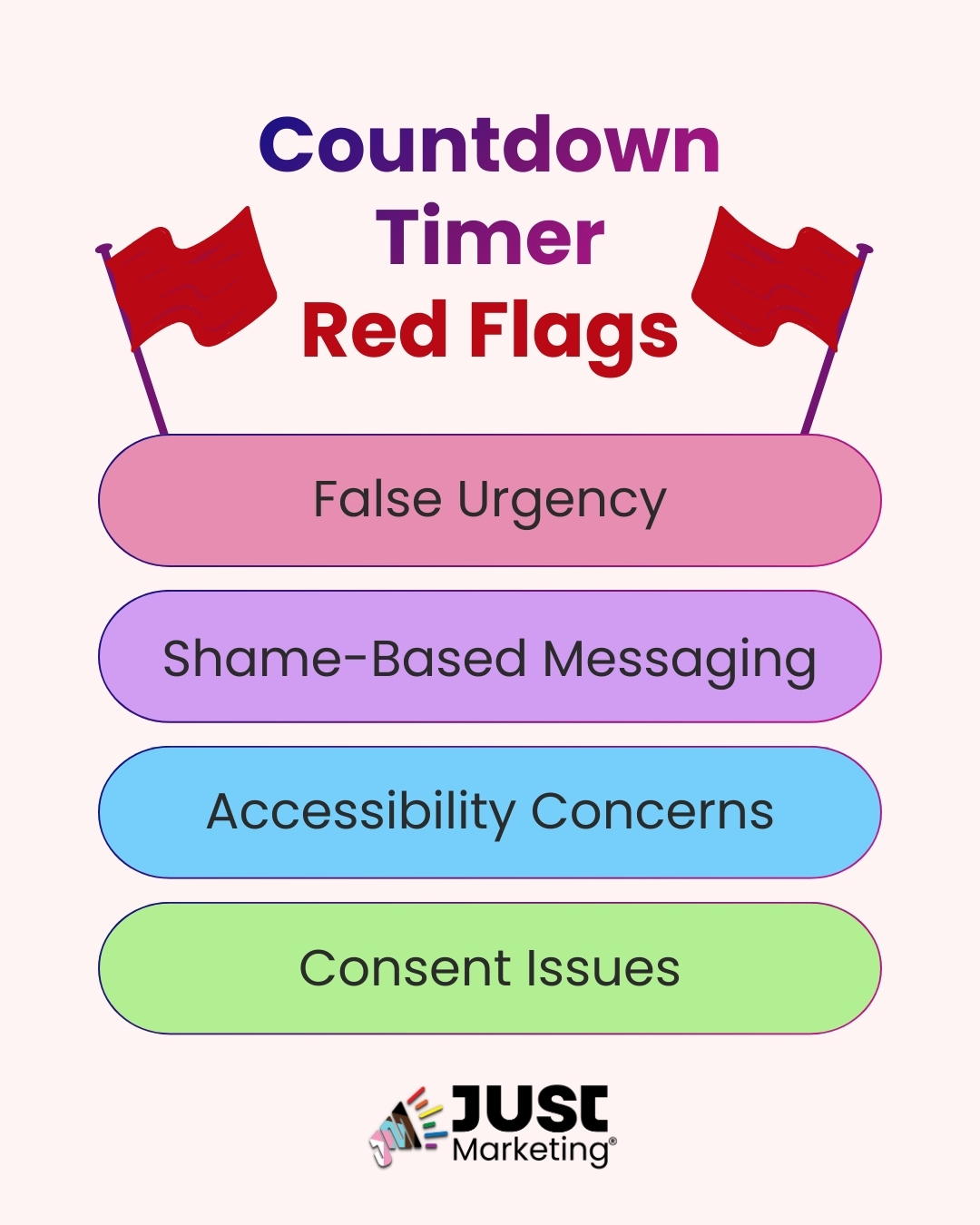
There’s a huge difference between using a timer to communicate a real deadline… and using it as a digital scare tactic. Here’s where countdown timers can go wrong:
False urgency
This is the most common ethical red flag. Timers that reset every time someone lands on the page – or are embedded in evergreen funnels masquerading as “live” events – aren’t really urgent. They just look urgent.
That kind of trickery chips away at trust. People feel duped when they realize the deadline wasn’t real – and that makes them less likely to buy from you (or anyone) again.
Shame-based messaging
Timers often come paired with copy like:
- “Don’t miss your only chance!”
- “You’re about to lose everything…”
- “You forgot something!”
This language is designed to trigger FOMO and guilt, especially for people who already struggle with decision-making, perfectionism, or time blindness. For neurodivergent folks, that pressure can be paralyzing instead of helpful.
Accessibility concerns
Fast countdowns, flashing timers, and pressure-based language can create sensory overload, especially for folks with ADHD, anxiety, or processing differences. Not everyone operates on the same internal clock – and urgent messaging without accommodation is exclusionary by design.
Consent issues
When urgency is used to force a decision, it removes agency. People aren’t choosing to buy – they’re being cornered. Ethical marketing prioritizes informed consent, not compliance.
Reminder: Just because it “works” doesn’t mean it’s right. Manipulation can generate quick wins, but it also burns bridges, creates buyer’s remorse, and attracts folks who may not be the best fit for your offer.
How Can You Use Countdown Timers Ethically?
Let’s be clear: urgency isn’t inherently unethical.
Deadlines can be supportive – especially for folks who thrive with structure, reminders, or external motivators. The problem isn’t urgency itself – it’s manufactured urgency designed to manipulate rather than inform.
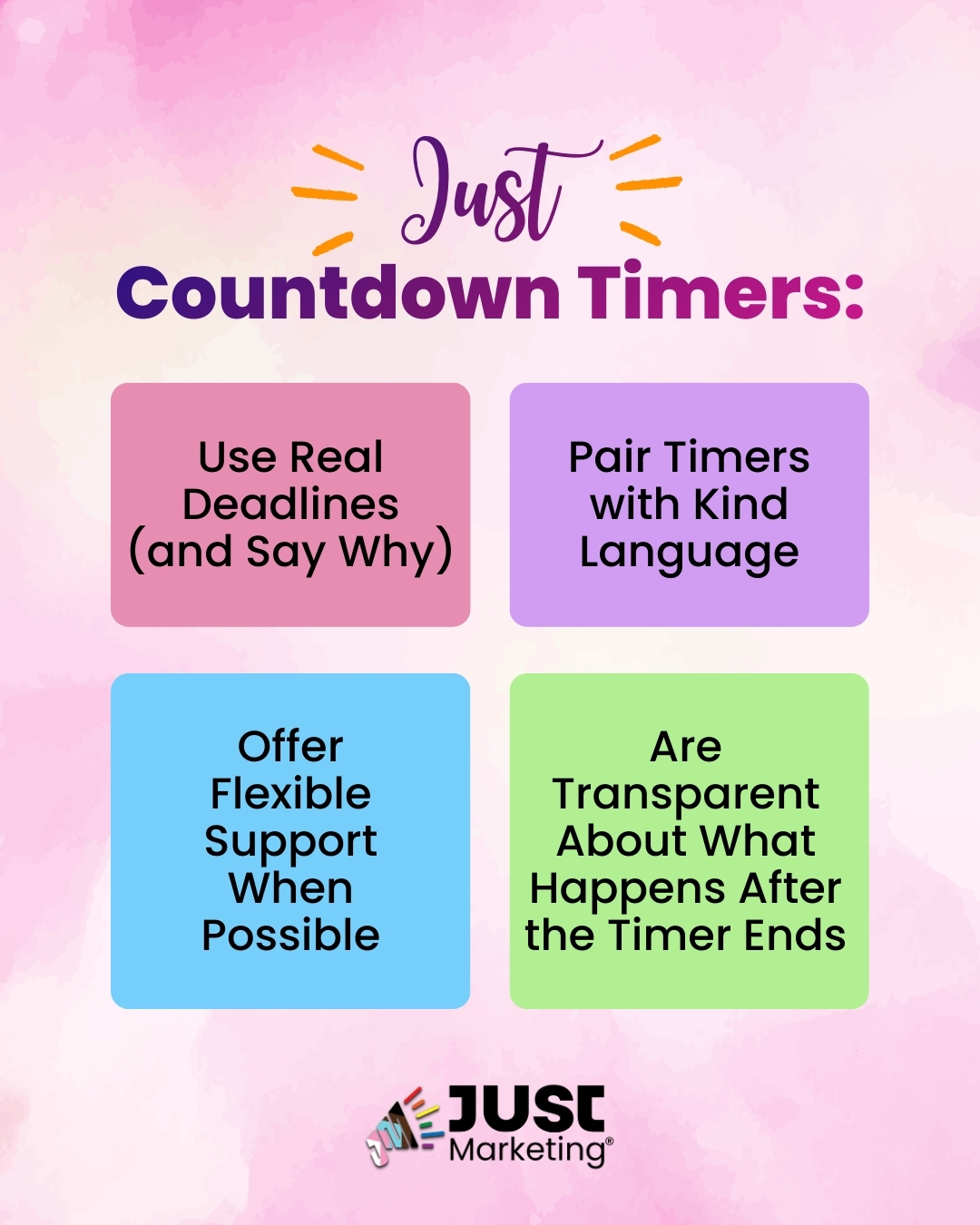
Here’s how to use countdown timers in ways that are ethical, inclusive, and effective:
Use Real Deadlines (and Say Why)
If your offer actually closes – say so. Be transparent about the reason:
- Maybe you’re starting a new cohort and need time to onboard folks.
- Maybe your capacity is limited and you’re setting a boundary.
- Maybe the price really will go up because your next round includes more support.
Try this: “Doors close Friday at 5pm ET so we can prepare onboarding for new students.”
This sets clear expectations without pressure or guilt.
Pair Timers with Kind Language
Instead of “Hurry! You’re about to lose your chance forever!”, try messaging that’s honest and compassionate:
“This offer expires soon so we can focus on current clients – but if you have questions or need more time, reach out. We’ve got you.”
Respecting your audience’s autonomy builds trust. Always.
Offer Flexible Support When Possible
If someone misses your deadline, and it won’t break your business to let them in late – consider it.
You can:
- Offer a grace period.
- Create a waitlist.
- Send a follow-up when the offer opens again.
Especially for neurodivergent folks or caregivers juggling life outside their screens, rigid deadlines can be a deal-breaker. Flexibility shows care and accessibility.
Be Transparent About What Happens After the Timer Ends
If the offer really ends – say so.
Or, if it’ll be available again later – say that too.
And, if the price goes up – cool, explain why.
You don’t have to hide your strategy. Transparency doesn’t kill conversions. It builds loyalty.
Ethical marketing is about consent, not control.
Funnel Fix: A Kinder Timer Template
You don’t have to ditch countdown timers entirely – you just need to reframe how you talk about them.
Here’s a simple, ethical template that blends clarity, consent, and compassion:
Ethical Timer Copy Example:
“Enrollment closes in 2 days so we can give personalized support to everyone who joins.
If you need more time, just reply to this email or DM me – we’re here to support your pace.”
Why this works:
- It sets a boundary: There’s a clear deadline and a reason for it.
- It provides context: You're not just saying “because I said so” – you’re explaining the why, which builds trust.
- It centers the audience’s autonomy: You're acknowledging that people move at different speeds and offering a path forward that doesn’t rely on pressure or shame.
Even if someone doesn’t reach out, knowing the option is there reduces anxiety and builds psychological safety – which is a conversion strategy (just not the manipulative kind).
You can easily adapt this language across:
- Sales pages
- Email sequences
- Social posts
- Webinar reminders
- DMs
And remember: ethical marketing isn’t just “nicer” – it’s more sustainable.
You don’t have to panic people into buying. You get to invite them with clarity, context, and kindness.
Does Ethical Urgency Still Convert?
There’s a common myth in online marketing: “If you don’t pressure people, they won’t buy.”
But here’s the truth: ethical urgency does convert – and it attracts the right people for the right reasons.
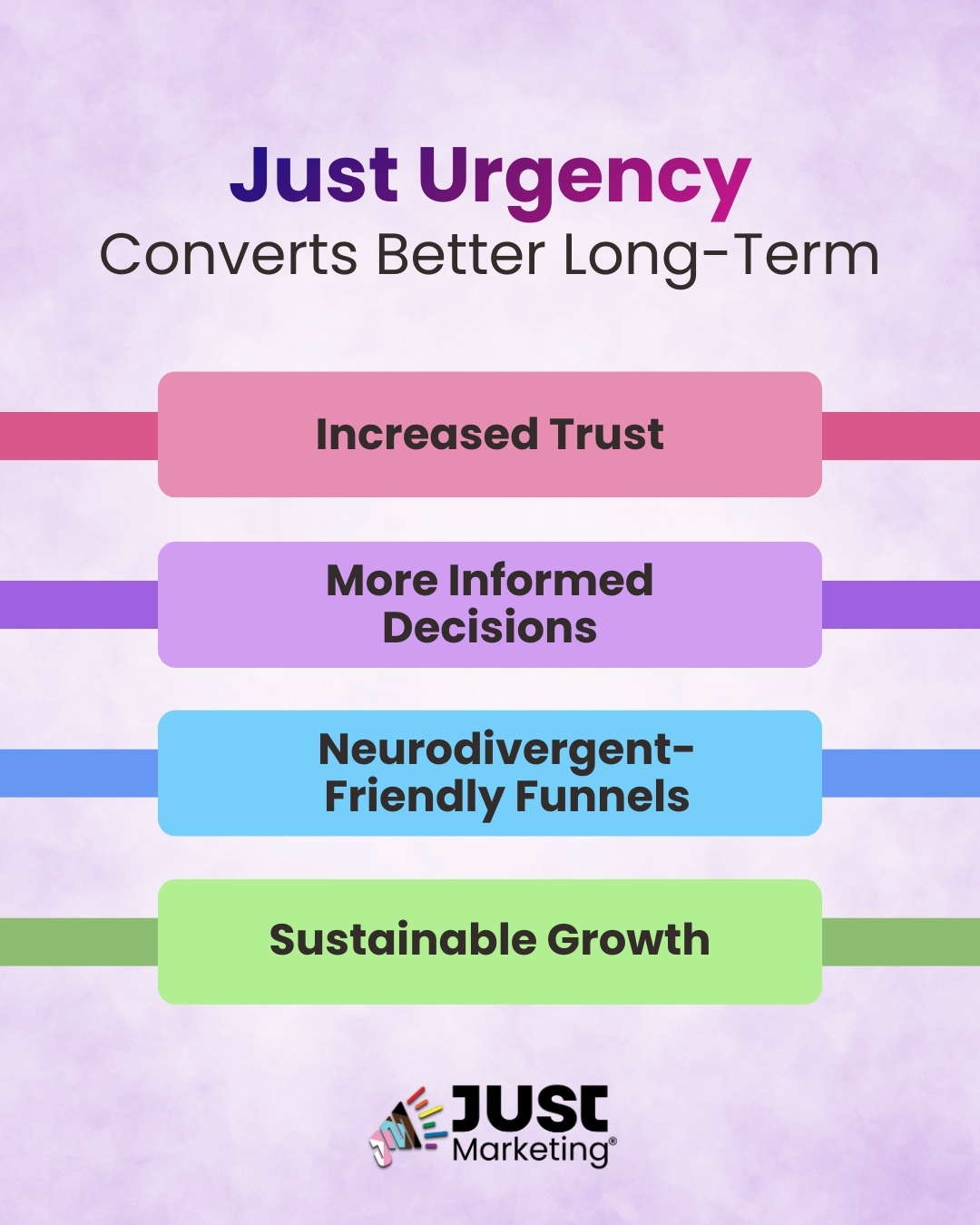
When you ditch the false deadlines and pressure tactics, you create an environment of trust, respect, and actual alignment. And that leads to:
1. More Trust
When people realize your marketing is honest – that you're not using shady gimmicks or fake scarcity – they feel safe. And safety is the foundation of a long-term client relationship.
People are more likely to:
- Refer you to others
- Buy from you again
- Engage with your content
- Feel good about the investment they made
2. More Informed Decisions
Ethical urgency allows your audience to make choices based on fit, not fear. That means:
- Fewer refund requests
- Higher satisfaction
- More committed, values-aligned clients who are ready to show up and do the work
3. Neurodivergent-Friendly Funnels
Let’s not forget: a lot of marketing pressure doesn’t just feel icky – it’s inaccessible.
Creating clarity, flexible support, and consent-based urgency helps folks with ADHD, anxiety, and other executive function challenges engage in a way that respects how their brain works.
It’s not just inclusive – it’s smart business.
4. More Sustainable Growth
Manipulative tactics might spike your sales once, but they rarely build loyalty.
If your audience trusts that you’ll show up with consistency and care – instead of panic-inducing pressure – they’ll come back when the timing’s right. And that’s how sustainable, equity-centered businesses are built.
TL;DR: Ethical urgency works better because it centers people, not pressure.
Rethink Your Timers – Respect Your People
Countdown timers aren’t inherently shady. But how you use them matters.
If your funnel relies on pressure, panic, or made-up deadlines to get people to buy… it might be time for a reset.
Ask yourself:
- Is this deadline real and clearly explained?
- Does my copy respect my audience’s autonomy?
- Would I feel good being on the receiving end of this funnel?
If not – no shame. Just an invitation to shift.
Because urgency can be supportive. Timers can be transparent. And marketing can feel good for everyone involved.
Ethical marketing isn’t the opposite of effective. It’s the future of sustainable business.
Let’s Keep the Conversation Going
I’d love to hear your take.
- Have you ever felt supported by a deadline in a funnel?
- When has urgency felt empowering – and when did it feel like a trap?
Let’s connect on LinkedIn or Instagram and talk about what ethical, inclusive urgency really looks like in action.
Because consent-forward funnels are absolutely possible… And they start with honest conversations – like this one.
FAQs
They can be, with a little care. Accessibility guidelines (WCAG) call for a way to pause or hide content that updates automatically, like a ticking timer, and screen readers can get overwhelmed if a timer announces every second. Writing the deadline in plain text, like “Enrollment closes Friday, October 10 at 5 p.m. PT,” makes it clear for everyone. See how this fits into accessible marketing.
An evergreen timer gives each visitor their own personal deadline, often starting when they join your list or watch a webinar. It can be ethical when the deadline is real for that person and doesn't reset if they come back. Being upfront that the offer runs on a personal timeline keeps the experience honest.
Some can be. The FTC's 2022 staff report on dark patterns lists the “baseless countdown timer” as a design element that induces false beliefs. In the UK, the High Court confirmed in May 2026 that Emma Sleep's countdown timers and “high demand” messages broke consumer law. A timer tied to a real deadline keeps you on solid ground.
Email timers are usually animated images, so screen reader users won't hear the countdown unless you add alt text. Always include the deadline in plain text with the date and time zone so every subscriber gets the information. Here's more on writing helpful alt text.
Try a clear deadline paired with a reason and an open door, like: “Enrollment closes in 2 days so we can give personal support to everyone who joins. If you need more time, just reply.” Copy like this gives people the information they need to decide calmly.
Let them know when the offer will open again, and consider a waitlist so they hear first. If it won't strain your capacity, a short grace period is a kind option, especially for neurodivergent folks and caregivers. Here's how to build consent-based funnels that leave room for every pace.