Countdown timers and inboxes stuffed with fake urgency have convinced a lot of us that this is simply how marketing works. Plenty of mission-driven business owners try those tactics because someone with a big following swore by them. Then the results come in, and something feels off.
The gist: People-centered marketing measures success by the relationships that keep your business growing. Shifting away from profit-driven tactics means swapping pressure for honest invitations and giving yourself time to adjust while your audience gets to know the new you.
If you're new around here, start with my complete guide to Just Marketing®, which covers the definition and a step-by-step roadmap. This post zooms in on one piece of that journey: what actually changes when you move from profit-driven to people-centered marketing, and what to expect along the way.
The Funnel That Changed Everything for Me
About a year into my entrepreneurial journey, I caved. One of the OG “bro” marketers had a funnel formula everyone seemed to be using, so I decided to give it a shot.
I followed his playbook to the letter, from the funnel structure down to every email, and hit “go” on the whole thing.
It was a disaster. The strategy flopped, and the people on my list made sure I knew why. Subscriber after subscriber hit reply to tell me it was a crap strategy that clashed with everything I stood for.
They were right. I turned the whole thing off and wrote an apology email to my list. I've never looked back.
In hindsight, those replies were a gift. My audience had signed up because of my values, and they noticed the moment my marketing stopped matching them. That experience taught me something no sales course ever did: the people who trust you will tell you when you've lost your way, as long as you've built the kind of relationship where they feel safe doing it.
That's the heart of people-centered marketing, and it's what this post is about.
Profit-Driven vs. People-Centered Marketing at a Glance
Both approaches want your business to make money. They differ in how they get there and what they're willing to trade along the way.
Comparison Profit-Driven Marketing People-Centered Marketing Primary goal Close the next sale Build relationships that lead to sales Timeline This launch, this quarter Months and years of client relationships Success metrics Conversions and list size Trust, repeat clients, referrals, and revenue How the audience is seen Leads to move through a funnel People with their own needs and timelines How sales happen Pressure to decide right now Clear information and an open invitation After the purchase On to the next prospect Ongoing care and connection When someone says no An objection to overcome Useful information, respected as a full answer
Notice that revenue shows up in both columns. People-centered marketing still cares about income. It simply widens the lens to include the relationships that make income sustainable.
Why Profit-Driven Marketing Backfires
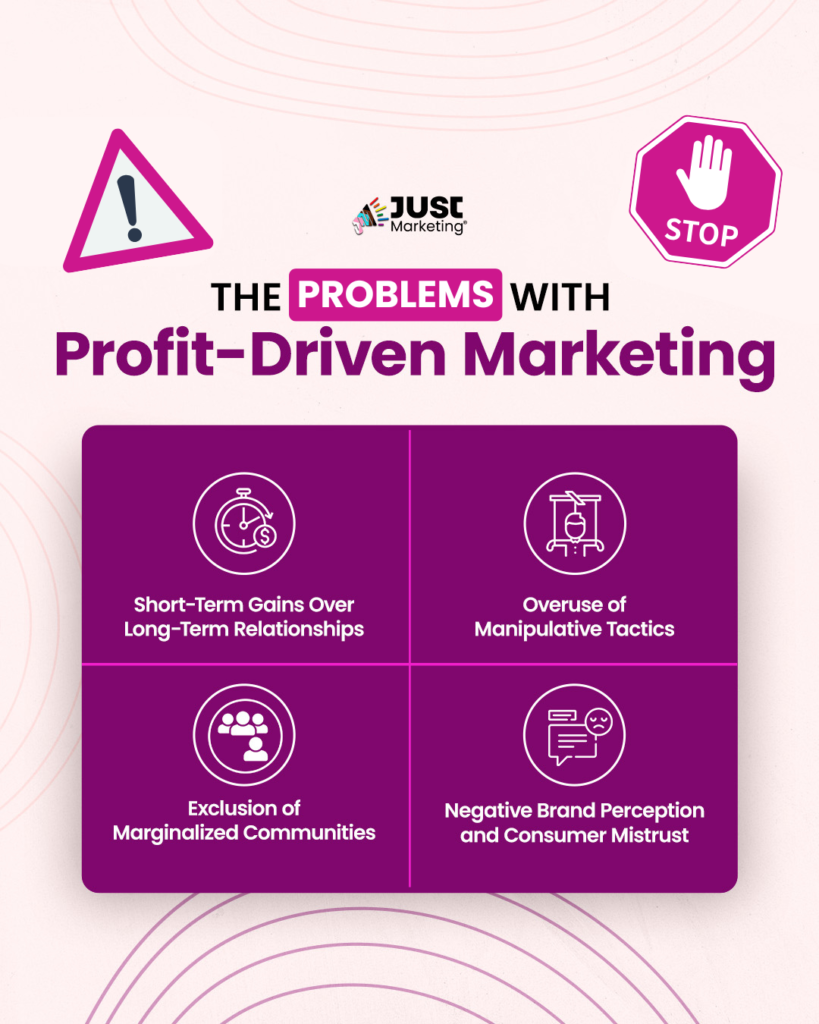
Profit-driven tactics can produce a spike in sales. The trouble shows up later, in four predictable ways.
- Quick wins crowd out loyalty. High-pressure campaigns may close a sale today while leaving buyers with little reason to return or refer a friend.
- Manipulation erodes trust. Fake scarcity and countdown timers push people to act before they're ready, and many end up feeling regret once the pressure wears off.
- One-size-fits-all leaves people out. Campaigns built for an imagined “average” customer overlook disabled, neurodivergent, and marginalized folks entirely.
- Audiences notice. People are quicker than ever to call out brands that put profit over people, and that reputation follows a business around.
Here's how that plays out. A brand launches a product with a countdown timer and an “exclusive, limited-time” price. Customers rush to buy before the clock runs out. A week later, the same product is still available at the same price, or even cheaper. Those customers learn that this brand's deadlines mean nothing, and they'll remember it the next time an email lands in their inbox.
For a deeper look at how traditional marketing causes harm, check out the first section of my Just Marketing® guide.
The Money Question: Can People-Centered Marketing Pay the Bills?
Yes, and the reason comes down to where your revenue actually comes from over time.
A profit-driven campaign treats every sale as a fresh hunt. You spend energy (and often ad dollars) finding new people, pressure them into buying, and start over the next month. People-centered marketing builds income that compounds:
- Repeat clients. People who felt respected the first time come back for your next offer without needing to be convinced.
- Referrals and word of mouth. Happy clients become your most credible marketing, and their recommendations cost you nothing.
- Higher-quality leads. Honest marketing attracts people who already share your values, so sales conversations feel like a natural next step.
- Lower churn. Clients who chose you freely are far less likely to ask for refunds or quietly disappear.
There's an honest trade-off here, too. Your email list may grow more slowly without aggressive opt-in tricks, and launches may feel quieter at first. The folks who do join tend to open your emails, reply, and stick around. I break down why in my post on how consent-based funnels convert.
Measuring that kind of growth takes different metrics than likes and clicks. My guide to measuring marketing success beyond vanity metrics walks through what to track instead.
What the Shift Looks Like in Real Life
The fastest way to understand people-centered marketing is to see the same message written both ways. Here are four everyday examples.
The launch email
Profit-driven: “⏰ LAST CHANCE: Doors close at midnight and you'll NEVER see this price again!”
People-centered: “Enrollment for [Program] closes Friday at 5pm PT, and here's everything you need to decide whether it's right for you.”
The second version keeps a real deadline and pairs it with the information people need. Read more about artificial urgency and what to do instead.
The sales page button
Profit-driven: “YES! I'm ready to change my life!”
People-centered: “Join the program ($497 or 3 payments of $175)”
The second button tells people exactly what happens when they click, including the price. Clear, descriptive CTAs also work better for screen reader users.
The social caption
Profit-driven: “If you're still struggling with your marketing, you're leaving money on the table. Only 2 spots left!”
People-centered: “I have two client spots opening in November. If you're craving a marketing system that fits your brain, I'd love to chat about whether we're a good match.”
Genuine limits are helpful to share. The difference is in the tone: an invitation that leaves room for “not right now.”
The follow-up after a “maybe”
Profit-driven: “How much is it costing you NOT to solve this problem?”
People-centered: “Totally understand wanting time to think. Is there anything I can clarify that would help you decide?”
The second message respects the person's pace and opens a door for real questions. My 4As of objection handling offer more language you can borrow.
The Messy Middle: What to Expect During the Shift
Changing how you market feels uncomfortable at first, especially if you've been told for years that pressure is what makes people buy. Knowing what's coming makes it easier to stay the course.
What it might feel like:
- A quieter launch or two. Fewer urgency emails can mean fewer last-minute sales while your audience adjusts.
- The pull to go back. When numbers dip, the old tactics will whisper that they worked. Give the new approach a few months before you judge it.
- Some unsubscribes. Folks who were drawn in by hype may drift away, which leaves more room for your people.
- Big feelings around sales. For many neurodivergent business owners, rejection sensitivity can make every “no” sting. People-centered marketing helps here, since you're extending invitations and letting people choose freely.
Signs it's working:
- People reply to your emails with thoughtful responses and questions.
- Past clients come back or send friends your way.
- Sales conversations feel easier because prospects already know what you offer and why.
- You feel proud of what you put out into the world.
And if you slip back into an old habit? Own it, adjust, and keep going. My apology email didn't end my business. It actually deepened the trust my list had in me.
Your Next Step
Pick one piece of marketing you're sending this week, maybe a launch email or a sales post, and rewrite it the people-centered way. Use the examples above as a guide.
When you're ready for the bigger picture, the Five Steps to Just Marketing® walk you through auditing your current practices and building from there.
I'd love to hear from you, too: have you ever followed a marketing “formula” that felt wrong the moment you hit send? Tell me about it over on LinkedIn.
Want support making the shift? Explore how we can build an ethical, ADHD-friendly marketing system together, or join my email list for weekly-ish tips delivered with kindness and clarity.
FAQs
Profit-driven marketing puts revenue above everything else, often leaning on pressure tactics like fake scarcity and countdown timers. It can bring quick sales, though it tends to wear down trust over time. People who feel rushed into buying are less likely to come back or refer friends.
People-centered marketing focuses on the needs and long-term relationships of the people you serve. It uses honest messaging and measures success by trust and repeat clients alongside revenue. It's a core part of Just Marketing®.
You may see a quieter launch or two while your audience adjusts. Over time, the trust you build tends to bring steadier income through repeat clients and referrals. Real deadlines are still fair game, as long as they're true. Learn how to share honest deadlines.
Most business owners notice a difference in engagement within a few months, while referral and repeat-client growth builds over a longer stretch. Change one piece at a time, starting with whatever you're sending next. Small updates add up quickly.
You're in good company, and it's fixable. Turn off anything that relies on pressure, then tell your audience honestly what you're changing and why. A sincere note to your list can strengthen trust. I've done it myself!
Common examples include fake scarcity (“only 2 left!” when there are plenty), countdown timers that quietly reset, and guilt-trip copy. Each one pushes a quick yes while leaving people feeling misled.


