Marketing goals are the foundation of any successful strategy. They provide clarity, direction, and a sense of purpose, helping you navigate the sometimes chaotic world of entrepreneurship.
But if you’ve ever felt overwhelmed trying to juggle countless responsibilities, you’re not alone – this is especially true for neurodivergent entrepreneurs who often face unique challenges in prioritization and focus.
The gist: Realistic marketing goals are specific, achievable targets that fit your actual time and energy and connect back to your bigger vision, or “North Star.” To set them, define your North Star, break it into small steps, attach a number and a deadline, and build in flexibility so a setback becomes a simple adjustment.
Luckily, setting realistic marketing goals can transform that chaos into clarity. These aren’t just pie-in-the-sky aspirations – they’re actionable, specific, and achievable objectives that align with your values and your business's mission.
At the heart of this process is identifying your “North Star” – the big, meaningful vision that drives everything you do. By keeping your “North Star” in mind, you can filter out distractions and focus on what truly matters.
This clarity isn’t about rigid schedules or unrealistic expectations. Instead, it’s about breaking your marketing goals into manageable steps and trusting yourself to get things done as long as you know the next move. Think of it as creating a roadmap for your success – one that fits your unique strengths and keeps you motivated along the way.
By the end of this post, you’ll have the tools to set realistic marketing goals that help you move forward with confidence, clarity, and purpose. Let’s do this!
Table of Contents
Step 1: Identify Your Marketing ‘North Star’
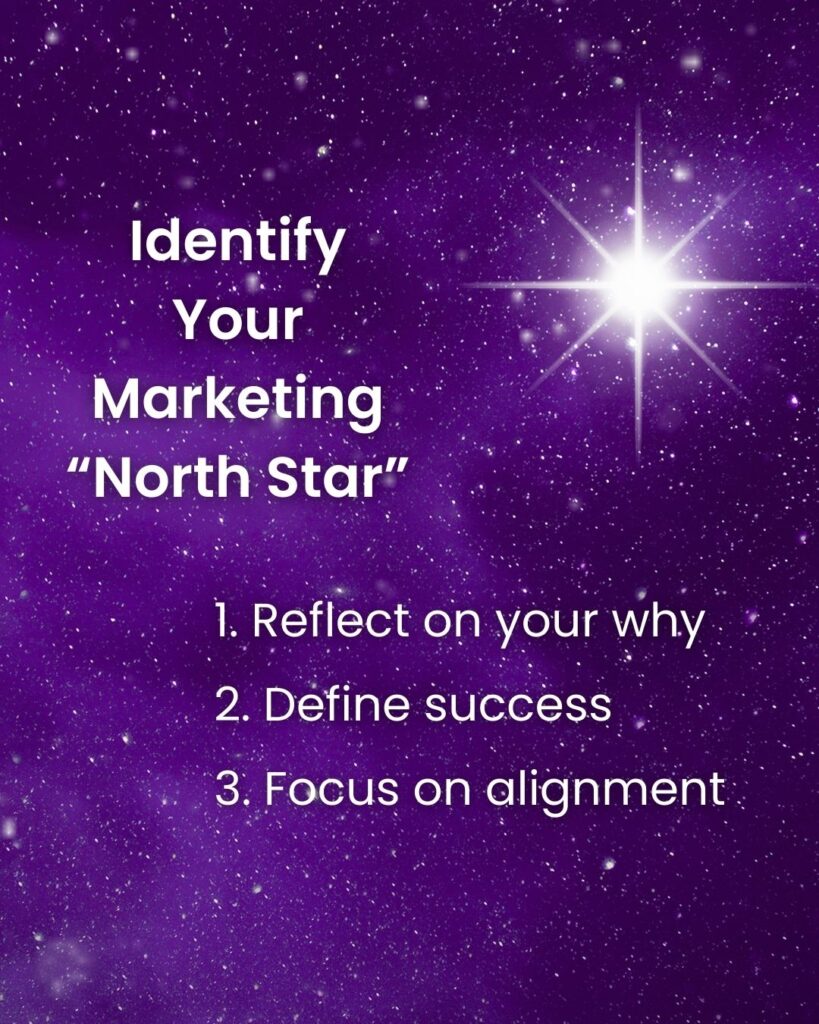
Before diving into the nitty-gritty of marketing tactics, take a moment to identify your “North Star.” Think of this as your ultimate mission – the guiding light that keeps you on track, even when distractions and challenges threaten to pull you off course.
For neurodivergent entrepreneurs, having a clear North Star isn’t just helpful; it’s essential. It provides a framework for decision-making, helping you focus on what’s truly important while filtering out the noise. Your North Star is the answer to the big question: What does success look like for your business?
Examples of Marketing ‘North Stars’
Your North Star will look different depending on your goals and business model. Here are some examples to spark inspiration:
- Building a consistent online presence: You want to show up regularly on your blog, social media, or email list.
- Attracting values-aligned clients: Your focus is on growing a community of people who share your passion and principles.
- Boosting brand recognition: You’re ready to become a go-to authority in your niche, gaining visibility and trust.
How to Find Your North Star
If you’re unsure where to start, try this simple activity:
- Reflect on your why: Why did you start your business, and what impact do you want to make?
- Define success in one sentence: Imagine your ideal business in five years. What are you achieving?
- Focus on alignment: Ensure your North Star reflects your values and mission, not someone else’s idea of success.
Aligning Your To-Do List with Your North Star
Once you’ve identified your North Star, it’s time to align your daily tasks and goals with it. Ask yourself:
- Does this task bring me closer to my North Star?
- Is it a priority, or can it wait?
Remember, your North Star is like your marketing GPS. It keeps you moving forward with purpose, helping you say “yes” to the right things and “no” to the distractions.
Step 2: Break Down Your Goals into Bite-Sized Steps
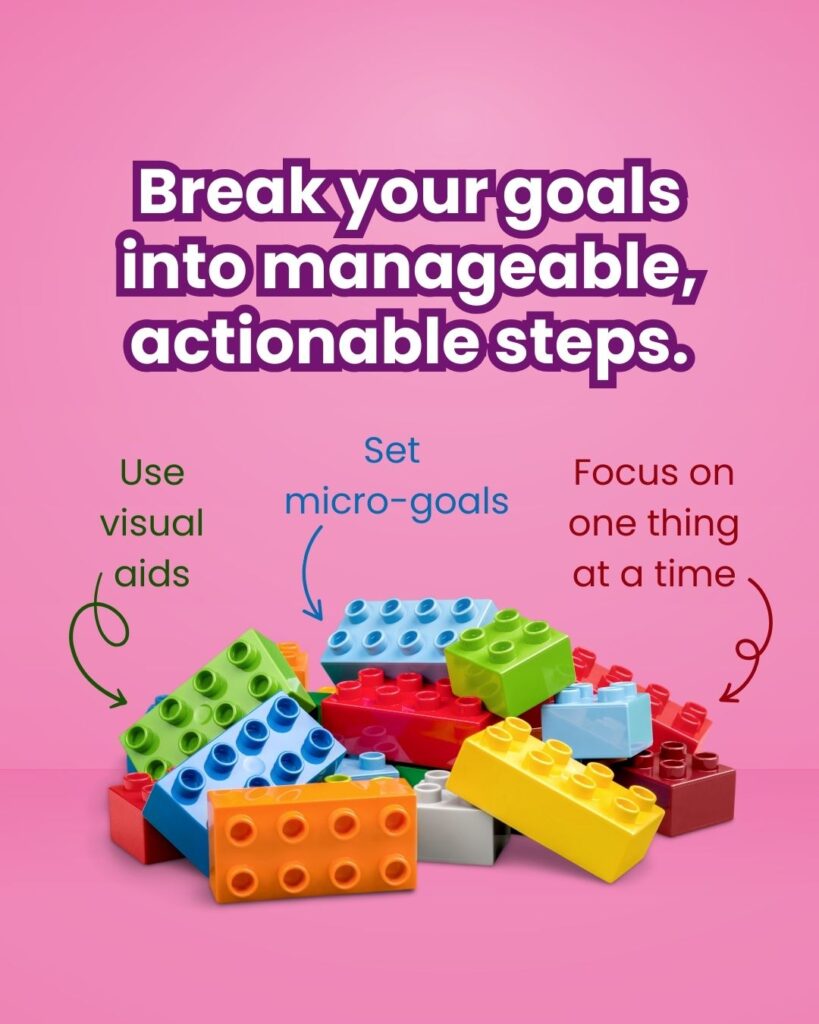
Once you’ve identified your North Star, the next step is to turn that big-picture vision into manageable, actionable steps. For many neurodivergent entrepreneurs, the idea of tackling a huge goal can feel overwhelming. Breaking it down into smaller pieces not only makes it more achievable but also builds momentum and confidence along the way.
Think of your marketing goal as a puzzle. Instead of focusing on the completed picture, start with the corner pieces. By tackling small, manageable tasks first, you create a structure that makes the rest fall into place. This approach also helps combat the overwhelm that comes with trying to do everything at once.
This section contains one (or more) affiliate links. If you click through and sign up, I may earn a small commission. You'll never pay more, and I'd recommend them even without the commission. I appreciate it so much when you click through!
How to Break Down Your Marketing Goals
- Start with the end in mind: What’s the specific outcome you’re aiming for? For example, if your North Star is to increase your email list, your first step might be creating a lead magnet.
- Work backward: Identify the key milestones you need to hit to achieve that outcome. These might include drafting the lead magnet, designing a landing page, and promoting it on social media.
- Chunk it out: Break those milestones into even smaller tasks. For instance:
- Draft an outline for your lead magnet.
- Write the first draft of the content.
- Edit and proofread.
Tips for Staying on Track
- Use visual aids: Create a mind map, checklist, or project management board to organize your steps. Tools like Trello, Asana, or even a simple notebook can work wonders.
- Set micro-goals: Break tasks down into pieces that can be completed in 15–30 minutes. For example, instead of “Write blog post,” aim for “Draft the introduction.”
- Focus on one thing at a time: Multitasking can be a distraction. Channel your energy into completing one task before moving on to the next.
Celebrate Progress Along the Way
Don’t wait until the final goal is achieved to celebrate. Each completed step is a win! Whether it’s finishing your lead magnet or simply writing a killer headline, take a moment to acknowledge your progress.
By breaking down your marketing goals into bite-sized steps, you’ll avoid feeling overwhelmed and create a clear roadmap to success. The best part? You’ll gain confidence as you check off each step, making that big goal feel less like a mountain and more like a series of small, manageable hills.
Step 3: How Do You Make Goals Measurable and Time-Bound?

Having a clear North Star and actionable steps is a great start, but without measurable and time-bound goals, it’s hard to track progress or stay motivated. Measurable goals give you a sense of accomplishment, while time-bound goals help create momentum.
Setting measurable goals allows you to answer one crucial question: Did I achieve what I set out to do? Without metrics, it’s easy to lose sight of progress, especially when juggling a million tasks. A measurable goal turns vague aspirations like “grow my audience” into specific targets like “gain 100 new email subscribers in 30 days.”
How to Make Your Goals Measurable
- Focus on numbers: Choose a quantifiable metric to track your progress. For example:
- Grow your email list by 15%.
- Post consistently on LinkedIn three times a week.
- Get 10 new client inquiries in a month.
- Use tools to track progress: Platforms like Google Analytics, social media insights, or even a simple spreadsheet can help you see how far you’ve come.
Why Deadlines Create Focus
Time-bound goals add urgency to your work, making it easier to prioritize tasks and avoid procrastination. Setting realistic timelines prevents burnout while still providing structure.
How to Create Realistic Deadlines
- Start small: Instead of committing to a massive 12-month project, start with a 30-day goal.
- Be honest about your capacity: Consider how much time and energy you realistically have, especially if you’re balancing other responsibilities.
- Build in flexibility: Life happens, and sometimes things don’t go as planned. Allow wiggle room for unexpected challenges.
Examples of Measurable, Time-Bound Marketing Goals
- Write and publish four blog posts in the next two months.
- Increase website traffic by 20% over the next quarter.
- Gain 50 new email subscribers by the end of the month.
By making your goals measurable and time-bound, you’ll gain clarity and focus. Not only will you know exactly what success looks like, but you’ll also have a timeline to work toward – keeping you accountable and on track.
Step 4: Embrace Flexibility and Celebrate Progress

Setting marketing goals is a powerful step toward clarity and focus, but life isn’t always predictable – especially for neurodivergent entrepreneurs. Flexibility allows you to adapt when things don’t go as planned, without losing sight of your ultimate mission. Equally important? Celebrating progress along the way, so you stay motivated and energized.
Rigid goals can feel suffocating and overwhelming, especially when unexpected obstacles arise. Flexibility helps you:
- Adapt to change: Whether it’s a shift in priorities or a personal curveball, you can tweak your approach without abandoning your goal.
- Avoid burnout: Giving yourself permission to adjust timelines or methods can make the process feel more sustainable.
How to Stay Flexible Without Losing Focus
- Revisit your goals regularly: Schedule time to check in with yourself. Are your goals still aligned with your North Star? If not, adjust.
- Redefine success as needed: Progress is still progress, even if it looks different than you originally planned.
- Build in buffers: Create extra space in your deadlines to account for life’s unpredictability.
The Power of Celebrating Progress
Progress, no matter how small, is worth celebrating. Recognizing your achievements keeps you motivated and reinforces positive habits. Plus, it’s a reminder of how far you’ve come – even if the finish line feels far away.
Ways to Celebrate Your Wins
- Acknowledge mini-milestones: Treat yourself when you complete a task, whether it’s taking a break, enjoying your favorite snack, or sharing your win with a friend.
- Reflect on what’s working: Take note of what strategies or habits helped you succeed, so you can replicate them in the future.
- Celebrate publicly: Share your progress with your audience or community. Not only does it build accountability, but it also inspires others.
Remember: Progress Over Perfection
Your journey toward achieving your marketing goals won’t always be linear, and that’s okay. By embracing flexibility and celebrating every step forward, you’ll build resilience, confidence, and momentum – all while staying aligned with your North Star.
What Are Common Goal-Setting Pitfalls (and How Do You Avoid Them)?
Even with the best intentions and a solid plan, it’s easy to stumble when working toward your marketing goals. Recognizing common pitfalls ahead of time can help you sidestep them and stay on track. Here are a few challenges that neurodivergent entrepreneurs often face – and strategies to overcome them.
1. Overcommitting to Too Many Goals
The Pitfall: Feeling inspired, you set multiple ambitious goals at once, only to find yourself overwhelmed and stuck.
How to Avoid It:
- Prioritize ruthlessly: Focus on one or two goals that align most closely with your North Star.
- Start small: Achieving smaller goals builds confidence and momentum, making it easier to tackle larger ones later.
2. Getting Distracted by Shiny New Strategies
The Pitfall: A new trend or tool catches your eye, pulling you away from your original plan.
How to Avoid It:
- Stick to your roadmap: Before shifting focus, ask yourself, “Does this align with my North Star?”
- Capture ideas for later: Keep a running list of exciting strategies to explore once your current goal is achieved.
3. Setting Unrealistic Expectations
The Pitfall: You overestimate what you can accomplish in a short timeframe, leading to stress and burnout.
How to Avoid It:
- Be honest about your capacity: Consider your energy, schedule, and resources when setting goals.
- Use the 80/20 rule: Focus on the 20% of tasks that will have the biggest impact, and let go of the rest.
4. Losing Momentum After a Setback
The Pitfall: One missed deadline or failed strategy makes you feel like giving up entirely.
How to Avoid It:
- Reframe setbacks as lessons: What didn’t work, and what can you adjust moving forward?
- Reconnect with your progress: Reflect on how far you’ve come instead of focusing on one misstep.
5. Forgetting to Track Your Progress
The Pitfall: Without tracking results, you feel like you’re spinning your wheels, unsure if your efforts are paying off.
How to Avoid It:
- Set measurable milestones: Break your goal into smaller checkpoints and track them consistently.
- Celebrate your wins: Acknowledge progress, no matter how small – it’s all part of the journey.
By anticipating these pitfalls and having strategies in place, you’ll be better equipped to navigate challenges and keep moving forward. Remember: setbacks don’t define you – how you respond to them does.
Your Next Step Toward Marketing Success

Setting realistic marketing goals isn’t just about achieving business success – it’s about creating clarity, focus, and a sustainable path forward. By identifying your North Star, breaking down big goals into manageable steps, making them measurable and time-bound, and embracing flexibility, you’ll not only stay aligned with your vision but also build confidence in your ability to achieve it.
Remember, progress is more important than perfection. Every step you take, no matter how small, brings you closer to your ultimate goal. Celebrate those wins, adapt when life happens, and always keep your North Star in sight – it will guide you through any challenges that come your way.
Your marketing success story starts here.
Take a moment to reflect on your North Star and set one actionable, realistic marketing goal today.
If you’re ready for more ADHD-friendly and justice-centered marketing advice, sign up for the newsletter or follow me on Facebook, Instagram, LinkedIn, or BlueSky!
I look forward to connecting with you!
FAQs
A marketing North Star is the big, meaningful vision that guides every marketing decision you make, like attracting values-aligned clients or building a consistent online presence. Checking each task against it helps you focus on what matters and set aside distractions. Most businesses do best with one clear North Star at a time.
Realistic goals are specific and sized to your capacity, such as publishing four blog posts in the next two months, gaining 50 new email subscribers by the end of the month, or receiving 10 client inquiries this quarter. Each one has a clear number and a deadline, so you’ll know exactly when you’ve reached it.
One or two goals at a time works well for most small businesses, especially for neurodivergent business owners. A short list keeps your energy focused and makes it easier to see real progress. New goals can join once the current ones feel steady. Learn how to focus on the marketing work that matters most.
SMART goals are specific, measurable, achievable, relevant, and time-bound. The framework turns a vague wish like “grow my audience” into a clear target like “gain 50 email subscribers by the end of the month.” Realistic marketing goals follow the same idea, with extra room for flexibility.
Treat it as useful information. Look at what got in the way, then adjust the timeline, shrink the goal, or try a different approach. Celebrating the progress you did make keeps your motivation steady for the next round. Learn how to review your marketing data and adjust your strategy.
Break goals into 15–30 minute micro-tasks and track them somewhere visual, like a project board or checklist. Keep a running “later” list for shiny new ideas so they don’t pull you off course. A regular check-in, weekly or monthly, helps you notice drift early and adjust kindly. Learn how to make confident marketing decisions with ADHD.


