If you’re a values-driven entrepreneur, chances are you’ve been told you need to “bust through” objections to make the sale. Scripts filled with urgency triggers, rebuttals, and confidence-boosting one-liners that feel more like pressure than support. But here’s the thing: trying to manipulate someone into a yes rarely feels good – for either person.
Objections aren’t the enemy. They’re a natural part of any decision-making process – especially when your audience is thoughtful, intentional, and maybe even a little overwhelmed. The goal isn’t to bulldoze past concerns – it’s to create space for curiosity, consent, and clarity.
In this post, I’m breaking down how to respond to objections without shame or manipulation – and why it’s time to ditch those tired “objection-busting” scripts for respectful, human-centered conversations that align with your values and support your business growth.
Let’s do this, ethically.
Why “Overcoming Objections” Can Feel Gross (and Is Often Harmful)
A lot of traditional sales advice treats objections like a problem to fix – fast. The advice sounds like this: “Handle the objection before they change their mind,” or “Flip their ‘no’ into a ‘yes’ before they ghost.”
This kind of language turns sales into a high-stakes game of persuasion, where your job is to “win.” But if you care about building real relationships with your audience – especially if they’re values-aligned, neurodivergent, or justice-minded – these tactics can backfire hard.
Here’s why:
- They often dismiss valid concerns with scripted comebacks that don't acknowledge the nuance of someone's situation.
- They rely on urgency and scarcity, which can create panic rather than confidence.
- They use shame to push people toward action – like implying someone isn’t committed enough if they hesitate.
- And most importantly, they can feel deeply manipulative, especially for folks with trauma histories, trust issues, or lived experiences of being pressured into decisions.
These tactics don’t just feel gross – they are gross.
There’s another way – one that honors your people and your offer.
Objections Are Not Enemies – They’re Opportunities for Connection
What if an objection isn’t something to overcome… but an invitation to understand?
When someone expresses hesitation, it often means they’re trying to protect their energy, money, or time. That’s not resistance – that’s wisdom. And when you treat objections with curiosity instead of control, you open the door for genuine connection.
Here’s what objections can actually mean:
- “I need more clarity.” → They're seeking understanding, not saying no.
- “I need to feel safe.” → They're processing risk, not rejecting you.
- “I need to honor my budget.” → They're practicing integrity, not being difficult.
This is especially true for neurodivergent folks, who may need more time to process decisions or feel safer with more information and autonomy. And for your audience – often mission-driven and deeply intentional – objections are rarely flippant. They're thoughtful.
The key is to stay open, grounded, and respectful. You’re not here to “handle” the objection – you’re here to hold space for it.
When you show that you're not threatened by questions or concerns, you're demonstrating that your business is rooted in trust, not control. And that’s what creates long-term clients, referrals, and raving fans.
How to Respond Without Shame or Pressure
You don’t need a rehearsed comeback or high-pressure tactic to handle objections. What you do need is a little empathy, a lot of clarity, and a deep trust that the right people will say yes when (and if) it’s truly aligned.
Let’s walk through an ethical, ADHD-friendly approach to objection conversations – one that feels human, spacious, and clear.
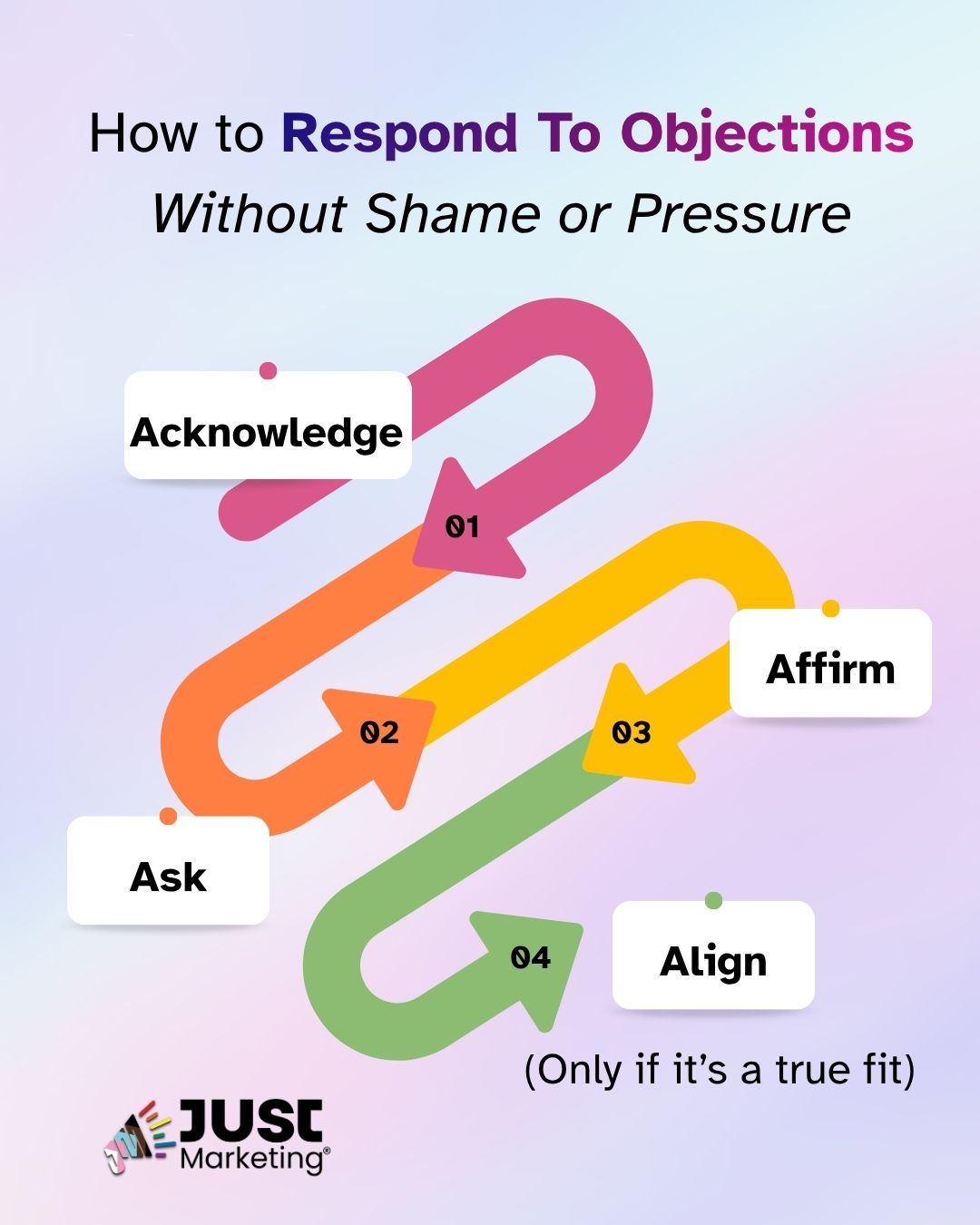
1. Acknowledge
Start by validating their concern. This is about listening, not fixing.
- “That totally makes sense – thank you for being honest.”
- “I hear you – that’s a really common question.”
- “I appreciate you sharing that. It’s important to explore all the angles.”
2. Ask
Gently invite them to share more. Stay curious, not defensive.
- “Can I ask what part feels sticky or uncertain?”
- “Would it be helpful if I shared a bit more about how it works?”
- “What information would help you feel more confident in your decision?”
3. Affirm
Let them know you’re not here to push. Their agency matters.
- “Whatever you decide, I fully respect your process.”
- “It’s okay to take your time – I’m not going anywhere.”
- “I trust you to make the decision that’s right for you.”
4. Align (Only if it’s a true fit)
If you honestly believe your offer can help them – and their objection is based on a misunderstanding or fear – gently reflect how your work supports their goals.
- “From what you’ve shared, it sounds like this could give you the clarity and structure you’ve been craving. Want to explore what that could look like together?”
- “I totally hear your hesitation around time – and I’ve designed this to be ADHD- and overwhelm-friendly, so we can work with your energy, not against it.”
Pro tip for neurodivergent entrepreneurs: You don’t have to respond on the spot. If real-time objections stress you out, try saying: “Let me think about that and get back to you – I want to give you a thoughtful answer.”
Navigating Real Objections (Without the Scripts)
It’s one thing to talk about responding with empathy… and another to do it in the moment – especially when you’re feeling vulnerable or invested in the outcome.
So let’s walk through a few common objections and how you can respond in ways that feel good for both you and your potential client.
Objection 1: “I can’t afford it right now.”
The traditional response: “Can you put it on a credit card?” or “How much is it costing you not to solve this?”
Oof. Guilt trip city.
A Just Marketing®-aligned response:
- “Thanks for being transparent – money stuff is real. If this isn’t doable right now, I totally understand.”
- “Would it help to explore payment plans, or would you prefer some free resources for now?”
This approach respects their financial reality and offers support without pressure. You’re building trust, not burning bridges.
Objection 2: “I need to think about it.”
The traditional response: “This is a limited-time offer – if you wait, the price goes up!”
Translation: I don’t trust you to make a decision without fear.
A respectful response:
- “Absolutely – take the time you need. I want this to be a full-body yes, not a pressured maybe.”
- “Would you like me to check in with you in a few days, or would you rather reach out when you’re ready?”
Give them space. If they come back, it’s from trust – not fear of missing out.
Objection 3: “I’m not sure this will work for me.”
The traditional response: “This has worked for tons of other people. Trust the process!”
This dismisses their unique concerns – and possibly their lived experience.
An inclusive response:
- “Thanks for voicing that – it’s a totally fair question.”
- “Would it be helpful to talk through how this can be adapted to your needs or situation?”
- “Here’s an example of someone with a similar background who found success – want me to share what worked for them?”
Instead of forcing a fit, you’re co-creating a conversation. That’s the magic.
If your nervous system spirals when you hear objections (hi, rejection sensitivity), consider scripting a few go-to responses in your own voice – and practice saying them out loud until they feel natural.
You Can Sell Confidently and Ethically
Sometimes, the reason we reach for sales scripts is because we’re scared. Scared of rejection, scared we’ll say the wrong thing, or scared we won’t make the sale.
And if you’re neurodivergent or someone who’s been told you’re “too much” or “not enough” your whole life… That fear can run deep.
But confidence doesn’t have to come from pushing past objections – it can come from trusting yourself and respecting your people.
You can:
- Speak to your offer’s value without inflating promises.
- Trust your audience to make decisions without pressure.
- Allow someone to say no and still feel supported by your brand.
- Create long-term relationships, not just one-time conversions.
When someone shares a concern and you respond with honesty, empathy, and zero shame? That is sales.
Sales can feel like consent, not coercion.
It can prioritize relationship over revenue.
And it can actually lead to sustainable, values-aligned growth.
You don’t have to choose between being kind and being effective.
Kind is effective – when it’s backed by clarity, consistency, and confidence in your offer.
Let’s Keep This Conversation Going
You can build a business rooted in consent, clarity, and connection – and you don’t have to do it alone.
Here are a few ways we can stay connected:
Let’s connect on social – Come say hi on LinkedIn or Instagram – I’d love to hear your thoughts on handling objections with heart. Got a favorite respectful response? Tag me and let’s talk about it!
Curious what it’s like to work together? If you’re craving more support with ethical, ADHD-friendly marketing systems that actually feel good – head over to my Work With Me page to explore how we can co-create something sustainable and aligned.
Join the email list – Want weekly-ish tips on content strategy, Just Marketing®, and marketing with ADHD? Sign up for my emails and get real-talk guidance, delivered with kindness and clarity.