Most offers out there – from courses to coaching programs – aren’t built with neurodiverse folks in mind. They assume everyone has consistent energy, a reliable schedule, and a brain that plays nice with time management. But if you live with ADHD (or support people who do), you already know that’s not how it works.
- Time-blindness.
- Executive dysfunction.
- Motivation that arrives in bursts (if at all).
These aren’t flaws. They’re part of the experience – and they deserve to be accommodated, not ignored.
Whether you’re an entrepreneur designing offers or a buyer trying to invest in support that doesn’t lead to burnout, this post is for you. We’re talking about what makes an offer truly ADHD-friendly. Not just in theory, but in practice. The goal: more accessibility, less overwhelm – and marketing that actually works for neurodiverse people, not against them.
Why Traditional Offers Can Feel Inaccessible
It’s not that people are trying to make their offers hard to access – they just often build for what’s typical, not what’s true for neurodivergent folks. And when ADHD is in the mix, certain offer structures can unintentionally become barriers. Here’s what often gets in the way:
1. Urgency Overload
Countdown timers, fast-action bonuses, and “last chance” messaging are everywhere. For someone who struggles with time-blindness, that kind of pressure doesn’t inspire action – it triggers panic or shutdown. Realistically, many ADHDers want to enroll, but their brains don’t always operate on launch timelines.
2. Complexity That Feeds Overwhelm
Twelve-week programs with multiple modules, bonus masterclasses, and Slack groups for every cohort? It can be too much. If a buyer can’t quickly understand what’s included, how it works, and what outcome to expect, they’ll often check out entirely – even if it’s exactly what they need.
3. Rigid Scheduling
Live-only sessions, fixed timelines, and no access to replays can leave people behind before they even begin. ADHD often means working in windows of focus, not consistent 9–5 availability.
4. Lack of Neurodiverse Visibility
Most offers simply aren’t created with ADHDers in mind. That invisibility makes it harder for buyers to trust that their access needs will be respected – or that the experience will actually support their unique ways of learning and engaging.
This isn’t about blame. It’s about awareness… With just a few thoughtful shifts, you can create (or spot) offers that actually work for brains like ours. Let’s dig into what those look like next.
ADHD-Friendly Elements for Inclusive Offers
Designing (or choosing) an offer that supports neurodiverse brains doesn’t have to be complicated. In fact, it’s often the simplification that makes it more accessible. These elements help reduce overwhelm, accommodate fluctuating energy, and create a more humane experience – for everyone involved.
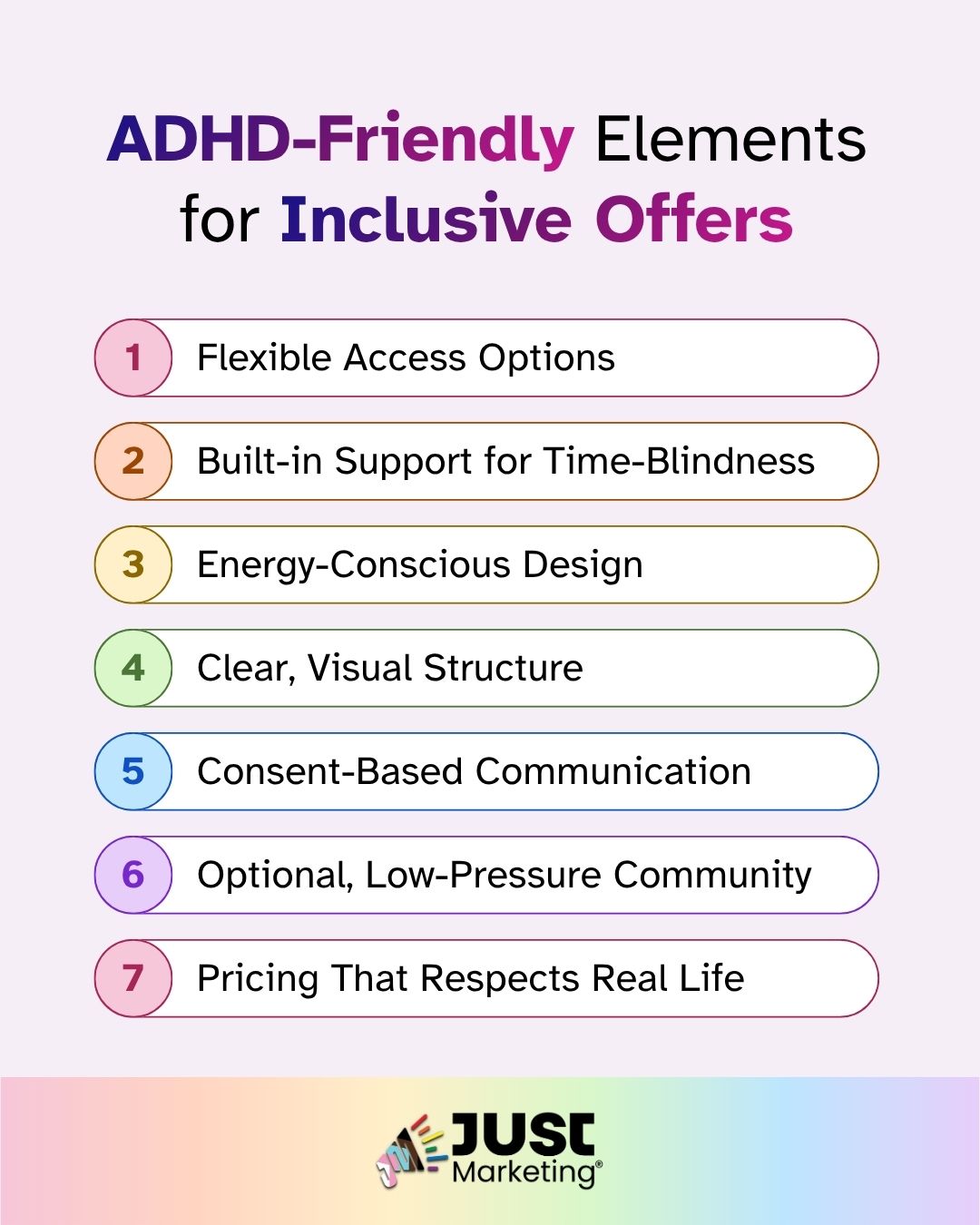
1. Flexible Access Options
Rigid timelines don’t work for brains that process in bursts. Offer replays, lifetime access, or at least extended timeframes. Bonus points for downloadable audio or transcripts so folks can engage offline, at their own pace.
2. Built-in Support for Time-Blindness
Time doesn’t “feel real” for many ADHDers. Help out with:
- Calendar invites or gentle reminders
- Visual timelines or progress bars
- Clear deadlines without pressure or shame
The goal isn’t urgency – it’s orientation.
3. Energy-Conscious Design
Focus fluctuates. That’s just part of the package. Keep things digestible:
- Break content into short, modular pieces
- Space out delivery over time
- Offer “pause points” or integration weeks
Let people go slow without falling behind.
4. Clear, Visual Structure
Too much text or too many choices? That’s a recipe for decision fatigue. Use:
- Checklists
- Roadmaps
- Simple layouts with one action per step
Clarity is kindness. Visuals help.
5. Consent-Based Communication
Let clients choose their level of interaction. Not everyone wants to be in a group chat every day – or at all. Offer a “quiet mode” for those who need space. Be explicit about how often you’ll reach out, and honor boundaries.
6. Optional, Low-Pressure Community
Communities can be powerful – but not if they’re noisy or overwhelming. Create opt-in spaces that aren’t tied to social platforms, and normalize lurking as valid participation. No “you get out what you put in” guilt trips.
7. Pricing That Respects Real Life
Neurodiverse folks may deal with inconsistent income or decision paralysis. Flexible pricing can remove friction:
- Payment plans with no shame
- Sliding scale options
- Clear breakdowns of value
And definitely don’t hide the price, or gatekeep with “book a call.” Transparency is what builds trust.
This isn’t about lowering standards. It’s about raising accessibility – so more people can say yes to the support they need, in a way that works for their brain.
For Buyers: What to Look for in ADHD-Friendly Offers
Investing in support can be energizing – or exhausting. When your brain already works overtime filtering distractions, unclear or high-pressure offers can feel like too much. But you deserve support that meets you where you are. Here’s how to spot it.
Green Flags
Look for offers that include:
- Clear expectations: You know exactly what’s included, how long it lasts, and what kind of time/energy commitment it requires.
- Flexible engagement: You don’t have to show up live or follow a strict schedule to get results.
- Multiple formats: Content is available in different ways – video, audio, text – so you can choose what works best in the moment.
- No shame for going at your own pace: The offer explicitly supports self-paced progress, pausing, or partial completion.
If you see the creator naming ADHD or neurodivergence directly, that’s also a good sign they’ve thought about your needs.
Red Flags
Be cautious if you see:
- Vague descriptions with no clear outline of deliverables
- One-size-fits-all structure that assumes everyone learns and works the same way
- Pushy language like “no excuses,” “only action-takers,” or “if you really wanted this, you’d find a way”
- Exclusivity culture: Promoting success through hustle, not sustainability
Questions You Can Ask Before You Buy
You’re allowed to advocate for yourself. Try:
- “Is this something I can access on my own time?”
- “What kind of support is available if I fall behind?”
- “Can you walk me through what a typical week might look like in this program?”
You don’t owe anyone an explanation for your needs. You’re just gathering info to make the best decision for your brain, your energy, and your capacity.
For Entrepreneurs: Why It’s Worth It to Build ADHD-Friendly Offers
Making your offers more accessible isn’t just kind – it’s a smart, sustainable business practice. When you intentionally design for neurodivergent folks, you don’t just serve a niche. You create a better experience for everyone.
Reducing Drop-Off and Increase Retention
When people can actually follow through – because the structure supports their real-life energy and focus – they’re more likely to stay engaged, complete the offer, and tell others about it. Meaning: better outcomes and referrals.
Building Real Trust
Neurodivergent folks are used to being gaslit, ignored, or blamed for “not trying hard enough.” When your offer doesn’t do that, it stands out. That trust leads to stronger client relationships, repeat business, and brand loyalty rooted in respect.
Aligning Your Business with Your Values
If you're here, you probably care about equity, inclusion, and justice. Accessibility is part of that. When you build with ADHDers and other neurodivergent humans in mind, you’re backing up your values.
Creating a Healthier Business for Yourself
Here’s the plot twist: ADHD-friendly systems often help you too.
- Simplified delivery.
- Fewer fires to put out.
- More thoughtful pacing.
Whether you’re neurodivergent or just tired of the hustle, these changes can reduce burnout and increase sustainability on both sides.
If you’ve ever worried that accommodating different needs might water down your offer – flip that script. This isn’t about doing less. It’s about designing smarter, more inclusive systems that help the right people say yes… and stick around.
You Don’t Have to Do It All at Once
If your brain is already buzzing with a dozen things you want to change – take a breath. You’re not behind, and you don’t have to overhaul everything overnight.
Start small. Maybe you offer a replay. Extend access by a few weeks. Add a checklist or a visual timeline to help folks stay oriented. One tweak at a time adds up fast – and your audience will notice.
The same goes if you’re on the buyer side. You don’t have to find the “perfect” offer to move forward… you can choose what feels doable now. Ask questions. Pause and come back later. That flexibility is not a lack of commitment… It’s self-awareness.
In my own business, ADHD-friendly isn’t a feature. It’s baked into how I build. From flexible timelines to simplified strategies, everything I offer is designed to support the real humans behind the screen – especially the ones who’ve never felt like business was built for their brain.
Let’s Keep the Conversation Going
Whether you’re building offers, navigating them, or somewhere in between – I’d love to connect. Come hang out with me on LinkedIn or Instagram.
Curious what it’s like to work with me? Explore how we can co-create ethical, accessible offers that support your strengths and your people.
Want more insights like this delivered gently to your inbox? Join my email list for ADHD-friendly content marketing tips, honest conversations about entrepreneurship, and the occasional meme.