Language is one of the most powerful tools we have as marketers. It’s how we tell stories, connect with people, and call communities into the work we’re doing. But when we only speak – or write – in one language, we’re unintentionally building walls instead of bridges.
Most mainstream marketing defaults to English. It assumes a shared cultural context. It prioritizes speed and simplicity over accessibility and equity. And in doing so, it often excludes the very people we say we want to serve – especially those from multilingual, immigrant, Deaf, or neurodivergent communities.
Language justice asks us to pause and consider: who gets left out of our message?
And more importantly, how can we invite them back in?
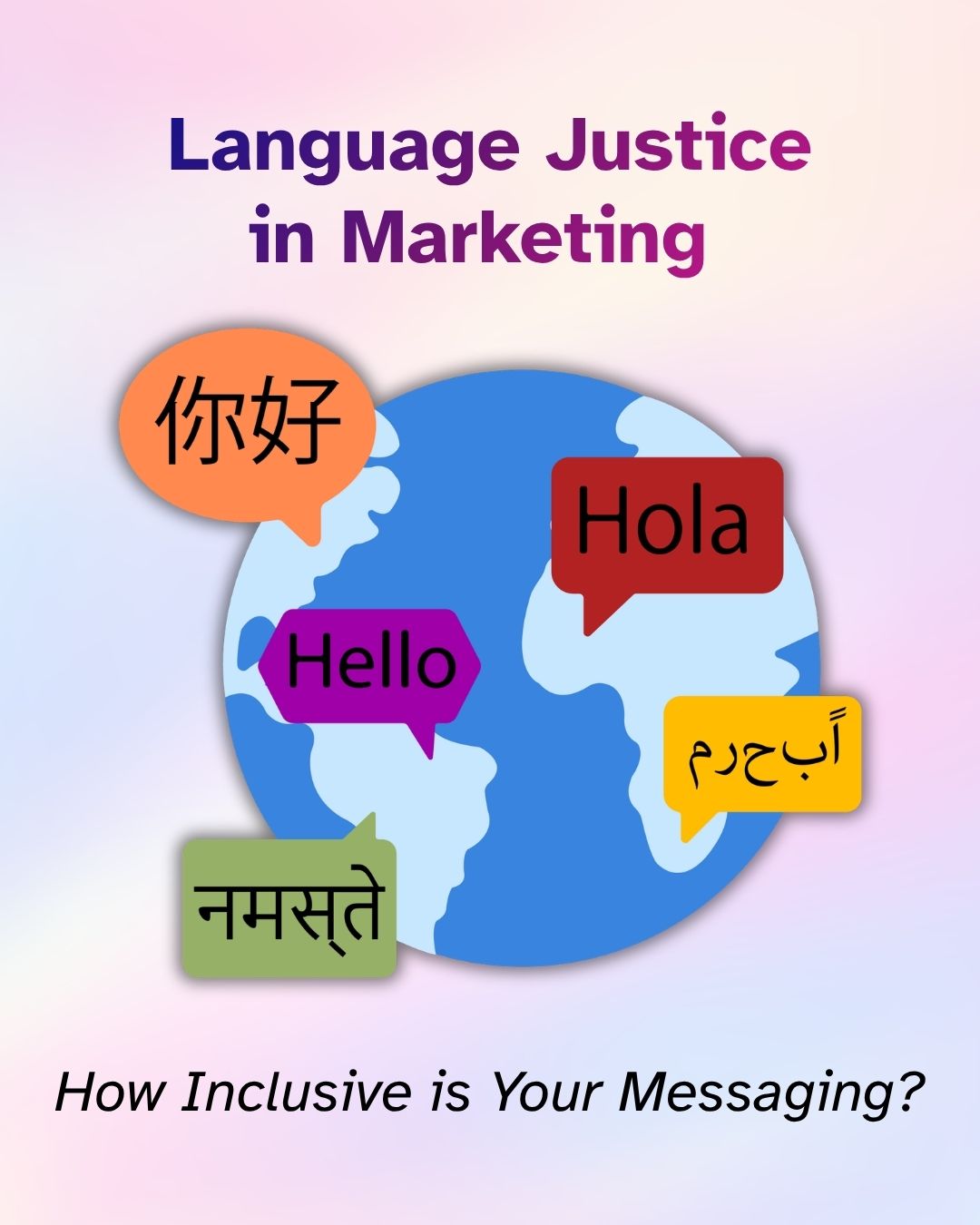
Whether you’re a coach, a creative, or a consultant trying to show up more ethically, this post will walk you through how multilingual content, cultural nuance, and intentional collaboration can make your marketing more inclusive – without overwhelming your system or losing your voice.
Language as Access – Not Everyone Speaks (or Thinks in) English
If your marketing only shows up in English, you’re speaking to a limited audience – even if your services are technically available to anyone. According to the U.S. Census Bureau, about 20% of people in the U.S. speak a language other than English at home. Globally, that number skyrockets. And yet, so much of the online business space treats English as the default, or even the only option.
But language isn't just about words. It’s about how we process information, how we feel seen or shut out. For some people, English is a second or third language. For others, it’s never felt safe or accessible due to systemic exclusion in education or healthcare. And for many neurodivergent folks, even “simple” English content can be dense or unclear.
When we treat language as a barrier to entry instead of a bridge to connection, we’re reinforcing power structures that say only certain people are “ideal clients.”Let’s challenge that.
Ask yourself:
- Do I know what language(s) my audience speaks or prefers?
- Have I ever tested if my message is still clear in translation?
- Would someone using a screen reader or translation app understand what I’m offering?
Centering access doesn't mean you have to become multilingual overnight. It means starting to ask better questions – and building marketing that meets people where they are.
Cultural Nuance and Context – More than Just Translation
Translating your content word-for-word is a start – but it’s not enough.
Language isn’t neutral. Words carry culture, tone, humor, and emotion. A joke that lands perfectly in one culture might fall flat or feel offensive in another. An idiom that makes sense to U.S.-based English speakers might be confusing or meaningless elsewhere. Even color choices, emojis, and pop culture references can shift in meaning across cultural lines.
That’s why language justice goes beyond translation – it includes localization and transcreation too.
- Localization adapts content for a specific culture or region.
- Transcreation rewrites content in another language with cultural and emotional accuracy, rather than sticking to the literal meaning.
This matters because your message isn’t just about what you say – it’s about how it lands. And when we skip nuance, we risk being misunderstood, irrelevant, or even harmful.
Here’s a simple example. If you’re a coach who helps people “get off the hamster wheel” of hustle culture, that phrase might be confusing or meaningless to someone outside the U.S. or unfamiliar with that metaphor. Instead, you might say something like “break free from the cycle of burnout” – a clearer, more universally understood message.
Cultural nuance also means being mindful of assumptions. “Spanish,” for instance, isn’t a one-size-fits-all language. The Spanish spoken in Mexico differs from that in Puerto Rico, Spain, or the U.S. Latinx community. Using region-specific vocabulary or slang without knowing the context can undermine your message or alienate the people you're trying to reach.
The goal isn’t perfection… It’s care. Care enough to check the context, to ask for feedback, and to respect your audience’s full humanity.
Working with Translators, Interpreters, and Creators Ethically
Creating inclusive content doesn’t mean relying on Google Translate and calling it a day. It means partnering with people who live in the languages and cultures you want to honor – and doing so with respect, collaboration, and fair compensation.
Hiring a translator or interpreter isn’t just a task to check off. It’s a relationship. And like any relationship in business, it works best when it’s rooted in shared values and clear communication. Here are a few ways to approach this work ethically:
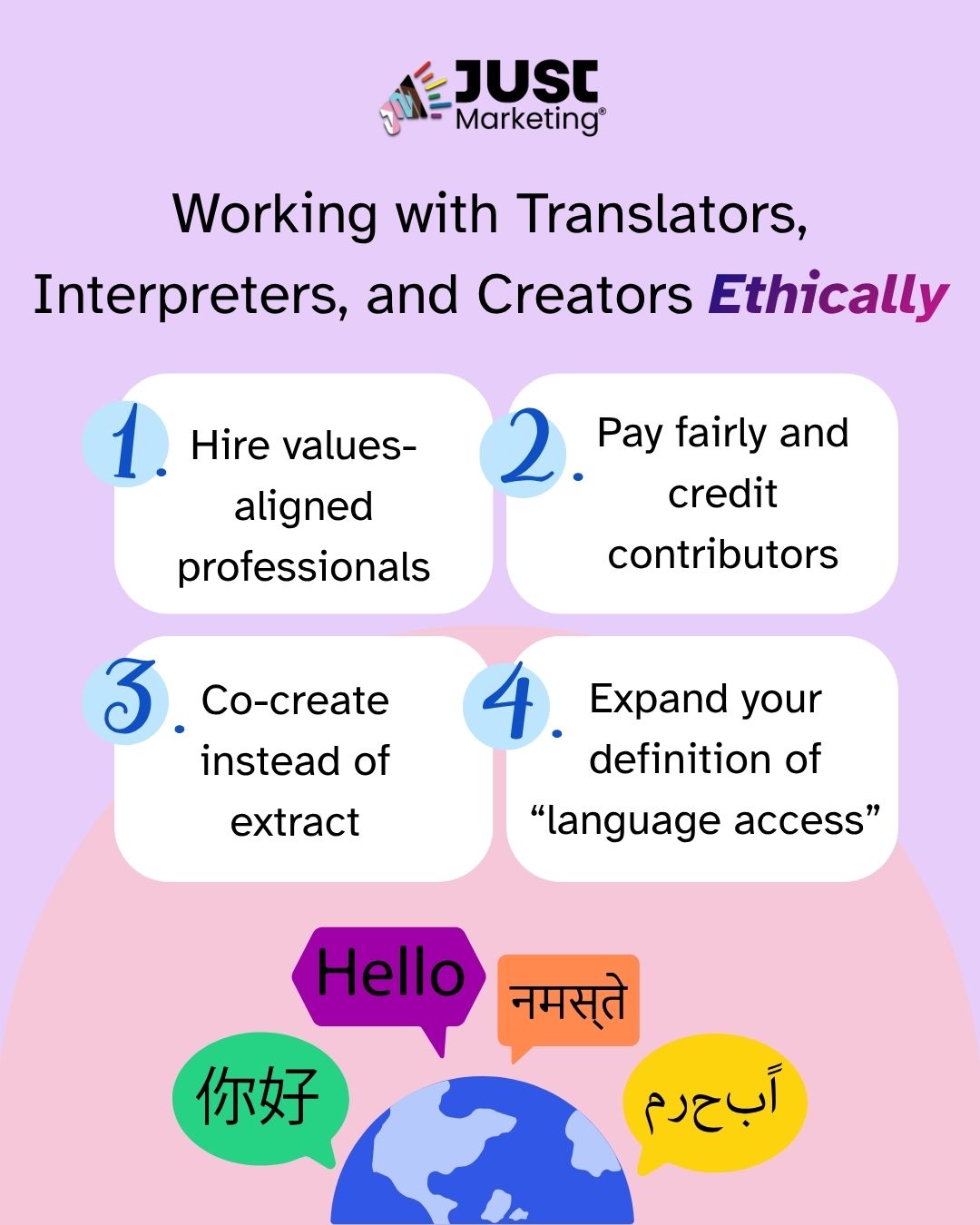
1. Hire values-aligned professionals
Look for translators, interpreters, and language consultants who understand the nuances of your audience – and your mission. Bonus points if they have experience in marketing or your specific industry.
Don’t just choose the cheapest option. Choose the one who gets what you’re trying to say and who knows how to say it in ways that resonate culturally.
2. Pay fairly and credit contributors
Language work is skilled labor. These professionals are not just translating – they’re adapting tone, catching cultural issues, and often protecting you from saying something unintentionally harmful. They deserve to be paid accordingly.
When appropriate, credit them – especially if their contributions shape the content’s impact.
3. Co-create instead of extract
Rather than handing over a finished script and expecting a flawless translation, invite collaboration. Ask questions like:
- Does this phrase translate well?
- Would this example resonate with your community?
- Is there a better way to say this that aligns with your lived experience?
Co-creation ensures your message isn’t just technically correct – it’s emotionally and culturally relevant.
4. Expand your definition of “language access”
Language justice also includes accessibility for people who communicate in nonverbal ways or who process language differently. Think:
- ASL interpreters for live events or video content
- Accurate captions and transcripts (auto-captions often miss nuance)
- Image descriptions and alt text for visual content
- Clear, plain language for neurodivergent readers
Being inclusive means considering how people receive your message – not just what language it’s in.
Ethical collaboration takes more time. But it builds deeper trust, better content, and a brand that truly walks its talk.
Starting Where You Are – Small, Sustainable Shifts
If this all feels like a lot – that’s okay. You don’t have to overhaul everything overnight. Language justice is a practice, not a finish line. What matters is taking steps that align with your capacity and your values.
You can start small, and still make a real difference. Here are a few low-lift ways to begin:
- Add captions and transcripts to videos. Bonus points if you can offer them in more than one language.
- Translate a key piece of content. Your lead magnet, homepage, or booking page are great starting points. Choose a language that reflects your current or desired audience.
- Ask your community. Run a poll on Instagram or LinkedIn: What languages do they speak at home? Would they value multilingual content? Let them guide your next steps.
- Use plain language. Simple, clear writing helps everyone, especially neurodivergent folks, multilingual audiences, and people using translation tools.
- Audit your visuals. Does your imagery reflect the cultural and linguistic diversity you want to welcome? If not, swap in more inclusive stock photos or create visuals in multiple languages.
And remember – done is better than perfect. One thoughtful change is more impactful than a dozen performative gestures.
This isn’t about checking a box. It’s about building genuine relationships and creating content that invites more people to the table. Every shift you make toward language justice increases the chances that someone feels seen, respected, and included.
Language is a Justice Issue – And a Relationship Tool
Marketing isn't just about selling. It's about connection. And language is at the heart of that connection.
When we slow down and consider whose voices we center – and whose we’re unintentionally leaving out – we start building brands that reflect the world we want to live in. A world where more people are included from the start. A world where multilingual, multicultural, and neurodiverse communities aren’t an afterthought.
You don’t need to speak five languages or have a flawless translation strategy to move toward language justice. You just need to be intentional, curious, and willing to try, learn, and do better.
Because inclusive messaging isn’t about perfection… It’s about people.
Let’s Build More Inclusive Messaging, Together
Want more ideas like this? Let’s stay connected:
- Connect with me on LinkedIn or Instagram for weekly tips, reflections, and behind-the-scenes support.
- Curious what it’s like to work together? Learn more about how I help values-driven entrepreneurs simplify and strengthen their marketing.
- And if you’d love a steady stream of ethical marketing goodness in your inbox, join the email list for practical tips, gentle accountability, and zero guilt.