Community is one of the most powerful parts of ethical business. It’s where trust is built, ideas are exchanged, and people feel like they belong – especially in online spaces that can often feel isolating or transactional.
But here’s the hard truth: in many digital business models, paywalling community has become the norm.
The gist: Paywalling community means making connection, like group chats or peer support spaces, available only to paying clients. Offering at least one free, welcoming touchpoint and being transparent about what's paid helps more people find belonging, especially those facing financial or other barriers.
Part of the Marketing Accessibility series.
Maybe you’ve seen it – or done it yourself. Group chats, Slack spaces, Voxer threads, mastermind calls… all offered only to paying clients, framed as “exclusive bonuses” or “added value.” It’s not inherently manipulative, but it is worth questioning.
Because when we put connection behind a paywall, we risk sending the message that belonging must be earned.
In this post, we’re unpacking how paywalling community can unintentionally create barriers – especially for neurodivergent, disabled, or marginalized entrepreneurs – and what more inclusive, accessible alternatives can look like. This isn’t about calling anyone out. It’s about calling ourselves into new possibilities for building connection that’s rooted in care – not conversions.
Let’s explore how we can make community a practice, not a product.
What Does Paywalling Community Look Like?
Paywalling community means making connection, like group chats or peer support spaces, available only to paying clients.
Paywalling community doesn’t always look like a giant “members only” sign. In fact, it’s often framed as a benefit – a bonus Facebook group, Slack channel, or Voxer chat that comes with your course, program, or membership. It's sold as added value, something that sweetens the deal.
And in some ways, it is valuable. People crave connection, support, and belonging – and offering community access can absolutely enhance your services.
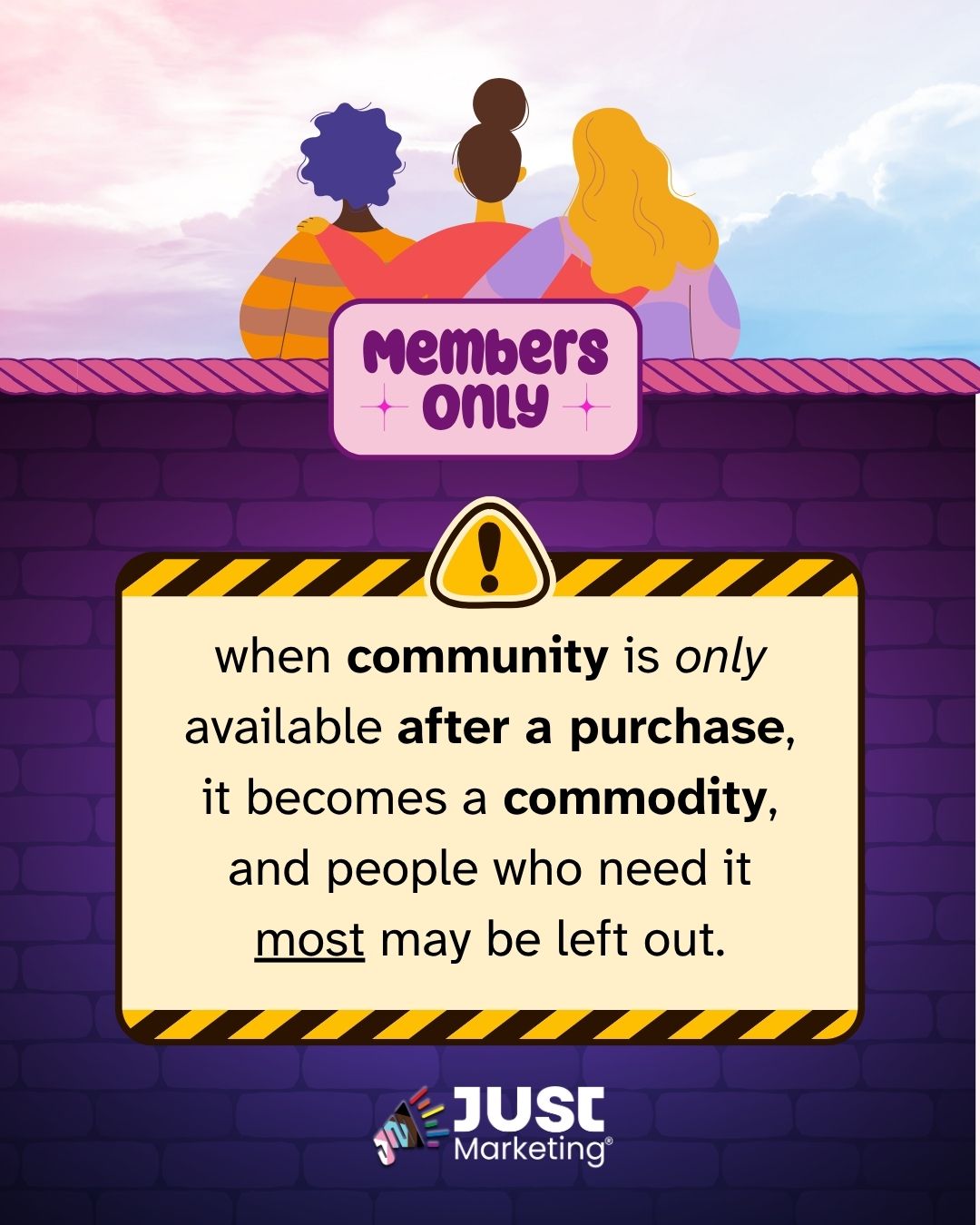
But when community is only available after a purchase, it becomes a commodity. It turns connection into something you have to buy into – rather than something that’s available by design.
Let’s break it down. Paywalling community might look like:
- A “private client-only” group that houses all your peer support and shared resources
- Framing connection and access to others as a limited-time bonus
- Messaging that suggests your community is exclusive, elite, or only for those who can “invest”
- Using FOMO language to imply that you’re missing out unless you pay to join
While these strategies are common – and often taught as “best practices” – they can unintentionally reinforce systems of exclusion, especially for folks who can’t afford to buy in right now, but still deeply need connection and support.
When access to community is conditional, people who need it most may be left out.
The intention might be to protect your energy or create a container for your clients. That’s totally valid. But there are ways to do that without locking belonging behind a price tag – and we’ll dig into those in the next section.
Who Gets Left Out When We Paywall Community?
Paywalling community doesn’t just shape who’s inside your space – it directly impacts who’s left out.
When community is something people have to buy into, those who are already facing systemic barriers – financial, cognitive, emotional – often get excluded. Not because they’re not aligned or interested, but because the door was never open without a transaction.
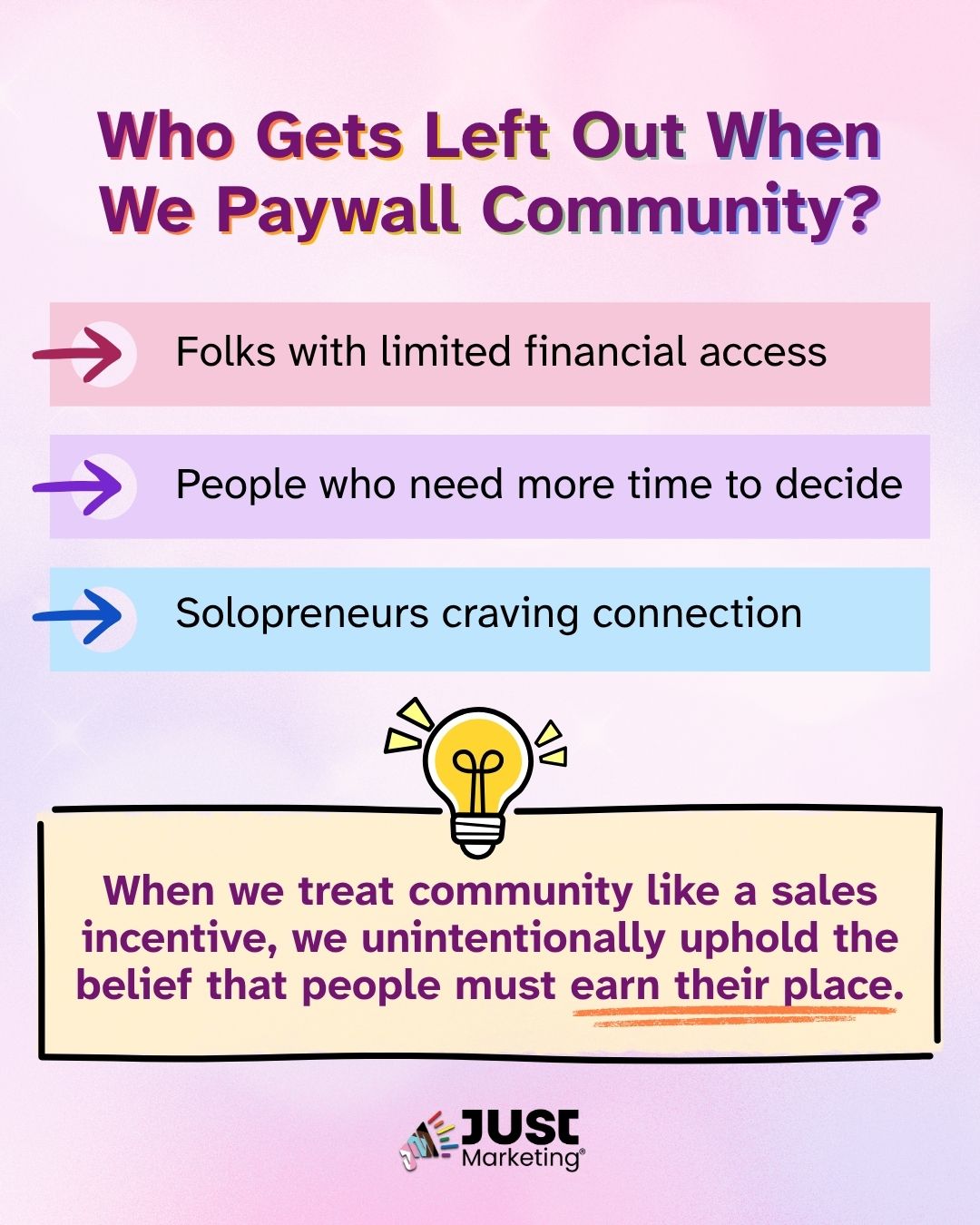
Here’s who often gets left out:
Folks with limited financial access
Neurodivergent entrepreneurs, disabled creators, and folks from historically excluded communities are more likely to face economic challenges. When the only way to access support is through payment, many are shut out before they even get started.
People who need more time to decide
Some of your most aligned future clients might need time to build trust, understand the offer, or regulate nervous system responses before making a purchase. If community is locked away behind a deadline or “fast action” bonus, they may never feel welcome enough to join.
Solopreneurs craving connection
Entrepreneurs navigating business alone – especially those who are newer or feel isolated – might be looking for a sense of belonging before they’re ready to invest. When connection only exists behind the scenes, they stay in the margins, not in the room.
And beyond individual exclusion, there’s a bigger pattern: When we treat community like a sales incentive, we unintentionally uphold the belief that people must earn their place.
This mimics harmful systems many of us are actively trying to unlearn: capitalism, gatekeeping, ableism, and the false idea that value is tied to output or income. And while that may not be the intention, the impact is still real.
Accessible community shouldn't be a luxury. It should be a reflection of your values.
How Can I Offer Community Without Burning Out?
You can protect your energy, honor your capacity, and still offer community without locking it behind a paywall. This isn’t about overextending yourself or offering everything for free – it’s about creating access points that reflect your values and invite in more of the right people.
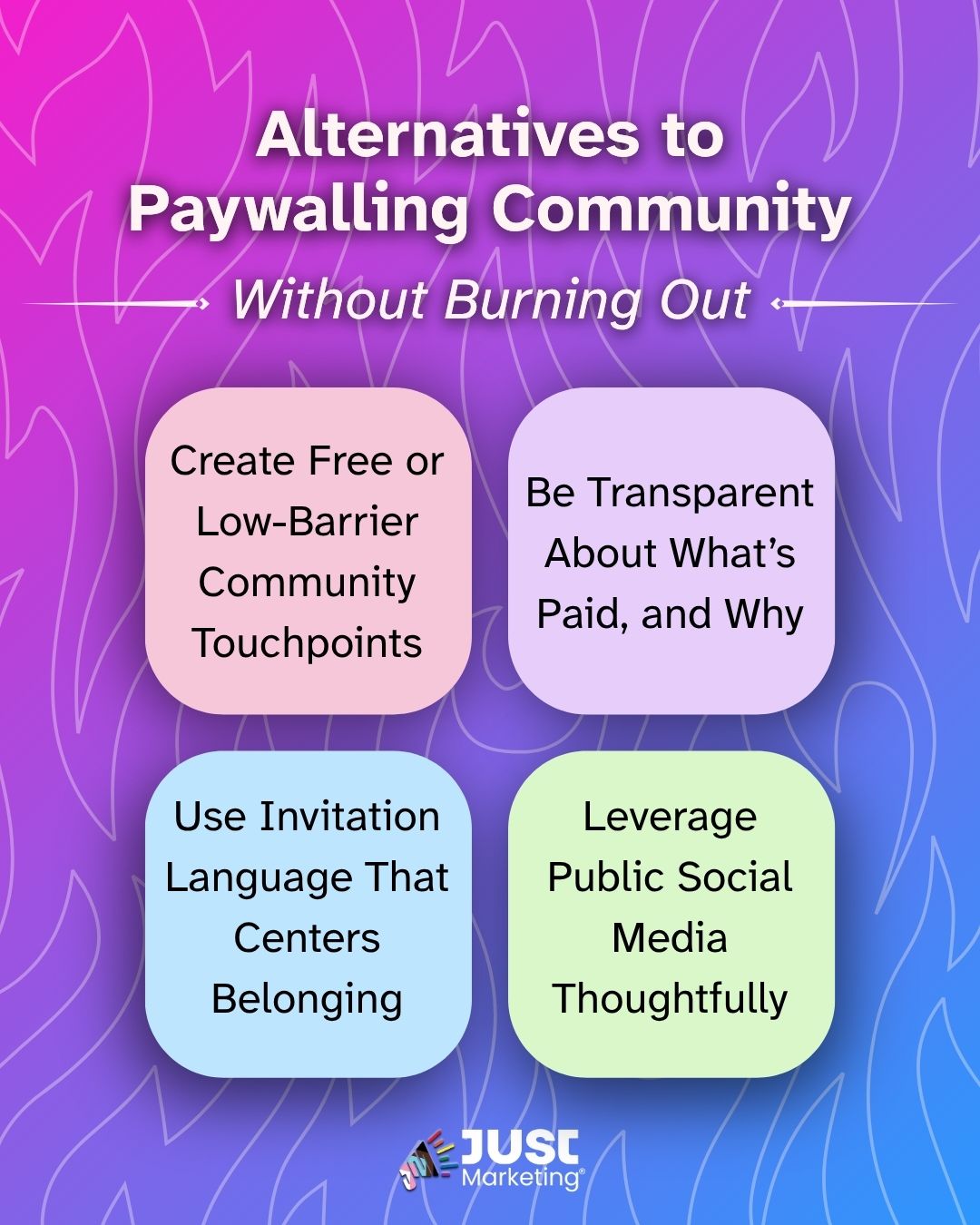
Here are a few ways to build connection without making people “pay to belong”:
1. Create Free or Low-Barrier Community Touchpoints
Not every space needs to be open access – but could there be one place where people can connect without buying?
Some examples:
- A free monthly coworking session or community call
- A lightly-moderated, no-pressure Facebook or Discord group
- Public-facing comment threads on LinkedIn or Instagram where you intentionally create space for dialogue
Community doesn’t have to be big to be impactful – it just has to feel welcoming.
2. Be Transparent About What’s Paid – and Why
If some parts of your community do live behind a paywall, explain that clearly and compassionately. Frame it as a boundary rooted in your capacity, not a hierarchy of value.
For example:
“To keep my paid clients supported and my own energy protected, I reserve this space for folks inside the program. But you’re always welcome to join my free monthly chats or connect with me on Instagram!”
Transparency builds trust and shows you’re not using access as a carrot – you’re being intentional with your time and care.
3. Use Invitation Language That Centers Belonging
So many sales pages and launch emails lean into exclusivity and urgency:
“Only a few will get in.”
“This is your one shot.”
“You’ll miss out if you wait.”
Try flipping that script.
Use words like:
- “This space is designed to feel welcoming, not overwhelming.”
- “You're invited to join when you're ready.”
- “You already belong here – even if now’s not the right time to buy.”
Belonging isn't a bonus – it’s the baseline.
4. Leverage Public Social Media Thoughtfully
If a full-blown free community feels out of reach right now, that’s okay. You can still foster meaningful connection in small but powerful ways:
- Ask open-ended questions in your Instagram Stories
- Host a live session with no pitch, just presence
- Respond to DMs with warmth and curiosity, not urgency
Remember: You don’t need to be everywhere, everything, or everyone’s community space.
You just need to create pockets of welcome – where people know they’re seen, even if they’re not ready to buy.
Does Offering Free Community Pay Off?
There’s a narrative in online business that says: if you give too much for free, people won’t value it – or they won’t pay you later.
But when it comes to community, the opposite is often true.
When you lead with generosity, openness, and accessibility, you create something more powerful than a sales funnel: you build trust.
And trust is the foundation of any sustainable, values-aligned business.
Here’s what happens when you stop paywalling community:
- People feel safe engaging with your brand before they ever spend a dollar.
- Your work becomes word-of-mouth worthy because people share how seen and supported they feel in your spaces.
- You build a values-aligned audience that doesn’t just buy because of FOMO – but because they resonate with your mission and feel part of your world already.
This kind of marketing isn’t manipulative. It’s magnetic.
Accessible community creates a ripple effect.
- A person who felt excluded elsewhere finally finds their place.
- Those unsure about investing can take their time – and come back when it feels right.
- Even folks who never become clients may still amplify your work, simply because they believe in what you stand for.
This is how we shift from extractive business models to ethical ecosystems – where everyone benefits, and no one is left out.
Let’s Rethink Paywalling Community in Ethical Business Models
Paywalling community isn’t always intentional – or inherently harmful. Often, it’s something we do because it’s what we’ve seen work, or what we’ve been taught to do in traditional business spaces.
But when we pause to ask who gets left out, we open the door to more inclusive, values-aligned possibilities.
Because, you don’t need to gatekeep connection to protect your time.
You don’t need to package belonging as a bonus to make your offers valuable.
And you definitely don’t need to follow someone else’s formula to build a thriving, trust-based business.
Your community can be built on access, care, and intention – and still support your capacity and income goals.
Want to Build Connection Without Barriers?
Let’s keep this conversation going… Because community shouldn’t be a commodity – and marketing doesn’t have to leave people out.
- Join me on LinkedIn or Instagram – I’d love to hear your thoughts on accessible, inclusive community spaces.
- Ready to create ethical offers that feel good and convert? Learn more about working with me here.
Get more values-aligned marketing ideas in your inbox when you join my email list.
FAQs
Absolutely! Paid communities can offer deeper support and help sustain your business. The key is being clear about what's included and why it's paid, plus offering at least one free way for people to connect with you and each other.
Start small with something that fits your capacity, like a monthly coworking session or an open comment thread on LinkedIn. Set clear boundaries around when you'll show up, and keep moderation light. A small, welcoming space can be just as meaningful as a big one.
Choose a platform your audience already uses and finds easy to navigate, such as a Facebook group, a Discord server, or the comments on your social posts. Checking that the space works well with screen readers and on mobile helps everyone participate.
Frame it around your capacity and your clients' needs. For example: “To keep my paid clients supported and my energy protected, I reserve this space for program members. You're always welcome at my free monthly chats.” Honest context builds trust with members and non-members alike.
Free community often builds the trust that leads to future sales. People who feel welcomed early tend to share your work with others and come back when the timing is right. Many become clients precisely because they already feel at home in your space.
Add captions to live calls, share recordings for anyone who can't attend in real time, and post clear community guidelines so everyone knows what to expect. Offering ways to participate asynchronously helps people with different schedules and energy levels. See our community agreements for an example.