Ever clicked “buy now” on something you were excited about – only to be instantly met with a pop-up shouting, “WAIT! This is your ONLY chance to upgrade!”?
Ugh. 😩
That is a classic One-Time Offer (or OTO for short). It’s a sales tactic baked into a lot of online funnels, designed to squeeze a little more money out of you before you even finish celebrating your purchase.
The gist: A one-time offer (OTO) is an upsell that appears right after a purchase, often with a discount that supposedly disappears if you leave the page. OTOs become manipulative when they rely on fake urgency or shame. Ethical alternatives include sharing upgrades before checkout and following up later with offers that stay available.
Marketers love them because they boost the average order value. But for the buyer? It often feels like a bait-and-switch. Like you're being told: “Congrats on your purchase, but it’s not really good enough unless you add this thing too…”
And for neurodivergent folks or anyone already dealing with decision fatigue, OTOs can trigger stress, guilt, and that icky pressure to act fast or miss out forever.
This post is here to call it out – without shame. We’re breaking down:
- What One-Time Offers actually are,
- What makes traditional OTOs so problematic,
- How they mess with trust and accessibility,
- And how you can reimagine post-purchase offers in a way that’s actually kind, clear, and consent-based.
Because yes, you can offer more without compromising your values – or overwhelming your audience.
What Exactly Is a One-Time Offer (OTO)?
A One-Time Offer, or OTO, is a sales tactic that shows up immediately after someone makes a purchase – often in the form of a pop-up or redirect – promising an “exclusive” upgrade, bonus, or add-on that is only available for a limited time (usually a few minutes or even seconds).
Think of it like this:
You just bought a $27 mini-course, and before you can even access the thank-you page, you're hit with a $97 “can’t miss” bundle that complements your purchase… but only if you act right now. If you click away, you’re told you’ll never see this deal again.
The logic behind OTOs is rooted in conversion math:
- You’re already in buying mode – so you’re more likely to say yes again.
- Creating urgency can push quick decisions.
- Offering a discount makes it feel like a steal.
And sure, that strategy might technically work. But here’s the thing: just because it works doesn’t mean it’s right.
When used unethically, OTOs rely on pressure, fear of missing out, and manipulated urgency – which can cause real harm, especially for buyers who are already navigating decision fatigue, financial sensitivity, or a history of being sold to in shady ways.
It’s not the offer that’s inherently bad – it’s how it’s framed, how it’s timed, and whether it honors your buyer’s consent and autonomy.
Why Are One-Time Offers Harmful?
On the surface, an OTO might seem like a generous bonus or a savvy business move. But when we look at how these tactics actually feel to the buyer – especially buyers who are neurodivergent, financially cautious, or value-aligned – the impact tells a different story.
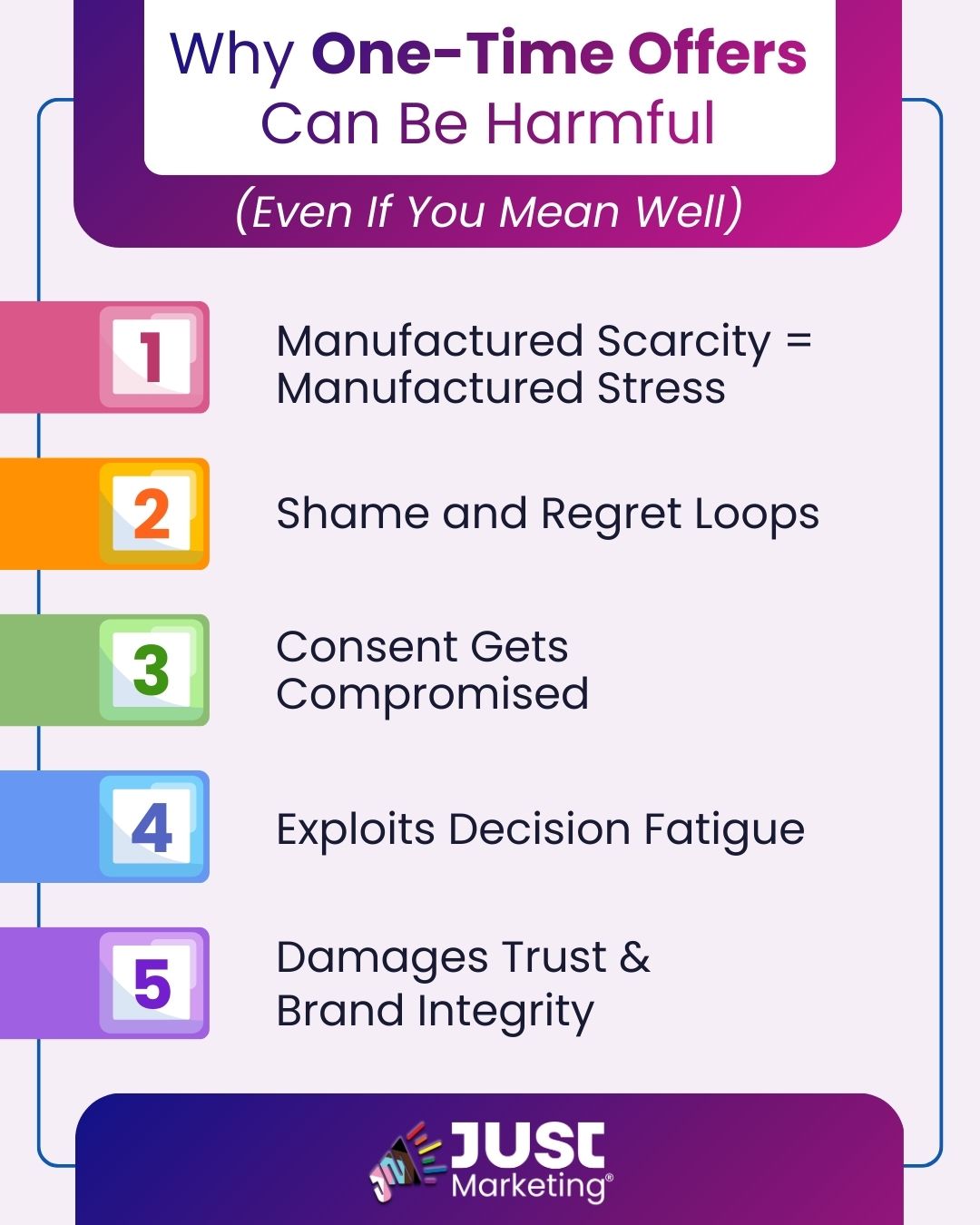
Here’s why One-Time Offers can cross the line from helpful to harmful:
1. Manufactured Scarcity = Manufactured Stress
OTOs rely on artificial urgency – “You’ll never see this again” – even though the same or similar offer is often available elsewhere (or later, in a different format).
This kind of pressure hijacks decision-making, pushing people into choices they haven’t had time to fully consider. That might boost short-term sales, but it chips away at long-term trust.
For neurodivergent folks – especially those with ADHD or anxiety – this urgency can trigger fight-or-flight instead of clarity and confidence.
2. Shame and Regret Loops
The framing of most OTOs implies that if you don’t say yes, you’re making a mistake.
Messages like “Smart entrepreneurs don’t skip this” or “Don’t miss your only chance” create a no-win situation: either buy under pressure or walk away and feel like you’ve done something wrong.
That’s not consent – that’s coercion with a smile.
3. Consent Gets Compromised
A core principle of ethical marketing is informed, enthusiastic consent. But OTOs show up after a purchase has already been made – often before the buyer has even received what they paid for.
This is like saying yes to dinner plans, only to have someone immediately upsell you to an entire weekend retreat. It’s jarring, unexpected, and makes the original “yes” feel like it wasn’t enough.
4. Exploits Neurodivergent Thinking & Decision Fatigue
Many ND folks deal with decision paralysis, time blindness, and difficulty filtering urgency. OTOs capitalize on those exact challenges – often leading to overbuying, buyer’s remorse, or total checkout shutdown.
Instead of respecting the cognitive load involved in purchasing, OTOs throw one more high-stakes decision into the mix.
5. Damages Trust & Brand Integrity
You worked hard to build a brand rooted in authenticity, values, and connection. OTOs – especially the “you’ll never see this again” kind – can feel manipulative and diminish that trust in seconds.
Even if someone buys, they may walk away questioning your intentions.
The problem with OTOs isn’t just the pop-up – it’s the pressure, the shame, the lack of transparency, and the way it prioritizes conversion over care.
What Are Ethical Alternatives to One-Time Offers?
You can grow your revenue and serve your audience without the disappearing pop-ups or last-chance FOMO. In fact, when you prioritize trust and autonomy, your sales process becomes more sustainable and more inclusive.
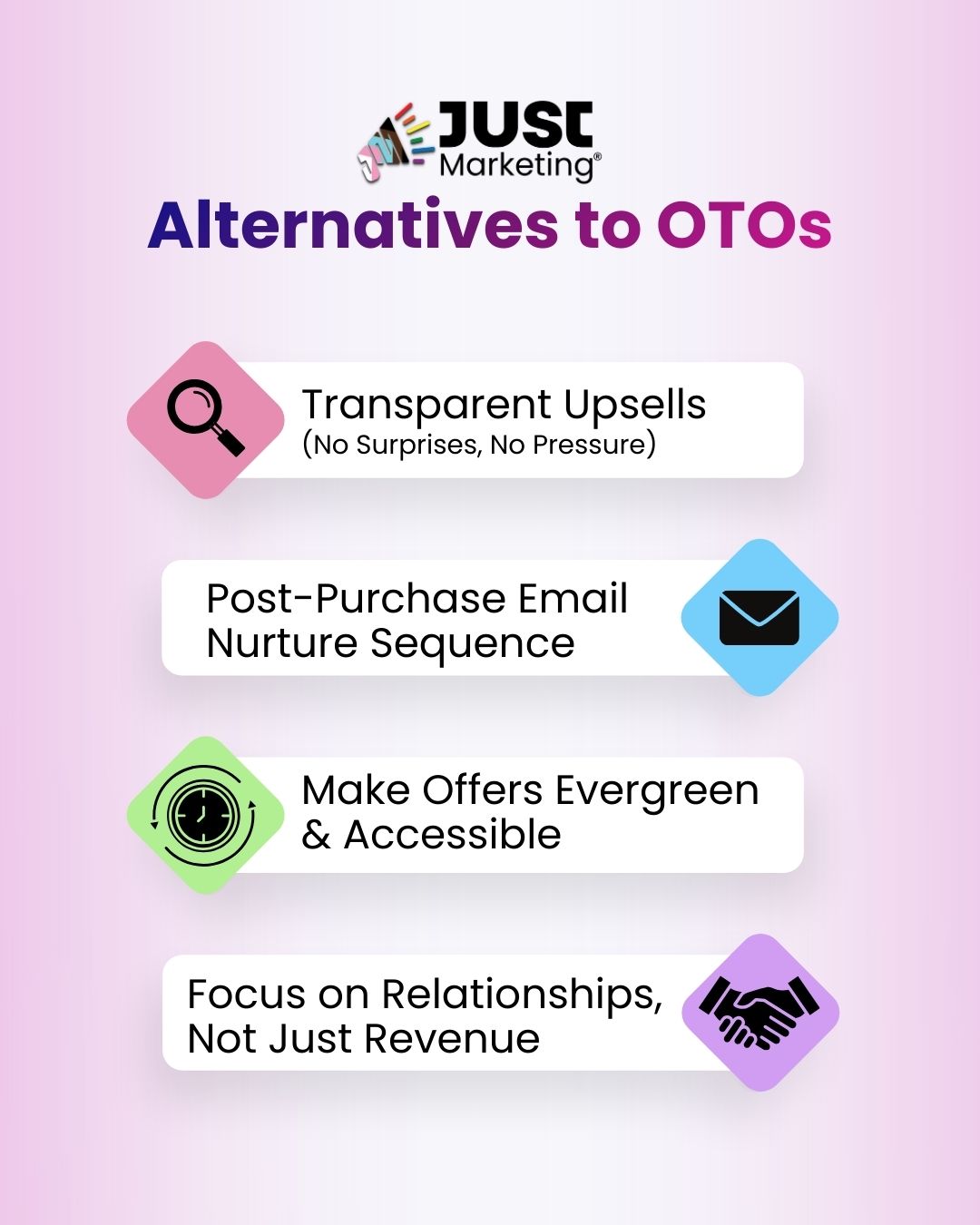
Here are four values-aligned alternatives to One-Time Offers that respect your audience and still support your business goals:
1. Transparent Upsells (No Surprises, No Pressure)
Let your audience know up front what other offers or upgrades are available – no sneaky pop-ups or surprise detours after checkout.
You can:
- Mention an add-on before they check out.
- Include upgrade options on your sales page.
- Offer a clear “next step” in your thank-you email.
Why it works: Transparency builds trust. Buyers appreciate knowing what’s available without being pressured into a split-second decision.
2. Post-Purchase Email Nurture Sequence
Instead of ambushing buyers immediately after they pay, create a gentle post-purchase sequence that:
- Celebrates their investment,
- Delivers what they bought with care, and
- Introduces relevant next-step offers once they’ve had time to engage.
Example: “Loving [Course Name]? Here’s an advanced training our students often take next – available any time you’re ready.”
Why it works: It honors the buyer’s timeline and gives them room to say “yes” from a place of clarity – not panic.
3. Make Offers Evergreen & Accessible
If an upsell or bonus is genuinely helpful, why limit it to 15 minutes?
Create evergreen versions that are always available – or explain the real reason if something is time-limited (like a live cohort, limited 1:1 support, etc.).
You can still promote urgency ethically:
- “Enrollment closes Oct 31 because we kick off live on Nov 1.”
- “I only take 5 private clients at a time – here’s the waitlist.”
Why it works: Real scarcity is about capacity and care – not fabricated countdown timers.
4. Focus on Relationships, Not Just Revenue
It’s tempting to optimize for that immediate post-purchase bump, but remember: ethical marketing is a long game.
Instead of squeezing every dollar from one transaction, ask:
- How can I make this first experience so good they come back for more?
- What can I offer that genuinely supports their journey?
When people feel safe and supported, they come back because they trust you – not because you pressured them.
A consent-forward funnel respects the buyer’s brain, bandwidth, and boundaries. It says: “I believe in the value of what I offer – and I trust you to choose it when you’re ready.”
How Do One-Time Offers Affect Marginalized Buyers?
We’re not just talking about conversion rates here. One-Time Offers – when used unethically – can have ripple effects that harm the very people we’re trying to serve. Especially when your audience includes trauma survivors, marginalized people, or neurodivergent folks, these tactics don’t just create friction – they create harm.
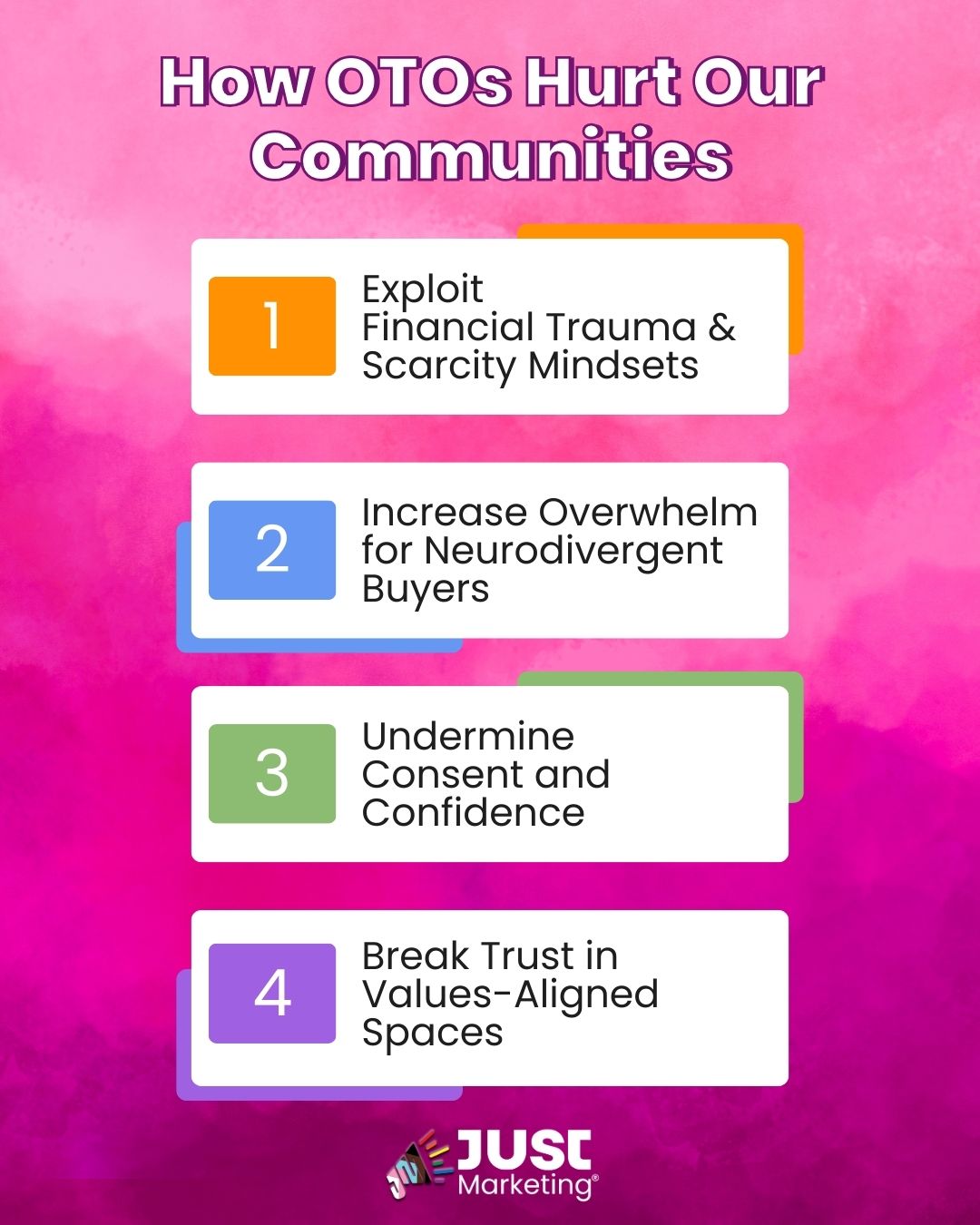
Let’s unpack that:
1. They Exploit Financial Trauma & Scarcity Mindsets
Many people – especially those from historically excluded communities – carry trauma around money. Urgent “Buy now or miss out forever!” messages can activate stress responses rooted in survival, not strategy.
That’s not empowerment. It’s exploitation.
And for buyers with limited income or inconsistent cash flow, being told they’re missing a one-time chance can lead to guilt, regret, or self-judgment – even if they made the right decision for themselves.
2. They Increase Overwhelm for Neurodivergent Buyers
OTOs often require instant decision-making under pressure, which can be incredibly difficult for people with:
- ADHD
- Autism
- Anxiety
- Executive dysfunction
For these folks, urgency = shutdown.
You’re not just asking for a quick yes – you’re adding cognitive load in a moment when they already thought the transaction was complete.
3. They Undermine Consent and Confidence
People want to feel empowered in their purchases – not second-guessing whether they “missed out” or made a mistake.
When you frame an upgrade as “now or never,” you remove their ability to make an informed, grounded decision. That’s not just bad marketing – it’s anti-consent.
Over time, this kind of pressure-based sales environment teaches buyers to doubt themselves. And that’s the opposite of what we’re here to do.
4. They Break Trust in Values-Aligned Spaces
If you’re building a brand rooted in justice, equity, and inclusion, your sales process needs to reflect that.
When buyers experience manipulation – even subtle – it creates a disconnect between your message and your methods. And that disconnect can make them hesitate to engage again (even if your offer was great).
These tactics don’t just affect individual buyers – they reinforce extractive, oppressive marketing systems that we don’t have to replicate.
But here’s the good news: you can sell ethically.
You can increase conversions and stay in integrity.
And you can build funnels that serve without shame.
An Ethical Sales Funnel Doesn’t Rush Consent
Urgency doesn’t equal value. Just because someone can make a split-second decision doesn’t mean they should be expected to – especially if they’re navigating financial stress, decision fatigue, or a neurodivergent brain.
In ethical marketing – in Just Marketing® – consent isn’t something you bypass for better conversions. It’s foundational. And that means:
- Letting people opt in without pressure.
- Giving them time to process.
- Trusting that the right-fit buyers will still say yes – without the countdown clock breathing down their neck.
We’re not here to manipulate people into panic-purchasing. We’re here to serve.
What If We Let Buyers Breathe?
When you build a funnel with transparency, generosity, and respect, you’re not just being kind (though yes, it is cool to be kind) – you’re building something more sustainable.
Because when people:
- Know what to expect
- Feel like they’re in control
- Are supported instead of pressured
They’re more likely to stay. To come back. And to trust you.
And trust is a way better metric than your upsell conversion rate.
Just Marketing® is about marketing that aligns with your values and your audience’s needs. It’s about relationships over revenue hacks. Consent over conversion tricks. And long-term impact over short-term gains.
Because you don’t have to rush people to get results – you just have to respect them.
Let’s Keep the Conversation Going
Have you ever clicked “buy” and instantly regretted it when a surprise upsell popped up?
Or have you tried using OTOs yourself and wondered if there’s a more aligned way to offer more without the pressure?
I’d love to hear what’s worked (and what hasn’t). Let’s connect on LinkedIn or Instagram and talk about what it looks like to create sales experiences rooted in trust, not tricks.
FAQs
An upsell is any offer to upgrade or add on, and it can happen anytime. A one-time offer is a specific kind of upsell that appears right after checkout with a “now or never” framing. Upsells can be completely ethical when they're transparent and optional. Learn more about ethical upsells.
OTOs on their own are legal. Trouble starts when the “one-time” claim isn't true, like a deal that keeps reappearing. The FTC's 2022 dark patterns report flagged false scarcity claims and countdown timers designed to trick consumers into believing they have limited time to buy. Keeping your offers honest keeps you on solid ground.
They can raise average order value in the moment, which is why they're so common. That bump can come with costs, like more refund requests or buyers who feel pressured and don't return. Many values-driven businesses find that transparent, ongoing offers build steadier revenue over time.
Give buyers time to enjoy their purchase first, then mention the upgrade in a follow-up email a few days later. Keep it available on an ongoing basis and explain who it's best for. A post-purchase sequence works much like a welcome sequence that nurtures without pressure.
Start with what buyers need most: how to access their purchase and when to expect it. Add a way to reach you with questions, plus, if you'd like, a calm link to learn about a related offer whenever they're ready.
Tripwires are low-cost offers designed to turn browsers into buyers, and OTOs often pop up right after a tripwire purchase. Together they form the classic “bait-and-upsell” funnel. Here's how to create tripwires that serve your audience.