You’ve been there – you're ready to buy that course, workshop, or bundle that finally feels like a good fit. You click “checkout,” already imagining the relief of crossing this off your to-do list.
But wait.
Now there’s an “exclusive offer” you can’t pass up. Then another. And before you can even get to the payment screen, you're clicking through a gauntlet of pop-ups and add-ons. You start questioning your decision. You feel a little overwhelmed, maybe even manipulated.
That’s upsell pressure – and it’s more common than you’d think.
The gist: Upsell pressure is the push buyers feel when extra offers pop up between “buy now” and the payment screen, often wrapped in urgent or guilt-heavy wording. Ethical upselling shares one closely related upgrade right on the checkout page, so people can choose yes or “no thanks” with confidence.
Here’s the thing: Upsells can be helpful. When done with care, they offer more value to people who genuinely want it. But when they’re stacked aggressively between someone and the “complete purchase” button? That’s when we start slipping into unethical territory.
In this post, we’re breaking down what upsell pressure really is, how it harms your customer experience (especially for neurodivergent folks), and how to offer upgrades that feel empowering – not pushy.
Let’s build sales funnels that serve, not stress.
What Is Upsell Pressure?
Upsell pressure happens when you're bombarded with unexpected upgrade offers before you can finish checking out – often in a way that feels rushed, overwhelming, or manipulative.
Upsell pressure turns what should be a smooth buying experience into a psychological obstacle course. You’re clicking “buy now” expecting a quick transaction, but instead you’re met with:
- Multiple pop-ups interrupting your flow
- Wording like “Don’t miss this or you’ll regret it!”
- Forced detours through extra pages or bundles before reaching the payment screen
These tactics are often framed as “normal” marketing strategy – just good business, right? But here’s the truth:
Upsell pressure prioritizes conversions over consent.
It hijacks the customer’s decision-making process in order to squeeze out a few more dollars – often at the cost of trust, accessibility, and long-term loyalty.
That’s a high price to pay for a quick win.
Why Is Upsell Pressure Harmful?
If you’ve ever felt overwhelmed or second-guessed a purchase because of a pushy checkout flow, you already know: upsell pressure doesn’t just mess with your conversion rate – it messes with your customer’s experience.
Here’s how:
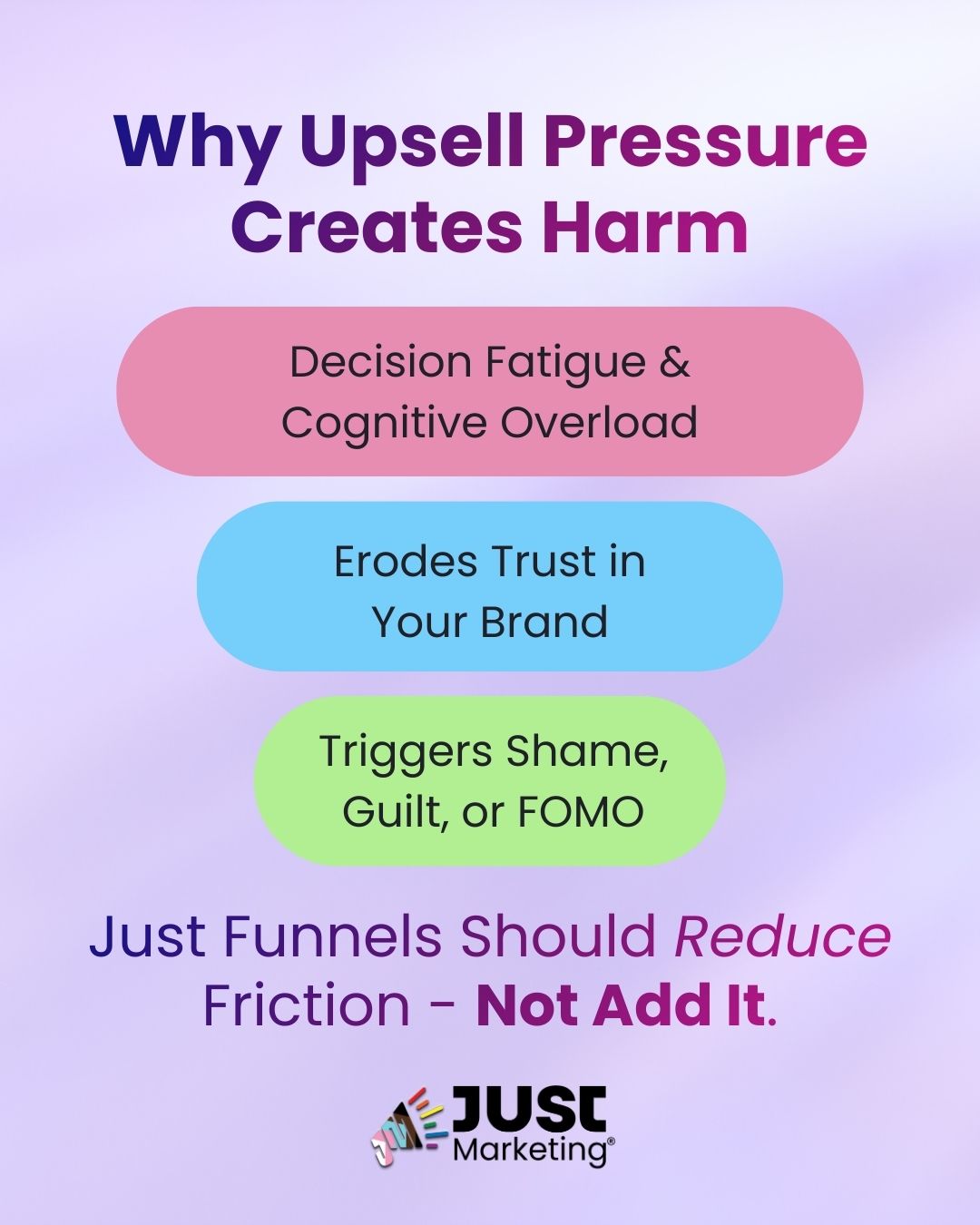
1. Decision Fatigue & Cognitive Overload
Imagine your brain as a browser with too many tabs open – and the checkout page keeps adding more.
When buyers are presented with multiple last-minute offers, their mental load increases dramatically. This is especially challenging for neurodivergent folks, who may already be navigating sensory overload, time-blindness, or executive dysfunction.
Instead of supporting a smooth yes, upsell pressure creates mental friction – which often leads to cart abandonment, not conversion.
2. Erodes Trust in Your Brand
When someone clicks “buy now” and is immediately redirected to “but wait, there’s more!” messaging, it feels like a bait-and-switch.
It can send the message that the original offer wasn’t complete or valuable enough – which plants seeds of doubt.
And let’s be real: once trust is cracked, it's hard to repair. Ethical marketing isn’t about squeezing the most out of a moment – it’s about building relationships that last.
3. Triggers Shame, Guilt, or FOMO
Many upsell flows are designed to push emotional buttons:
- “Smart entrepreneurs always choose the deluxe option…”
- “You’re missing out if you skip this one-time deal!”
- “You forgot something important!”
This kind of language may seem persuasive on the surface, but it’s rooted in shame and scarcity. It can make customers feel like they're making the “wrong” choice if they say no – or worse, like they're not good enough, committed enough, or savvy enough.
That’s not informed consent. That’s manipulation.
Just Funnels Should Reduce Friction – Not Add It
You can absolutely offer more value, upgrades, or bonuses. But the way you present them matters. When the buying process becomes a test of endurance or emotional resilience, something's broken.
Marketing that aligns with Just Marketing® values centers consent, clarity, and compassion – not pressure.
What Does Ethical Upselling Look Like?
Let’s be clear: upselling itself isn’t unethical.
It’s how you do it that makes the difference.
When approached with care and consent, an upsell can be a genuinely supportive next step – not a manipulative roadblock. Here’s what ethical upselling looks like in practice:
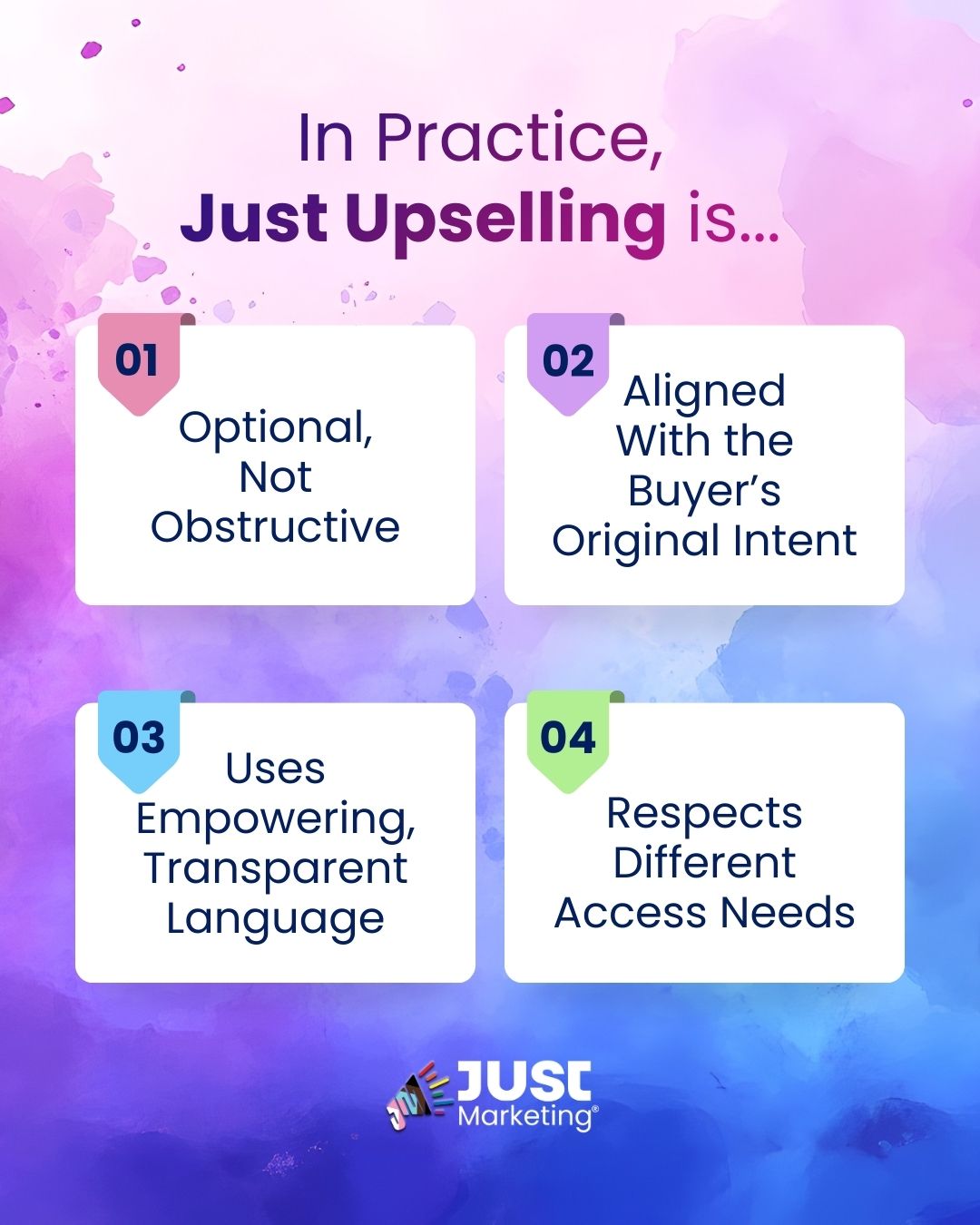
1. It's Optional, Not Obstructive
An ethical upsell never stands between someone and their purchase.
That means no forced detours, no multi-step funnels they didn’t ask for, and no “wait, don’t go!” pop-ups before the credit card even hits submit.
Instead:
- Offer one clearly positioned upgrade option on the same page as the purchase.
- Make it easy to say “no thanks” and move on.
Your customer’s time and autonomy are more valuable than a bump in your average order value (AOV).
2. It’s Aligned With the Buyer’s Original Intent
Upsells should enhance what your buyer already said yes to – not derail them with something unrelated or unnecessary.
For example:
- If someone’s buying a workshop, offer the replay or workbook.
- If they’re purchasing a coaching package, offer a related template bundle or bonus session.
Ask yourself: “Would this genuinely help them succeed faster, easier, or with more support?” If not, it’s not the right upsell.
3. It Uses Empowering, Transparent Language
Avoid hype. Skip the FOMO. Trash the “only smart people buy this too” vibe. Instead, try language that honors the buyer’s autonomy:
- “This might be helpful if…”
- “Want a little extra support?”
- “Totally optional, but here if you want it!”
When you let people lead their own decision-making, they’re more likely to say yes from a place of confidence, not coercion.
4. It Respects Different Access Needs
Some buyers need a simple checkout experience with minimal distractions – especially those with ADHD, anxiety, or sensory sensitivities.
Ethical upselling means designing for clarity and ease:
- Minimal clicks
- Clear formatting
- No overwhelming visuals or timers
- A calm, supportive tone
Accessibility is conversion support.
When you focus on respect over revenue, you build a sales process that feels good for everyone involved – including you.
How Can I Tell If My Funnel Uses Upsell Pressure?
Feeling a little called out? No shame – we’ve all tested strategies that didn’t align once we looked closer.
The goal isn’t to scrap every upsell. It’s to make sure your funnel centers your values – not outdated marketing playbooks.
Here’s a quick self-audit to help you spot (and stop) upsell pressure:
Ask Yourself:
- Am I surprising buyers with extra offers they didn’t expect?
Ethical upsells are transparent and anticipated – not hidden behind the “buy now” button. - How many clicks stand between “buy” and “done”?
If it’s more than one extra screen, it’s worth reviewing for friction. - Do my upsells relate directly to the original offer?
Stay relevant. Random add-ons feel spammy and confusing. - Is my upsell language empowering or pressuring?
If you catch any “don’t miss out”s or “only smart people choose this,” it’s time for a rewrite. - Would I feel respected going through this process as a buyer?
This one’s the real test. Put yourself in your audience’s shoes – especially if they’re neurodivergent or overwhelmed.
If you’re not sure how your funnel feels, ask a trusted peer to walk through it and reflect back their experience – especially someone in your ideal audience.
You Deserve to Sell Without Shame
Here’s the truth most bro-marketers won’t tell you: You don’t need pressure tactics, sneaky upsells, or guilt-inducing language to make sales.
In fact, when your sales process reflects your values – consent, clarity, compassion – people feel safe to say yes. And that yes? It’s stronger. It’s more aligned. It builds real trust.
So if you’ve ever felt gross about marketing…
If you’ve ever worried that removing upsells would “leave money on the table”…
Or, if you’ve ever wanted permission to do things differently…
This is it.
- You don’t have to choose between your integrity and your income.
- You can sell with soul and strategy.
- You can build funnels that serve – not manipulate.
Let’s keep building ethical, inclusive, and empowering buyer journeys that feel good for everyone involved. That’s Just Marketing®.
Let’s Keep the Conversation Going
Have you ever been ready to check out – only to feel trapped in a maze of last-minute offers that made you question everything?
Or maybe you’ve built your own funnel and thought, “Is this upsell actually helpful… or just pushy?”
I’d love to hear your take. What upselling strategies have felt good – and which ones made you cringe?
Let’s connect on LinkedIn or Instagram and talk about what it really means to create ethical sales experiences that respect your audience and reflect your values. Because selling should feel good – for everyone.
FAQs
An upsell is an offer to upgrade or add to something a customer is already buying, like adding the replay and workbook to a workshop ticket. Done well, an upsell gives extra support to people who genuinely want it. For a closely related tactic, see how to use one-time offers ethically.
Upselling can be a perfectly ethical way to offer more value. Trouble starts when offers stand between someone and their purchase or lean on guilt and fake urgency to get a yes. A good gut check: would you feel respected going through your own checkout as a buyer?
An upsell offers a bigger or better version of what someone is buying, such as a premium tier or an add-on that enhances the original. A cross-sell suggests a separate but related product, like a template bundle alongside a coaching package. Both work best when they match what the buyer came for.
One is plenty for most small businesses. Place a single, clearly related upgrade on the same page as the purchase, with an easy way to skip it. If buyers click through extra screens before they can pay, that flow is worth simplifying.
Stacked upsells can actually increase cart abandonment, since every extra decision adds mental load right when someone is ready to pay. A calm, simple checkout builds the kind of trust that brings buyers back for future purchases. Learn more about building consent-based funnels that convert.
Keep clicks to a minimum and use clear, uncluttered formatting. Skip countdown timers and flashy visuals, and write upgrade offers in a calm, low-pressure tone. This approach reflects Just Marketing®, which is ethical, inclusive, and accessible, so your audience feels supported and your business grows sustainably. Check out the complete guide to Just Marketing®.