You’ve received the emails…
“You forgot something!”
“Don’t miss out – this deal’s almost gone!”
“Still there?”
Cue the guilt trip, the scarcity, the subtle implication that you're doing something wrong by not checking out.
Now, imagine getting that kind of message on a day when your executive dysfunction is flaring, or you’re already overwhelmed juggling work, life, and the 47 tabs open in your brain. (Been there.)
The gist: Abandoned cart emails are automated messages sent when someone starts a purchase or checkout but doesn't finish, like a half-completed course enrollment or call booking. Ethical abandoned cart emails check in with warmth and make it easy for people to ask questions or return to their cart whenever they feel ready.
Here’s the thing: abandoned cart emails can be helpful… when they’re rooted in support, not shame. But too often, they rely on outdated marketing tactics that manipulate emotions – especially fear and guilt – in an attempt to boost conversions.
As values-driven entrepreneurs, we get to do things differently.
In this post, we’re unpacking the problems with traditional abandoned cart emails – and sharing accessible, inclusive alternatives that respect your audience and encourage ethical sales. Because when we lead with empathy, we build trust – and trust is what really converts.
What Are Abandoned Cart Emails, Anyway?
Before we break down the harm (and the better way), let’s start with the basics.
Abandoned cart emails are automated messages sent when someone adds an item to their online shopping cart or begins a checkout process – but doesn’t complete the purchase.
They’re often used in e-commerce, but they show up in the online service world too:
- Someone signs up for your course but doesn’t pay.
- They start booking a call, then ghost.
- They almost enroll in your membership, but leave the page open for three days.
The idea behind abandoned cart emails is simple: remind people to complete their purchase and recover “lost” sales.
And to be fair, sometimes these reminders are helpful!
Maybe someone got distracted mid-checkout (ADHD life), or needed more info before saying yes. A gentle nudge can be just the thing that brings them back.
But here’s where it gets messy: Marketers are often taught to use urgency, FOMO (fear of missing out), or guilt to increase the chances of a sale. Instead of being helpful, these emails start to sound accusatory, pushy, or just plain ick.
Why Do Guilt-Based Abandoned Cart Emails Backfire?
Here’s the uncomfortable truth: a lot of “best practices” in abandoned cart emails are built on emotional manipulation.
You’ve probably seen lines like:
- “You forgot something!”
- “Your cart is about to expire!”
- “We’re holding your order… but not for long!”
- “Don’t miss out – this offer won’t last forever!”
At first glance, these look harmless – even helpful. But let’s look closer.
These phrases are designed to trigger shame, scarcity, and urgency – three emotions marketers have been told “convert.” The problem? They also create unnecessary pressure and friction for your audience, especially for neurodivergent folks or anyone managing anxiety, decision fatigue, or executive dysfunction.
Instead of helping, they can feel like a digital finger‑wag:
“You were supposed to buy this. Why haven’t you yet?”
Not only is that tone patronizing – it’s also wildly out of alignment with values‑based, ethical marketing. It assumes the worst about your audience: that they’re careless, forgetful, or irresponsible. And when you make your potential customer feel wrong for not purchasing, you chip away at the very thing that makes marketing work long‑term: trust.
Here’s the reality: When someone doesn’t finish checking out, it’s not necessarily because they don’t want what you’re offering. Life might’ve interrupted. They might need more information. They might be waiting for payday. Or they might just be giving themselves space to decide.
That’s not a failure. That’s being human.
So instead of using guilt or scarcity to pull people back in, what if we used empathy, clarity, and support to invite them back?
That’s where ethical alternatives come in – and we’ll look at some real examples next.
What Can I Write Instead of a Guilt-Based Email?
The good news? You don’t need guilt, pressure, or panic-inducing countdown timers to recover abandoned carts. In fact, compassionate emails can be just as effective – and way more aligned with your values.
Let’s look at a few ethically grounded alternatives that still encourage action but honor your audience’s autonomy and emotional safety.
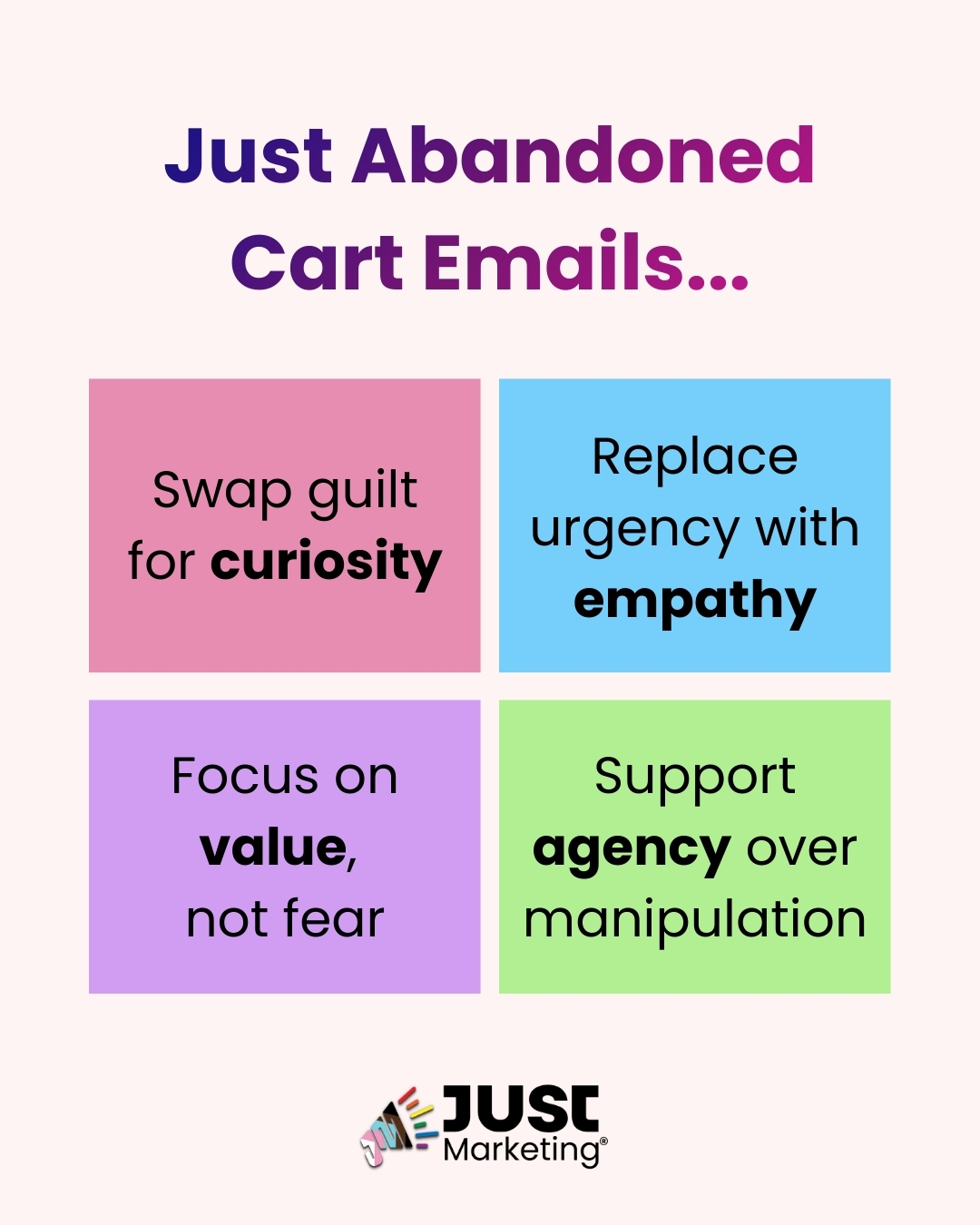
Swap guilt for curiosity
Instead of: “You forgot something!”
Try: “Still thinking it over? Here’s a little more info to help you decide.”
This shift respects that someone might be taking their time and offers support without pressure.
Replace urgency with empathy
Instead of: “Your cart is about to expire!”
Try: “We noticed you didn’t check out – no pressure at all, just wanted to check in and see if you had any questions.”
This creates space for dialogue instead of trying to rush a decision.
Focus on value, not fear
Instead of: “Don’t miss out!”
Try: “This resource has helped a lot of our clients [solve a problem]. Here’s why it might be a great fit for you, too.”
Reinforce the value of your offer through genuine insight or storytelling – not artificial scarcity.
Support agency over manipulation
Always include:
- Clear next steps (with no pressure)
- A way to ask questions or get support
- A respectful opt-out (no shame if they’re not interested)
This isn’t just about being nice – it’s about building sustainable relationships with your audience. People remember how your brand made them feel, especially in the moments when they weren’t ready to buy.
ADHD & Neurodivergent-Friendly Tweaks
Many neurodivergent folks abandon carts not because of lack of interest – but because of decision fatigue, distraction, or executive dysfunction.
Ethical email tweaks can make your follow-up more accessible, like:
- Bullet-point recaps of what’s included
- A link to save the cart for later
- A gentle reminder that the offer will still be there when they’re ready
TL;DR: Ethical emails convert because they support – not pressure – your people.
How Do I Structure an Ethical Abandoned Cart Email?
So what does an ethical, supportive abandoned cart email actually look like?
Let’s break it down into a simple, reusable structure you can customize to fit your voice, audience, and offer – no guilt-tripping or false scarcity required.
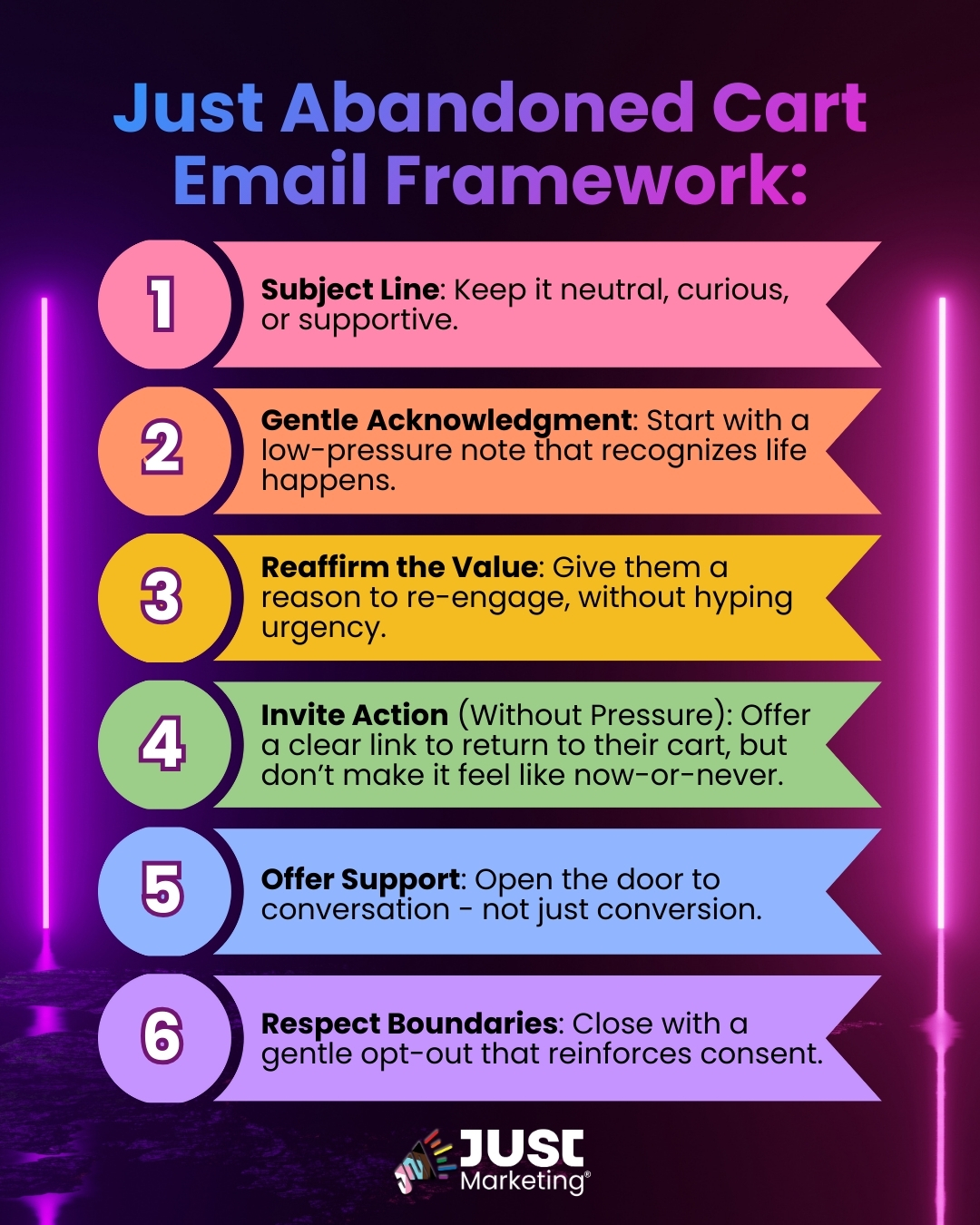
Just Abandoned Cart Email Framework
1. Subject Line: Keep it neutral, curious, or supportive.
- “Still considering it?”
- “Need more time?”
- “Quick check-in about your cart”
Avoid phrases that assume forgetfulness or apply pressure like “You forgot something!” or “Going… going… almost gone!”
2. Gentle Acknowledgment: Start with a low-pressure note that recognizes life happens.
“Hey, we noticed you started checking out but didn’t finish – totally understandable. We get it – sometimes timing just isn’t right.”
This tone is disarming, validating, and doesn’t make the reader feel like they messed up.
3. Reaffirm the Value: Give them a reason to re-engage – without hyping urgency.
“In case you’re still thinking about it, here’s why [product/service] has helped folks like you…”
Share a quick benefit, testimonial, or FAQ to provide helpful context.
4. Invite Action (Without Pressure): Offer a clear link to return to their cart, but don’t make it feel like now-or-never.
“If you’re ready, here’s your saved cart. No rush – just wanted to make it easy to find.”
This shows respect for their autonomy and bandwidth.
5. Offer Support: Open the door to conversation – not just conversion.
“Have any questions or need help deciding? Just hit reply – we’re happy to chat.”
This builds trust and reminds them there’s a human behind the brand.
6. Respect Boundaries: Close with a gentle opt-out that reinforces consent.
“Not the right time? Totally okay. Thanks for considering us – we’re here if and when you’re ready.”
This creates safety and shows you’re not trying to manipulate a “yes.”
You don’t need multiple follow-ups unless you’re adding value each time. If you’re sending more than one email, consider spacing them out and offering different content – like a how-to video, a free bonus guide, or answers to common objections.
You Don’t Need Shame to Sell
Let’s be honest: traditional marketing tells us we have to use urgency, scarcity, and psychological tricks to get people to buy.
But if you’re here, you already know that doesn’t sit right. Especially if your values include things like consent, accessibility, and community care.
Here’s what’s true:
- You don’t need to pressure people to make a sale.
- You don’t need to guilt them into clicking.
- You don’t need to chase conversions at the expense of connection.
What does work?
- Building trust.
- Centering the humanity of your audience.
- Creating systems that make it easier – not harder – for people to say yes when they’re ready.
When you stop chasing quick wins and start marketing with empathy and transparency, something powerful happens:
People come back. They refer others, and they trust you.
Not because you tricked them into buying – but because you gave them space to choose.
And that’s the kind of business that’s sustainable, scalable, and aligned with your bigger mission.
So the next time you set up an abandoned cart email, ask yourself:
- Is this helpful, or is it manipulative?
- Does this create pressure, or does it offer support?
- If I received this email on a hard day, would it feel kind?
Because ethical marketing isn’t just a strategy – it’s a commitment to treating people with dignity, no matter where they are in their decision-making process.
Let’s Keep the Conversation Going
Have you ever opened an abandoned cart email that made you feel… kind of called out? Maybe it guilt-tripped you with “Don’t miss out!” or implied you were forgetting something important – when really, you were just overwhelmed or still deciding.
Or maybe you’ve written your own abandoned cart emails and thought, “Is this helpful… or a little too pushy?”
I’d love to hear your take… What follow-up strategies have felt respectful and supportive – and which ones crossed a line? Let’s connect on LinkedIn or Instagram and talk about what it really looks like to build funnels that honor your audience’s autonomy and reflect your values.
Because consent-based, shame-free marketing isn’t just possible – it’s powerful. And it starts with conversations like this.
FAQs
Yes! Coaches, consultants, and course creators can use them whenever someone starts a checkout, enrollment, or booking and then steps away. Most course platforms and email tools can trigger one automatically once a buyer enters their email address at checkout.
One thoughtful email is often plenty. If you'd like to send a follow-up, give it something new to offer, like a short how-to video or answers to common questions, and leave a few days between messages. That spacing gives people room to decide on their own timeline.
Many businesses send the first one within about a day, while the offer is still fresh in someone's mind. Waiting a few hours instead of a few minutes feels more like a friendly check-in and gives the buyer space to come back on their own.
Neutral, curious subject lines work beautifully, like “Still considering it?” or “Quick check-in about your cart.” Wording that assumes someone forgot or that counts down a deadline tends to feel like pressure, so a gentle question is a great place to start.
A discount can genuinely help when cost is what's holding someone back, as long as it's real and clearly explained. Regular discounts can teach buyers to wait for a deal, so many businesses save them for special moments and lead with helpful information instead. For more on offering extras with care, see how to offer upsells without pressure.
Keep the email short, with a bullet-point recap of what's included and a direct link back to their saved cart. A quick reassurance that the offer will still be there when they're ready can ease decision fatigue. Learn more about building consent-based funnels.