“1,000 people already joined – why haven’t you?”
At first glance, it sounds impressive. It’s meant to build trust, show credibility, and spark action. But let’s be real: what it’s really doing is triggering that itchy little voice in your head whispering, “You’re missing out.”
This is where social proof and FOMO collide – and where things start to feel… icky.
The gist: Social proof is the psychological tendency to look to others for cues when unsure what to do, which marketers use through testimonials, reviews, client logos, and stats like “Join 5,000 others.” It turns into social pressure when paired with FOMO, such as cherry-picked success stories or messages implying readers will be left behind. Ethical social proof shares real, diverse client stories with honest context, so people feel welcome to join in at their own pace.
Part of the Persuasion Tactics series.
In traditional marketing, it’s common to see social proof used to crank up urgency and push people toward quick decisions. But as ethical, values-driven entrepreneurs, we’ve got to ask: at what cost?
Using fear to drive conversions may lead to short-term gains – but it also risks manipulating your audience, especially those who are neurodivergent, anxious, or simply need more time and clarity to make empowered choices.
In this post, we’re unpacking the not-so-subtle pressure behind FOMO-fueled social proof, exploring why it can be harmful, and offering Just Marketing® alternatives that foster trust, not panic. Because when you lead with inclusion and empowerment, your message doesn’t just sell – it supports.
What is Social Proof in Marketing?
Psychologist Robert Cialdini popularized the term “social proof” in his 1984 book Influence. At its core, social proof is a psychological concept: when people aren’t sure what to do, they often look to others for cues. It’s a survival instinct turned marketing tool – if a crowd is doing something, it must be safe, smart, or valuable… right?
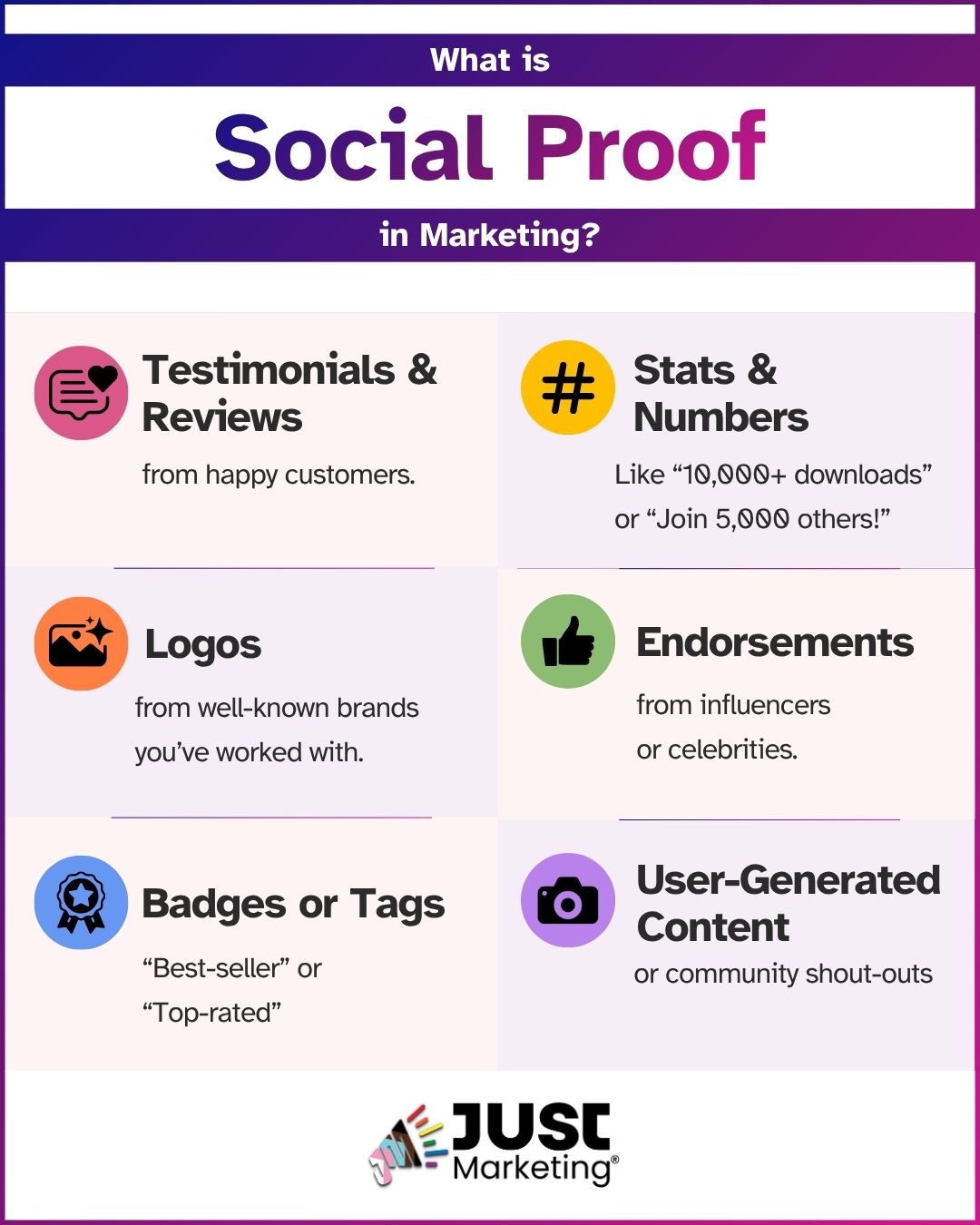
In marketing, social proof shows up in all kinds of ways, like:
- Testimonials and reviews from happy customers
- Stats and numbers, like “10,000+ downloads” or “Join 5,000 others!”
- Logos from well-known brands you’ve worked with
- Influencer or celebrity endorsements
- “Best-seller” badges or “Top-rated” tags
- User-generated content or community shout-outs
Used with care, social proof can help build trust and reduce the uncertainty that often comes with making a purchase or investment. It says: “You’re not alone – others have chosen this path and found value.”
But here’s the thing: while social proof can be helpful and affirming, it’s often turned into a pressure tactic. And that’s where the FOMO starts to creep in…
When Does Social Proof Become FOMO?
While social proof can build confidence, it often gets hijacked by FOMO – Fear of Missing Out – and that’s where the tactic starts to feel manipulative instead of motivating.
FOMO marketing leverages scarcity, urgency, and exclusion to push people into taking action now – often by making them feel like they’ll miss an opportunity, be left behind, or won’t belong if they don’t act immediately.
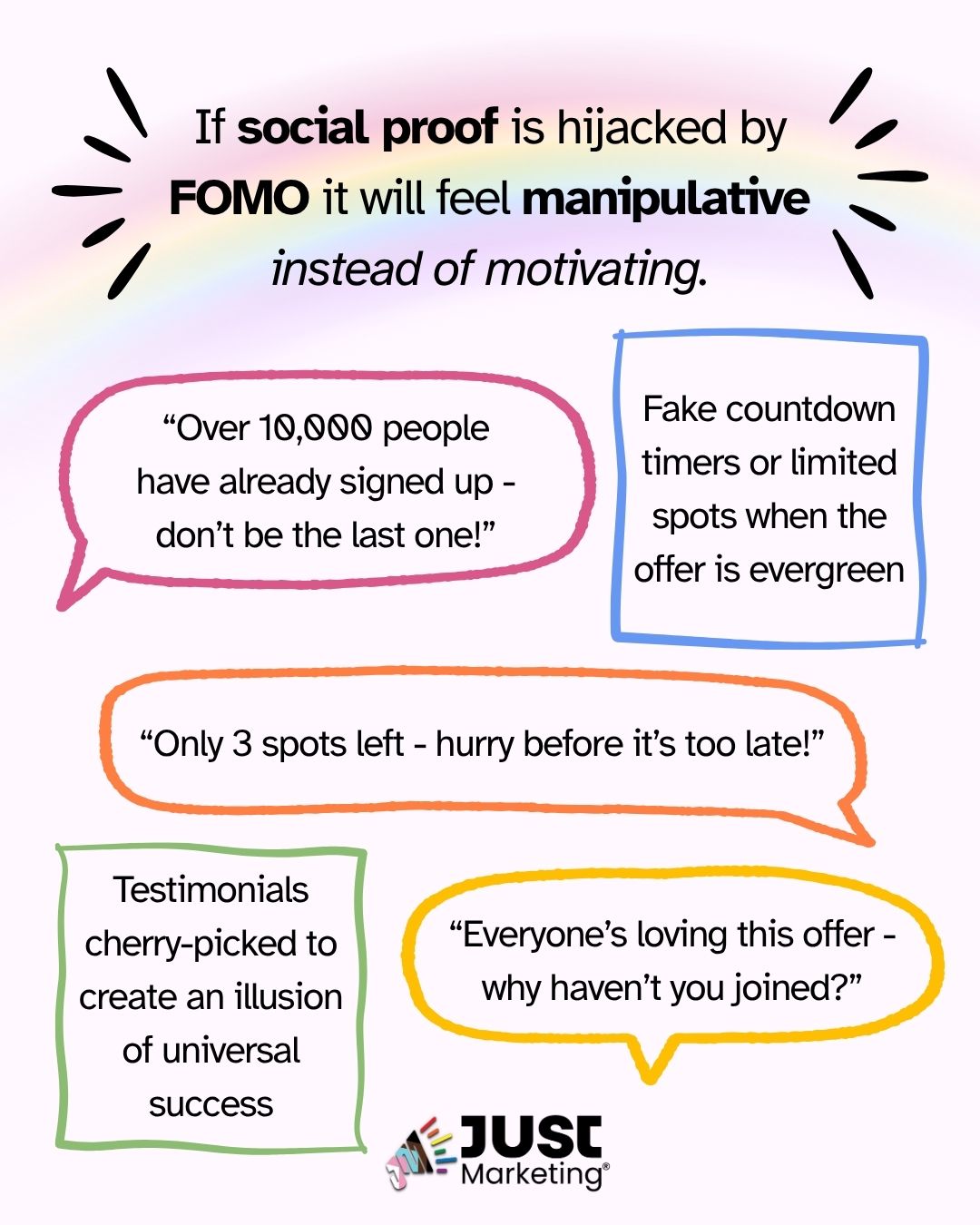
Examples of FOMO-Driven Social Proof
- “Over 10,000 people have already signed up – don’t be the last one!”
- “Only 3 spots left – hurry before it’s too late!”
- “Everyone’s loving this offer – why haven’t you joined?”
- Fake countdown timers or limited spots when the offer is evergreen
- Testimonials cherry-picked to create an illusion of universal success
These tactics create emotional pressure, not informed enthusiasm.
Why It’s a Problem
FOMO-fueled social proof taps into insecurity, not empowerment. It prioritizes conversions over consent and urgency over accessibility. For neurodivergent folks, those with anxiety, or anyone who needs more time or clarity to process decisions, these pressure tactics can be overwhelming – and even triggering.
Worse, FOMO often implies that people lack something essential: time, success, inclusion, worth. That’s not only manipulative – it’s the opposite of ethical, values-aligned marketing.
Why Is FOMO-Driven Social Proof Harmful?
At first glance, FOMO-driven social proof might seem like “just how marketing works.” But when we pause and look deeper – especially through a lens of justice, inclusion, and accessibility – it becomes clear why these tactics deserve a serious rethink.
Here’s how FOMO-centric messaging clashes with Just Marketing® values:
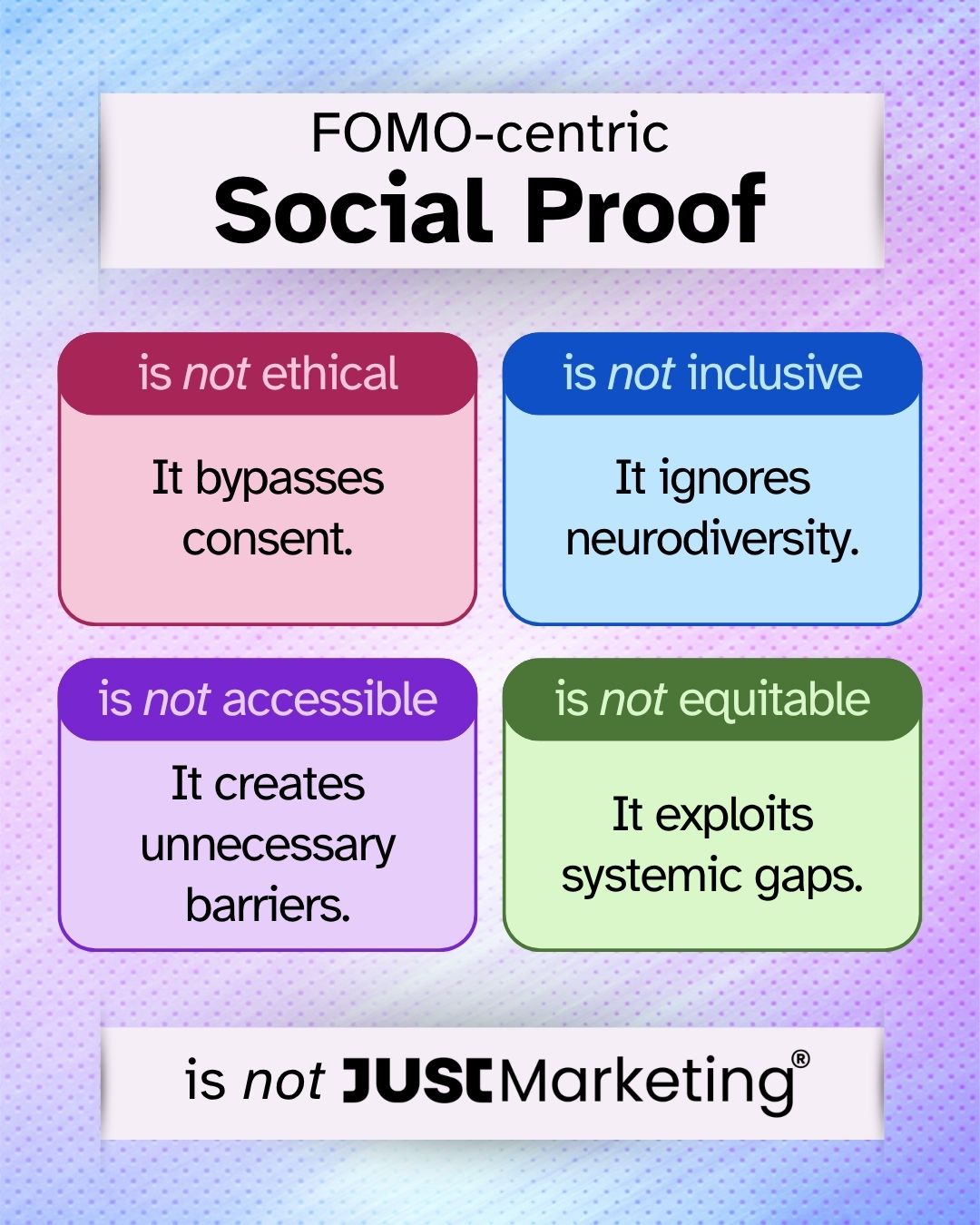
Ethics: It bypasses consent
Using fear or urgency to drive action doesn’t leave space for thoughtful decision-making. Ethical marketing invites people in with clarity and respect – it doesn’t back them into a corner with “now or never” pressure.
Inclusion: It ignores neurodiversity
Not everyone processes urgency the same way. Folks with ADHD, anxiety, or trauma histories may feel flooded by FOMO-based tactics, making it harder – not easier – to take action. Inclusive marketing honors different processing needs and creates space for autonomy.
Accessibility: It creates unnecessary barriers
Urgent, fast-paced language can overwhelm people who need more time, plain language, or additional information to engage. Ethical social proof should support informed choices – not force rushed ones.
Equity: It exploits systemic gaps
FOMO messaging often preys on people who’ve historically been excluded from access. It reinforces a harmful idea that opportunities are scarce and you must hustle or lose out – a message that directly contradicts the values of justice and care.
This is where Just Marketing® shows up as a necessary shift: from persuasion that pressures to messaging that respects. When we center ethics, inclusion, and accessibility, we build relationships that are rooted in trust – not tactics.
How Can You Use Social Proof Ethically?
Ditching FOMO doesn’t mean abandoning social proof altogether. It means using it intentionally – to build trust, not urgency. To affirm, not manipulate. To invite, not pressure.
Here’s how to make that shift:
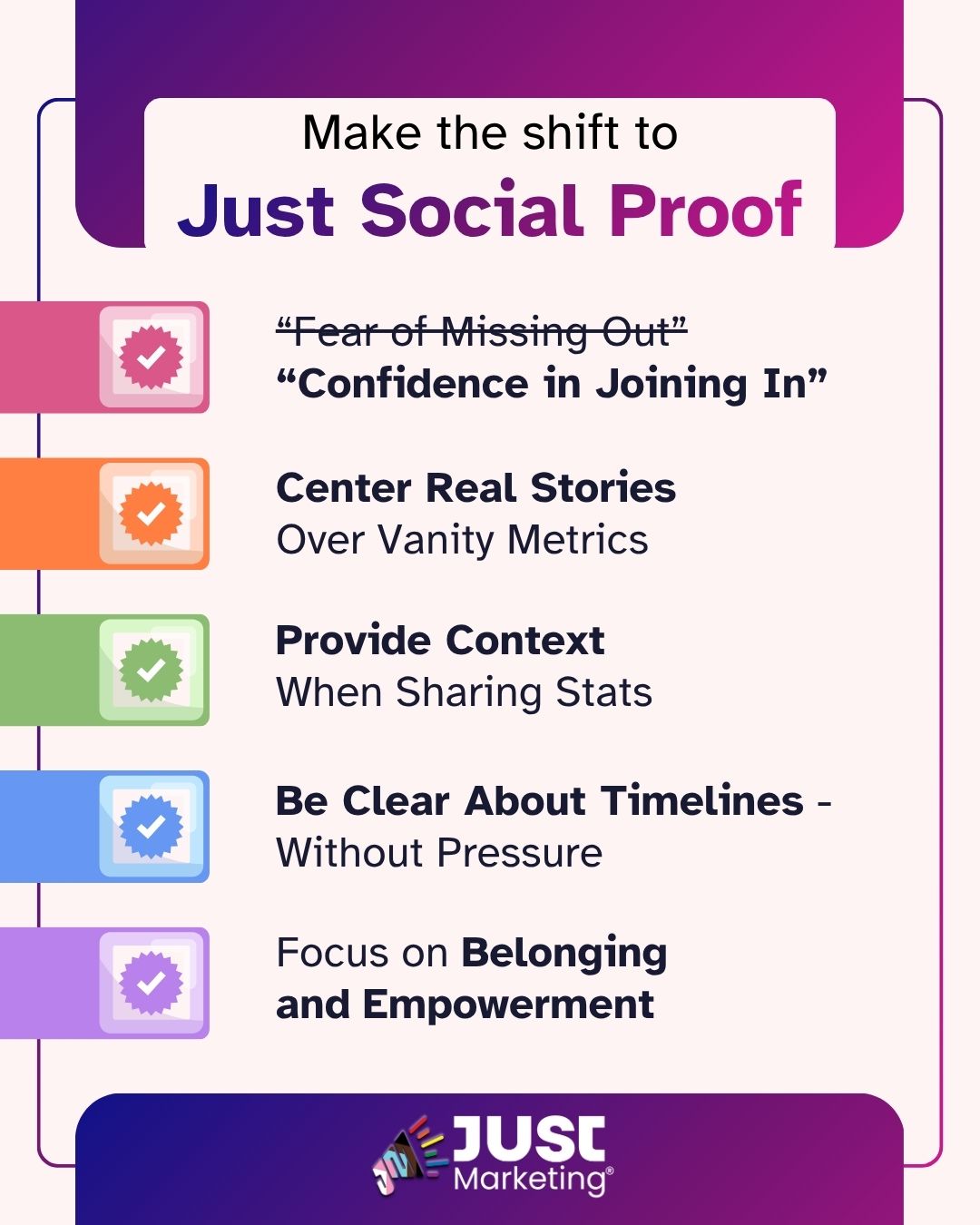
1. Shift from “Fear of Missing Out” to “Confidence in Joining In”
Instead of: “10,000 people already signed up – don’t miss your chance!”
Try: “10,000 people have already joined – and we’d love to welcome you, too.”
This subtle change replaces exclusion with invitation. It says, there’s still room for you – you belong here.
2. Center Real Stories Over Vanity Metrics
Rather than flaunting big, vague numbers, spotlight the real humans behind your success.
Instead of: “We’ve helped thousands – trust us.”
Try:“Here’s how working together helped Jordan find clarity and confidence in their business.”
Include testimonials that reflect diverse identities, needs, and outcomes. This isn’t just more inclusive – it also helps readers see themselves in the story.
3. Provide Context When Sharing Stats
If you do share numbers, keep them honest and transparent. Hype-free stats build trust.
For example: “Over 500 clients in the past 3 years have trusted us with their marketing strategy – and we’re honored.”
That’s real. It’s grounded. And it allows space for thoughtful decision-making.
4. Be Clear About Timelines – Without Pressure
It’s okay to have deadlines or limited spots. Just be transparent and respectful about it.
Instead of: “Only 2 spots left – don’t wait or you’ll regret it!”
Try: “We keep our cohorts small to provide personalized support. Enrollment is open through [date], or until spots fill. Reach out if you have questions – we’re here to help.”
This builds trust while still guiding action.
5. Focus on Belonging and Empowerment
Use social proof to say: This is a space where people like you thrive.
That’s not about pressure – it’s about possibility.
TL;DR: Social proof should affirm your audience’s decision-making – not override it.
Trust is Built, Not Rushed
FOMO might get quick clicks – but quick doesn’t always mean sustainable.
If someone joins your program or buys your offer because they felt pressured, what happens next? There’s a good chance they’ll second-guess the decision. Maybe they won’t fully engage. Some may disappear altogether – or worse, walk away with less trust in your brand than when they started.
That’s not the vibe we’re going for. Especially not in values-driven businesses.
Building a business rooted in trust, consent, and clarity might take a little longer – but it’s worth it. The people who choose to work with you will do so because they feel safe, seen, and supported – not manipulated into acting before they were ready.
That’s how you create long-term relationships, not just one-time transactions.
In a world full of pressure tactics and performative hype, showing up with honesty and care is a radical act. And it’s exactly what your people are craving.
Let’s Build Trust-First Marketing – Together
If this post made you pause and think, you’re exactly the kind of person I love building community with. ✨
I share more ethical marketing insights, real talk about neurodivergent entrepreneurship, and inclusive content tips over on LinkedIn and Instagram. Come say hi – I'd love to connect with you.
Want support creating values-aligned messaging that builds trust without the pressure? Join my email list for Just Marketing® tools, templates, and encouragement that actually respects your brain and your boundaries.
And if you’re ready to shift your strategy from fear-based to fully human, here’s how we can work together.
FAQs
Common examples include client testimonials, online reviews, and logos of organizations you've worked with. User-generated content, like clients sharing their results, counts too. Honest stats, such as how many people have taken a course, can also reassure new buyers.
FOMO (fear of missing out) marketing uses urgency, scarcity, or the idea of being left behind to push people into acting quickly. Common examples include “Only 3 spots left!” messages and countdown timers on evergreen offers. These tactics can feel especially stressful for people who need more time to decide.
Social proof can be genuinely helpful, since it shows buyers that others have found value in your work. It starts to feel manipulative when numbers are exaggerated, testimonials are cherry-picked, or the message implies something is wrong with anyone who hasn't joined yet. Honest, contextual proof keeps it trustworthy.
Explain the reason behind the deadline and share the date clearly. For example: “We keep our cohorts small for personalized support, so enrollment is open through [date] or until spots fill.” Adding an invitation to ask questions keeps the tone supportive. For more, see why countdown timers can backfire.
Start with what you have, like feedback from beta clients, a testimonial from a past collaboration, or kind words from a peer who knows your work. Sharing your own story and values builds credibility too. A single specific, honest testimonial often resonates more than a big number.
Ask for permission before sharing anything, and let clients describe their experience in their own words. Share the final version with them for approval and let them choose how they're credited. Learn more about sharing client wins without exploitation.