You’ve got two seconds to stop the scroll… but at what cost?
The GRAB framework has become a go-to formula in modern marketing – especially on social media and in email subject lines. It’s sleek. It’s punchy. It’s designed to hook attention fast, relate to your audience, stir up emotion, and point them toward your offer.
Sounds smart, right?
Well… kinda. But also? Kinda ick.
The gist: The GRAB framework is a copywriting formula, short for Grab, Relate, Agitate, Bridge, that hooks attention, reflects a reader's struggles, amplifies their pain, and then presents an offer. The Just Marketing® remix, Ground, Relate, Affirm, Bridge, keeps that structure while leading with honest messaging and affirming readers before inviting them to a next step.
Part of the Conversion Copywriting Framework guide.
Here’s the thing: while frameworks like GRAB can work, they often rely on tactics that exploit fear, urgency, or discomfort – especially in the “grab” and “agitate” phases. That might lead to clicks or conversions in the short term, but it can also chip away at trust, especially with audiences who value consent, transparency, and respect.
And if you’re a mission-driven entrepreneur who’s committed to ethical marketing? That tradeoff just doesn’t fly.
In this post, we’re unpacking the GRAB framework through a Just Marketing® lens – looking at where it falls short in terms of ethics, inclusion, and accessibility, and how we can reclaim its bones with a values-aligned remix. Spoiler alert: we’re not here to burn it all down. We’re here to build something better.
What is the GRAB Framework?
The GRAB framework is a modern twist on traditional conversion copywriting formulas, designed with fast-paced digital platforms in mind – think Instagram captions, Reels, emails, or ads.
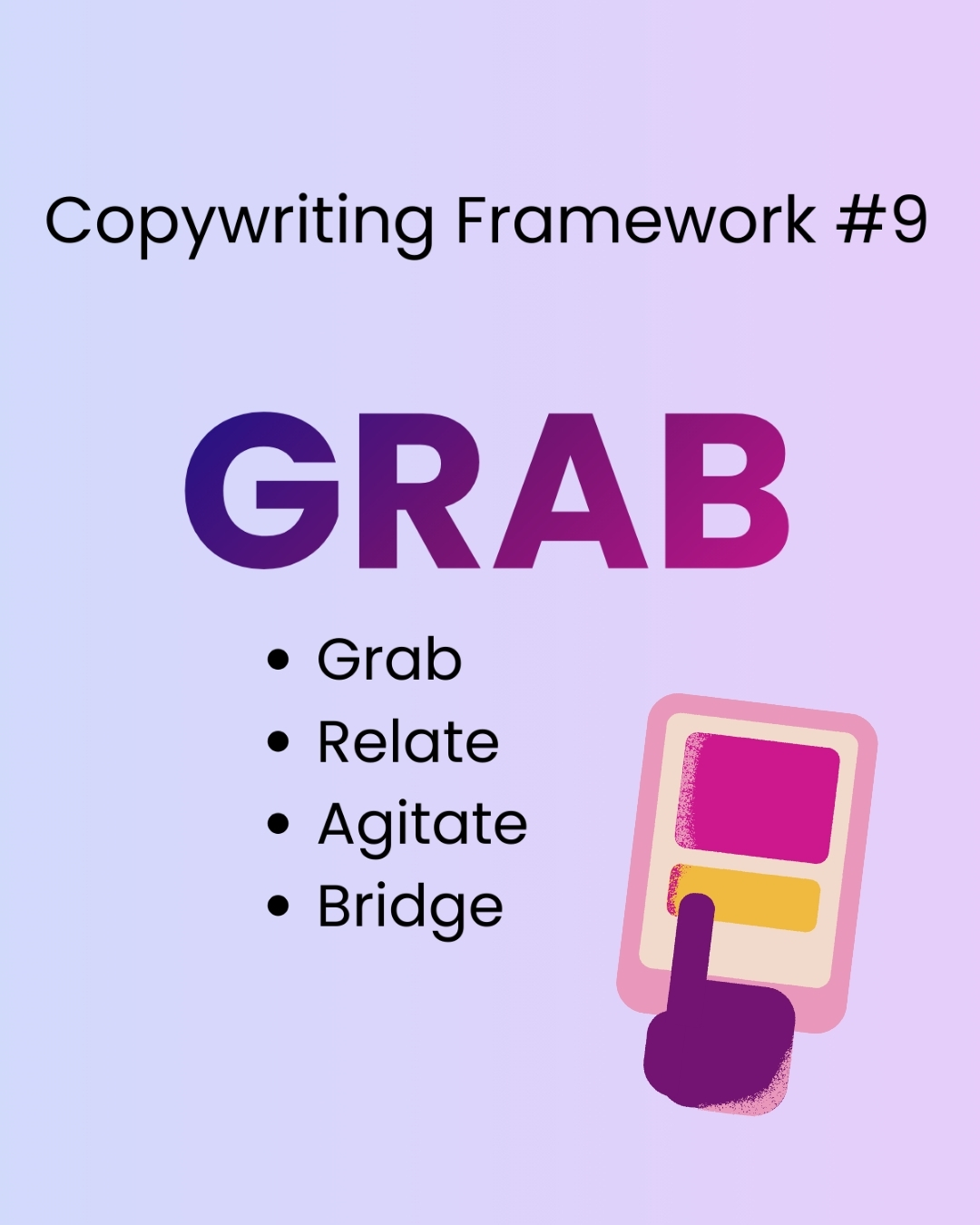
It goes like this:
- G – Grab: Start with a scroll-stopping hook – something bold, unexpected, or emotionally charged.
- R – Relate: Show your audience that you get them. Reflect their struggles, dreams, or identity.
- A – Agitate: Turn up the volume on the problem. Remind them what’s at stake if nothing changes.
- B – Bridge: Offer the solution – your service, product, or next step.
It’s short. It’s punchy. And it’s tailor-made for capturing short attention spans.
You'll often see it used in:
- Email subject lines and first lines
- Social media captions or videos
- Paid ads, especially Facebook and Instagram
- Funnels and lead gen content
Why marketers love it: It’s easy to remember, quick to implement, and it leverages emotional momentum to drive conversions.
But just because it works… doesn’t mean it works for everyone – or aligns with values like accessibility, inclusivity, and autonomy.
What's Wrong With the GRAB Framework?
Let’s be real: GRAB isn’t inherently evil – but the way it’s often used? Yeah, it can get messy.
This framework, like many in traditional marketing, was designed to influence behavior quickly. And while influence isn’t automatically unethical, the tactics used – especially in the Grab and Agitate stages – can easily cross the line from persuasive to manipulative.
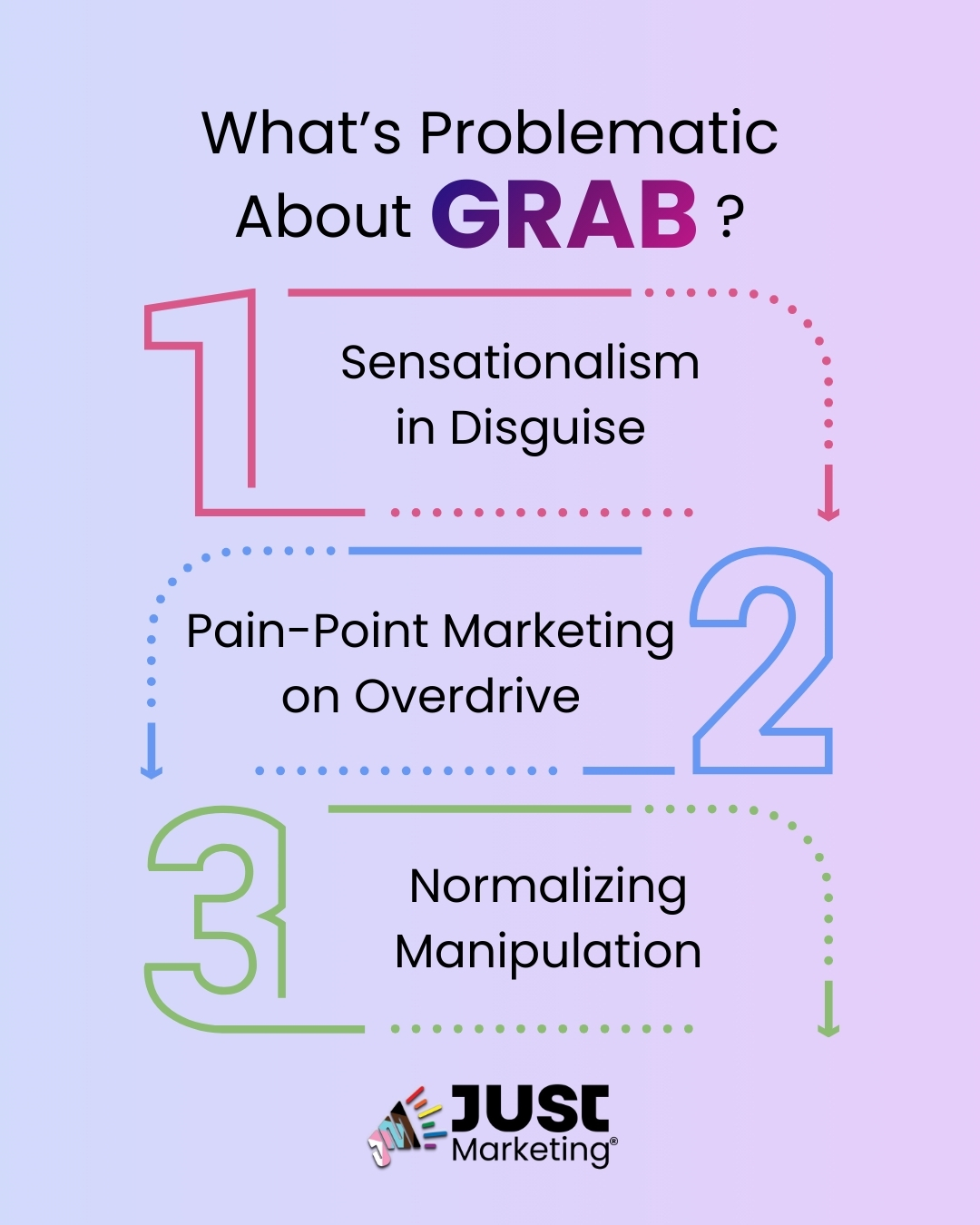
Grab: Sensationalism in Disguise
This stage is all about stopping the scroll… but at what cost?
- Hooks often lean on shock value, fear, or shame – like “You’re losing money every day you don’t do this…” or “No one’s paying attention to your content – here’s why.”
- Neurodivergent folks may be especially vulnerable to attention-grabbing content that hijacks dopamine and decision-making.
- It encourages a click first, consent later culture that prioritizes attention over respect.
The issue? This kind of grabbing doesn’t build trust – it exploits curiosity or pain to generate a quick hit.
Agitate: Pain-Point Marketing on Overdrive
Here’s where things get uncomfortable – fast.
- Agitation means reminding people of their problems… but it often goes beyond awareness and into amplifying insecurity, self-doubt, or fear.
- It can sound like: “You’re stuck. You’re failing. You’re falling behind.”
- For folks who are already navigating systems of oppression or marginalization, this language can feel retraumatizing or invalidating.
Why it matters: Marketing shouldn’t feel like picking at someone’s wounds just to sell the Band-Aid.
The Bigger Picture: Normalizing Manipulation
GRAB is especially common in ads and funnels – the land of false urgency, performative scarcity, and “pain point poking.”
Even when it’s not intentional, the framework reinforces:
- High-pressure sales tactics
- Neurotypical bias around decision-making and “rational” behavior
- A power dynamic where the seller positions themselves as the fixer or savior
For ethical entrepreneurs – especially those serving trauma-aware or neurodiverse communities – this approach can feel like a betrayal of values.
And the worst part? Many of us have been taught to market this way. Which means the first step isn’t shame – it’s awareness.
What's a More Ethical Version of GRAB?
Frameworks can be helpful – structure reduces overwhelm, especially for neurodiverse entrepreneurs juggling a million tabs (literally and mentally). But the way we use those frameworks matters.
So instead of throwing GRAB out the window, let’s reclaim it with values-aligned intention.
Introducing the Just Marketing® remix:
Ground – Relate – Affirm – Bridge
This version still honors the original structure – but shifts the tone from pressure to partnership, and from manipulation to mutual respect.
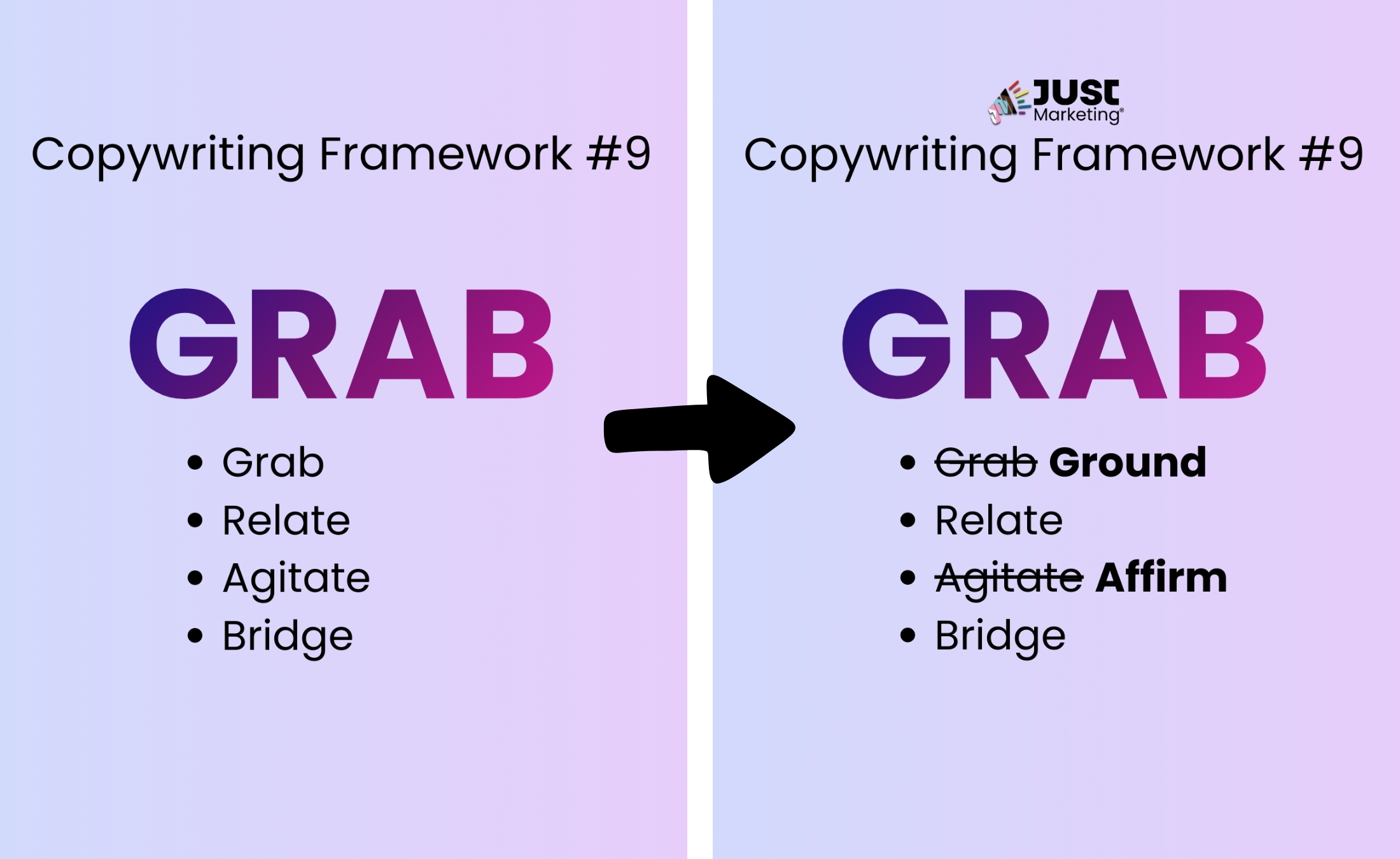
Ground (instead of Grab)
Start with truth, not tricks. Lead with grounded, honest messaging that centers clarity over clickbait.
- Examples:
- “Marketing can feel like a second full-time job – especially if your brain isn’t wired for routine.”
- “You don’t need to go viral to build a thriving business. You need sustainable systems.”
- “Marketing can feel like a second full-time job – especially if your brain isn’t wired for routine.”
Why it works: This kind of opening still catches attention – but it does so through resonance, not reaction.
Relate
Connect through shared humanity, not strategic mirroring.
- How to do it ethically:
- Reflect your audience’s experience with compassion, not condescension.
- Be specific without making assumptions – use “you might be…” instead of “you are…”
- Reflect your audience’s experience with compassion, not condescension.
- Example:
- “You might be juggling client work, admin tasks, and still wondering when content creation’s supposed to happen.”
- “You might be juggling client work, admin tasks, and still wondering when content creation’s supposed to happen.”
Why it works: You build trust by showing you see your audience – not by telling them how broken they are.
Affirm (instead of Agitate)
Skip the shame spiral. Offer empowerment instead.
Affirm their efforts, choices, and capacity – even before they buy from you. This doesn’t mean ignoring the problem – it means validating their experience without exploiting it.
- Example:
- “You’re already doing so much – and it’s okay if you need support to make marketing more manageable.”
- “You’re already doing so much – and it’s okay if you need support to make marketing more manageable.”
Why it works: When people feel safe and respected, they’re more likely to engage – and to make empowered, aligned decisions.
Bridge
Invite them into a next step – gently and collaboratively.
- Make your offer feel like an invitation, not a pressure cooker.
- Center agency and choice – no FOMO, no fear tactics.
- Examples:
- “Here’s how I can support you if you're ready.”
- “If it feels aligned, I’d love to connect.”
- “Here’s how I can support you if you're ready.”
Why it works: When your call-to-action honors autonomy, it fosters genuine relationships – and values-aligned conversions.
TL;DR: GRAB Doesn’t Need to Go – It Needs to Grow
You don’t need to ditch structure. You just need to make sure it aligns with your ethics, not just your metrics.
Ground. Relate. Affirm. Bridge.
That’s how we build trust – and business – with integrity.
What Does Ethical GRAB Copy Look Like?
Let’s see how the original GRAB framework compares to the values-aligned remix in a real-world example. Imagine you’re promoting a content strategy session for neurodivergent entrepreneurs.
Traditional GRAB Copy Just Marketing® GRAB Copy Grab: Struggling to stay consistent with your content? Ground: Consistency isn’t about showing up perfectly – it’s about building systems that work with your brain. Relate: You start strong, then ghost your audience (again). Relate: If content creation keeps falling to the bottom of your list, you’re not alone (and you’re not doing it wrong). Agitate: If you don’t show up, your dream clients won’t find you – and your business will keep stalling. Affirm: You’re already doing so much – and needing support doesn’t make you any less capable. Bridge: Book your strategy session now before you fall further behind. Bridge: If you’re ready to co-create a sustainable content strategy, I’d love to support you. Let’s connect. This version hits hard – and not in a good way. It assumes failure, exploits fear of missing out, and positions the offer as a last-chance fix. It might get clicks… but at the cost of trust and dignity. This version offers honesty, compassion, and empowerment – without sugarcoating. It creates space for choice and honors the reader’s autonomy, all while still guiding them toward a clear next step.
You can market ethically, inclusively, and effectively – without agitating pain or grabbing with fear.
When your copy centers consent, clarity, and care, it doesn’t just feel better. It works better – for everyone.
Does Ethical Copywriting Still Work?
We’ve been taught that to convert, we have to push. Prod. Poke the pain.
But, truth is… you don't have to manipulate to motivate.
The original GRAB framework can work – but when it relies on fear, urgency, or insecurity, it creates short-term clicks at the cost of long-term trust. And if you’re here, I’m guessing trust matters more to you than vanity metrics.
By reimagining the framework as Ground–Relate–Affirm–Bridge, you still guide your audience toward action – but in a way that’s rooted in empathy, respect, and shared humanity.
This isn’t about being “soft” – it’s about being intentional. It’s about building marketing that reflects your values and serves your community – especially if your people are neurodivergent, trauma-aware, or simply tired of bro-y sales tactics.
Marketing that feels good? That’s possible. And you don’t have to do it alone.
Let’s Keep the Conversation Going
If this post had you nodding along, here are a few ways to stay connected:
- Let’s connect on LinkedIn and Instagram – I share regular tips on ethical, accessible marketing.
- Want more insights like this in your inbox? Join my email list for ADHD-friendly marketing advice and values-aligned resources.
- Ready for support? Learn more about working together – whether you need strategy, systems, or done-for-you content.
You’re already doing amazing things. Let’s make sure your marketing reflects that.
FAQs
In traditional copywriting, GRAB stands for Grab, Relate, Agitate, Bridge. The Just Marketing® version swaps two steps to become Ground, Relate, Affirm, Bridge. Both follow the same flow from an opening line to a call to action.
PAS stands for Problem, Agitate, Solution, and it's one of the classic formulas GRAB builds on. GRAB adds an attention-grabbing opener and a step where you relate to your reader's experience. Both include an “agitate” stage, which is the part the Just Marketing® remix replaces with affirmation.
Naming a real problem can help people feel seen and understood. Copy becomes manipulative when it amplifies fear or shame to push a sale. Just Marketing® is ethical, inclusive, and accessible, so your audience feels supported and your business grows sustainably. Learn more in the complete guide to Just Marketing®.
Open with a grounded truth your audience will recognize from their own life. A line like “Marketing can feel like a second full-time job, especially if your brain isn't wired for routine” catches attention through resonance. Honest hooks build trust from the very first sentence. Read more about ethical hooks.
An affirm step acknowledges the effort your reader is already putting in and normalizes asking for help. For example: “You're already doing so much, and it's okay to want support making marketing more manageable.” It helps people feel capable as they consider your offer.
Absolutely! Ground, Relate, Affirm, Bridge works well for Instagram and LinkedIn captions, email openers, and short ads. Its four steps give you a simple structure that's easy to reuse. For another option, check out the Star-Story-Solution copywriting framework.