The Star–Story–Solution framework is a go-to for testimonials and case studies – and it can be a beautiful, human-centered way to highlight your work. But even the softest, story-driven strategies can slide into murky territory when we forget who the real hero is.
The gist: The Star–Story–Solution framework is a storytelling formula for testimonials and case studies that follows a client's journey to show how your work supported them. Used ethically, it keeps the client as the hero and shares their story with consent, including the messy middle of real growth.
Part of the Conversion Copywriting Framework guide.
Too often, this framework is used to center the brand’s brilliance, oversimplify transformation, or tokenize clients – especially when marginalized voices are involved. And let’s be real: marketing that looks empowering but feels exploitative? That’s not the vibe.
What is the Star–Story–Solution Framework?
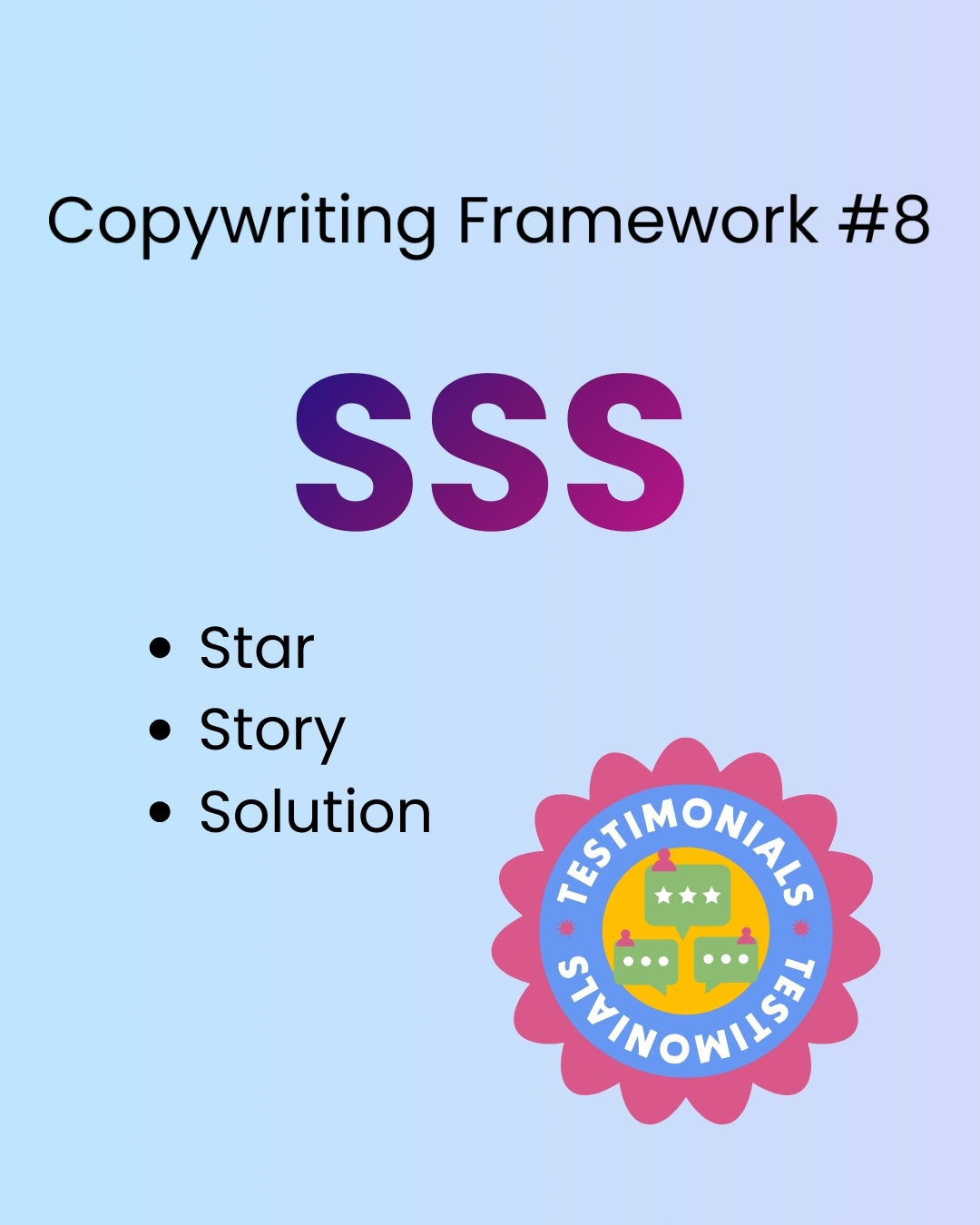
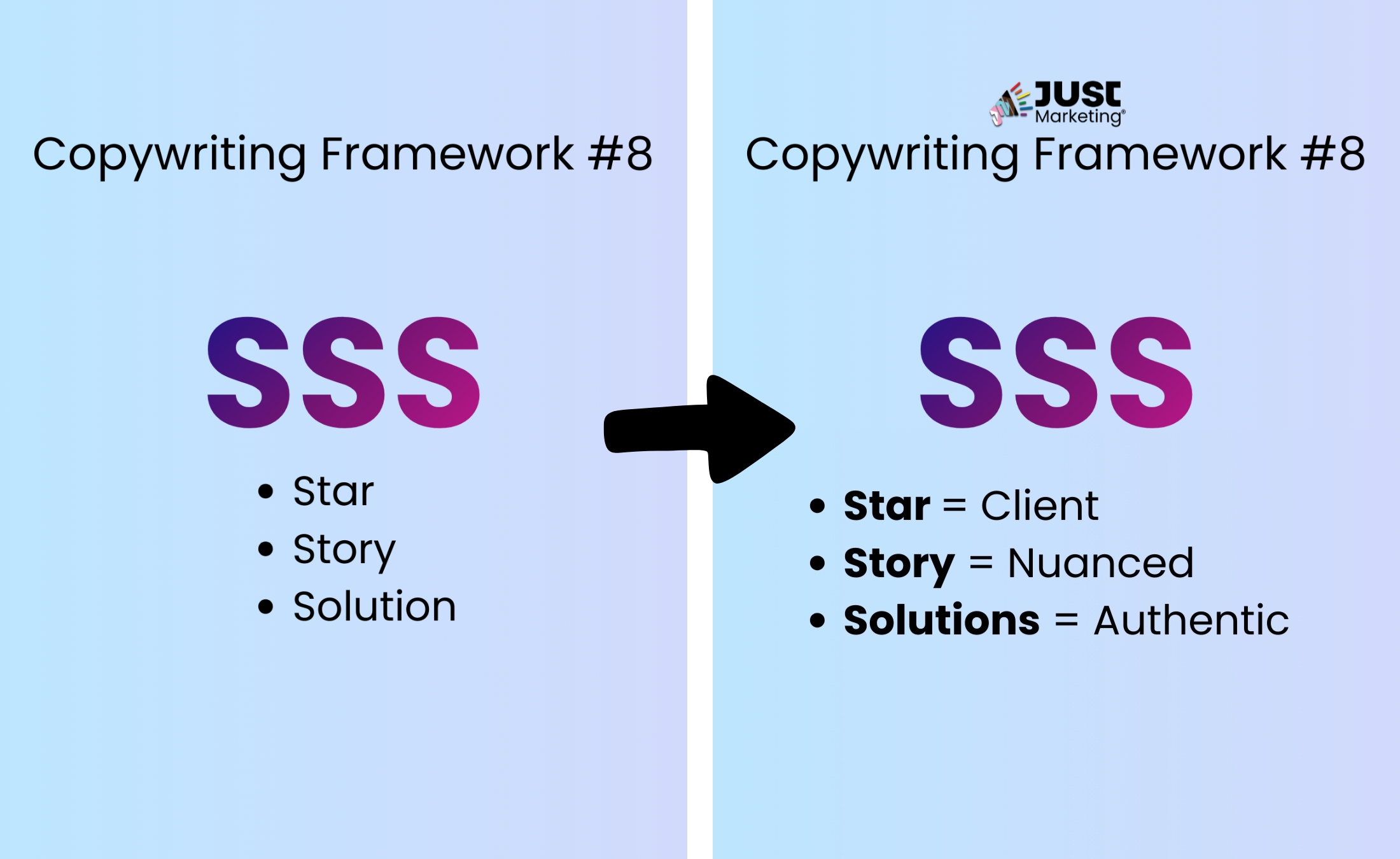
At its core, the Star–Story–Solution framework is a narrative-based approach to marketing that follows a simple, three-part arc:
- Star – Introduce the central character (usually a client or user).
- Story – Share their journey – the challenges, the turning point, the process.
- Solution – Reveal how your product or service supported their transformation.
It’s a favorite among marketers and copywriters for good reason – it leans into storytelling, which is one of the most powerful tools we have for building trust and connection. Instead of leading with features or benefits, this framework wraps your offer in a relatable human experience.
Why It Works:
- Emotionally engaging: Stories activate empathy and attention in ways stats and slogans just can’t.
- Demonstrates real-world impact: Seeing someone else succeed makes your work feel more tangible and credible.
- Gentle persuasion: It invites the reader into a journey instead of pushing a pitch.
You’ve probably seen this framework in:
- Case studies
- Client testimonials
- Webinar intros
- Long-form sales pages
And when done well, it can be authentic, powerful, and deeply values-aligned.
But like any framework… it depends on how you use it.
What Are the Problems With Star–Story–Solution?
On the surface, the Star–Story–Solution framework seems like a values-aligned dream. It’s gentle. It’s story-based. It highlights real humans. What could go wrong?
Well… quite a bit, actually – especially when ethical storytelling takes a back seat to conversion goals. Let’s break down the red flags…
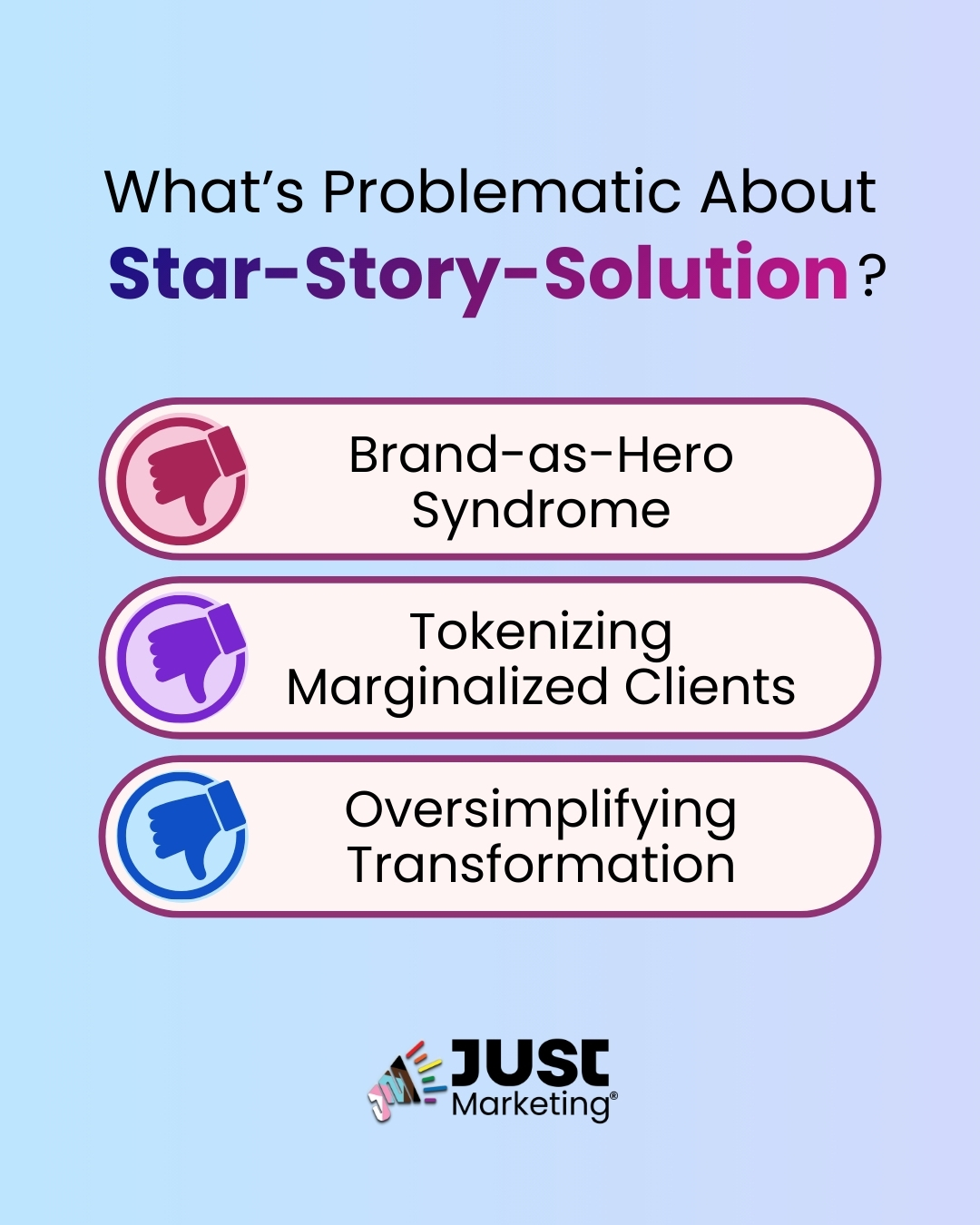
1. Brand-as-Hero Syndrome
When the brand becomes the “star” of the story, the client’s humanity gets sidelined. Instead of showcasing the client’s agency, resourcefulness, or resilience, the story frames them as helpless until you swooped in to save the day.
“Before working with me, she was totally lost. After my program, she was thriving!”
Translation: This win is mine.
This framing isn’t just cringey – it’s disempowering. It centers the business instead of celebrating the client’s growth and unique brilliance.
2. Tokenizing Marginalized Clients
Sharing client stories without consent, for clout, or as proof of impact is all too common – and especially harmful when those clients come from historically excluded communities.
Examples of tokenization include:
- Highlighting a BIPOC, LGBTQ+, or disabled client’s “success story” to make your brand look inclusive – without addressing the real barriers they face.
- Focusing on their “before” in a way that reinforces stereotypes or strips away dignity.
- Using their story without full permission or involvement.
When we tokenize people, we reduce them to marketing assets. And that’s the opposite of justice-centered storytelling.
3. Oversimplifying Transformation
Star–Story–Solution stories often lean into the “before-and-after” glow-up arc. But in real life? Growth is rarely linear or tidy.
When stories skip over the messy middle – the doubts, the detours, the systems at play – we create unrealistic expectations and erase the complexity of real human experience.
It can sound like:
“They came to me with nothing, and now they’re booked out months in advance!”
Great for conversions.
Not so great for nuance, context, or truth.
Why This Matters
When we ignore these issues, we risk perpetuating harm – even when we have the best intentions. Just Marketing® isn’t just about what we say, but how and why we say it.
Good stories inspire action. But great stories? They respect the storyteller, honor the truth, and build relationships – not just revenue.
How Do You Share Client Stories Ethically?
So how do we share powerful stories without exploiting people, oversimplifying growth, or centering ourselves? Ethical storytelling.
This approach still uses narrative (because stories work) – but it puts consent, nuance, and client agency at the center. Instead of seeing testimonials as “proof” of your value, you’re reframing them as collaborative reflections of meaningful relationships.
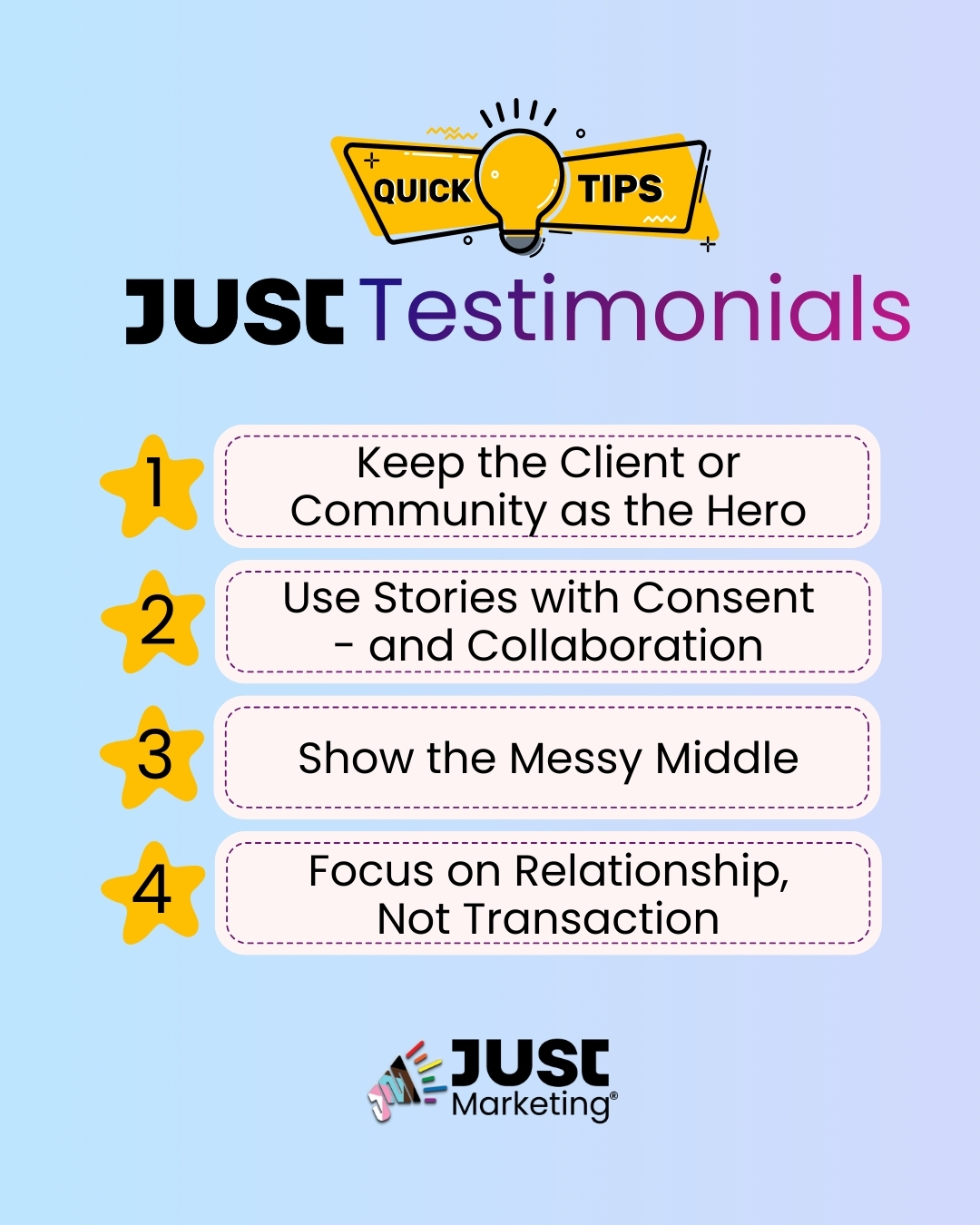
Here’s how to flip the script:
1. Keep the Client or Community as the Hero
You’re not the savior. You’re the guide, the mirror, the resource – supporting someone already doing powerful work.
Instead of: “I helped her get clarity on her business.”
Try: “She brought a brilliant vision – and together, we created a strategy that worked with her neurodivergent strengths.”
This centers the client’s brilliance, not your intervention.
2. Use Stories with Consent – and Collaboration
Before you hit publish on a testimonial or case study, check in:
- Did they explicitly consent to being featured?
- Did they review the story and approve the framing?
- Did they get to set boundaries on what felt safe or relevant to share?
Build story-sharing collaboratively. Ask open-ended questions. Let clients use their own words. Honor what they don’t want included.
3. Show the Messy Middle
Real change is rarely a straight line. It’s more like a beautifully chaotic spiral. Don’t erase that complexity to fit a tidy narrative.
You can still highlight wins and name the nuance:
“They’re still experimenting, still refining, still navigating – but they’ve taken bold steps toward a business that feels good and works for them.”
It’s honest, relatable, and so much more empowering than a polished “after” pic.
4. Focus on Relationship, Not Transaction
Ethical storytelling frames the client relationship as mutual, respectful, and ongoing – not just a one-off “win” for your sales page.
Instead of: “I helped this client triple her income!”
Try: “Over the past year, we’ve co-created systems that support her energy and goals – and we continue to adapt as her needs evolve.”
Longer arc. More trust. Deeper integrity.
You don’t have to stop using story. You just have to use it kindly, consciously, and collaboratively.
When you root your marketing in consent and care, your stories don’t just convert – they connect.
What Does Ethical Client Storytelling Look Like?
Let’s ground this in some real talk. Below are a few “before and after” examples that show how to shift from traditional Star–Story–Solution storytelling to something more ethical, inclusive, and Just Marketing® aligned.
These examples keep the story-centered approach without falling into the traps of saviorism, tokenization, or toxic transformation tropes.
Example 1: From Brand-as-Hero to Client-Centered
| Traditional (Exploitative) Framing: | Just Marketing® Rewrite: |
| “When Client X came to me, they were completely stuck and overwhelmed. I showed them my proven system, and within 30 days they had 5 new clients and doubled their income.” | “Client X had a bold vision and a deep commitment to serving her community. They were already doing powerful work – and together, we explored strategies that honored her capacity, values, and lived experience. Today, they're celebrating consistent progress on their own terms, including five new aligned clients in their first month.” |
| This version: Centers you as the hero. Flattens their experience into a conversion stat. Implies success is fast, easy, and replicable for everyone | This version: Centers the client’s agency and brilliance. Acknowledges nuance and collaboration. Shares wins without implying a formula. |
Example 2: Tokenizing
| Traditional (Tokenizing) Framing: | Just Marketing® Rewrite: |
| “We helped a Latina single mom build a 6-figure business in under a year – proof that anyone can succeed with the right mindset!” | “This client balances caregiving and entrepreneurship while navigating barriers that too often go unspoken. She chose to build her business in a way that centers sustainability, not burnout – and she’s now seeing consistent, aligned growth on a timeline that honors her reality.” |
| This version: Reduces identity to a marketing angleIgnores systemic barriers. Leans into hustle culture + toxic positivity | This version: Avoids tokenizing. Acknowledges complexity. Respects the client’s pace and priorities |
A Quick Checklist for Ethical Storytelling
- Did the client consent to being featured?
- Is their identity shared respectfully (if at all)?
- Does the story reflect nuance, not just success?
- Are you centering their agency – not your genius?
- Does the story contribute to trust, not just sales?
Ethical storytelling takes more thought – but the payoff is deeper trust, more meaningful relationships, and content you can feel proud of.
Trust Over Transformation
The Star–Story–Solution framework has so much potential when it’s used with care – but like any tool, it’s only as ethical as the hands that hold it.
You don’t have to stop sharing client wins or ditch testimonials and case studies.
You just have to share stories that respect the full humanity of the people involved.
That means:
- Prioritizing consent over conversion
- Centering the client, not your brand
- Embracing nuance instead of neat narratives
Ethical storytelling doesn’t just feel better – it works better, too. Because when people can trust your message, they’re more likely to trust your mission.
Let’s Stay Connected
If this post sparked something for you, let’s keep the conversation going:
- Let’s connect on social!
Come say hi on LinkedIn or Instagram – I’m always sharing thoughts on ethical marketing, neurodivergent business strategies, and building brands with heart.
- Want thoughtful, values-aligned content in your inbox?
Join my email list and get resources, reflections, and real talk (no spam, no BS).
- Curious about working together?
Learn more about how we can collaborate to build inclusive, accessible marketing strategies that align with your mission and values.
FAQs
Send a short, friendly request with a few open-ended questions, like “What felt different after we worked together?” Let them answer in their own words and ask how they'd like to be named or credited. Sharing a draft for their approval before anything goes live builds even more trust.
A strong case study shares the client's goals in their own words and the progress they're proud of, with honest context about the process. Highlighting their strengths and choices keeps them at the center of the story. For an example, see the Inclusiveology website redesign case study.
Yes, always get clear consent before featuring someone, ideally in writing. Give them a chance to review the final version and set boundaries on what feels safe to share. In the US, FTC guidelines also require testimonials to reflect real, honest experiences.
Include identity details only when the client wants them shared and they genuinely matter to the story. Let the client decide how they're described, using their own language. Their skills, choices, and goals deserve the spotlight.
Brand-as-hero storytelling frames the business as the savior who rescued a struggling client. A more empowering approach positions you as a guide supporting someone who was already doing powerful work. For another copywriting framework with an ethical remix, check out the GRAB framework through a Just Marketing® lens.
You can, with the client's permission and enough context to keep expectations realistic. Mentioning the time, effort, and circumstances behind a result helps readers understand that every journey looks different. A simple note that results vary adds honesty, too.