There’s a lot of pressure in the online marketing world to “convert cold leads fast.” You’ve probably seen the formulas: Run an ad → push to a sales page → close the sale in 24 hours or less.
Sure, it might work sometimes. But for most of us—especially those of us who are neurodivergent, values-driven, or simply allergic to manipulative marketing—it feels gross. And it’s not sustainable.
Here’s the thing: Rushing relationships in marketing is just like rushing them in real life—it’s awkward at best, and harmful at worst.
Whether you're trying to grow your coaching business, sell your services, or build your community, cold traffic doesn’t become committed clients overnight. And when we try to skip the “getting to know you” phase, we risk pushing people away… or attracting folks who aren’t actually aligned with what we offer.
This blog is your permission slip to slow down. To pace your marketing with intention. And to start building connections that last longer—and feel better—than a funnel ever could.
Let’s talk about why slowing your roll might just be the most strategic move you can make.
Why the “Quick Conversion” Strategy Fails
Cold traffic means cold. These folks don’t know you, your values, or the magic you bring to the table. So why do so many marketing gurus act like you can drop a perfectly-worded offer into their feed and expect an instant sale?
Here’s what often really happens when we try to convert cold leads too fast:
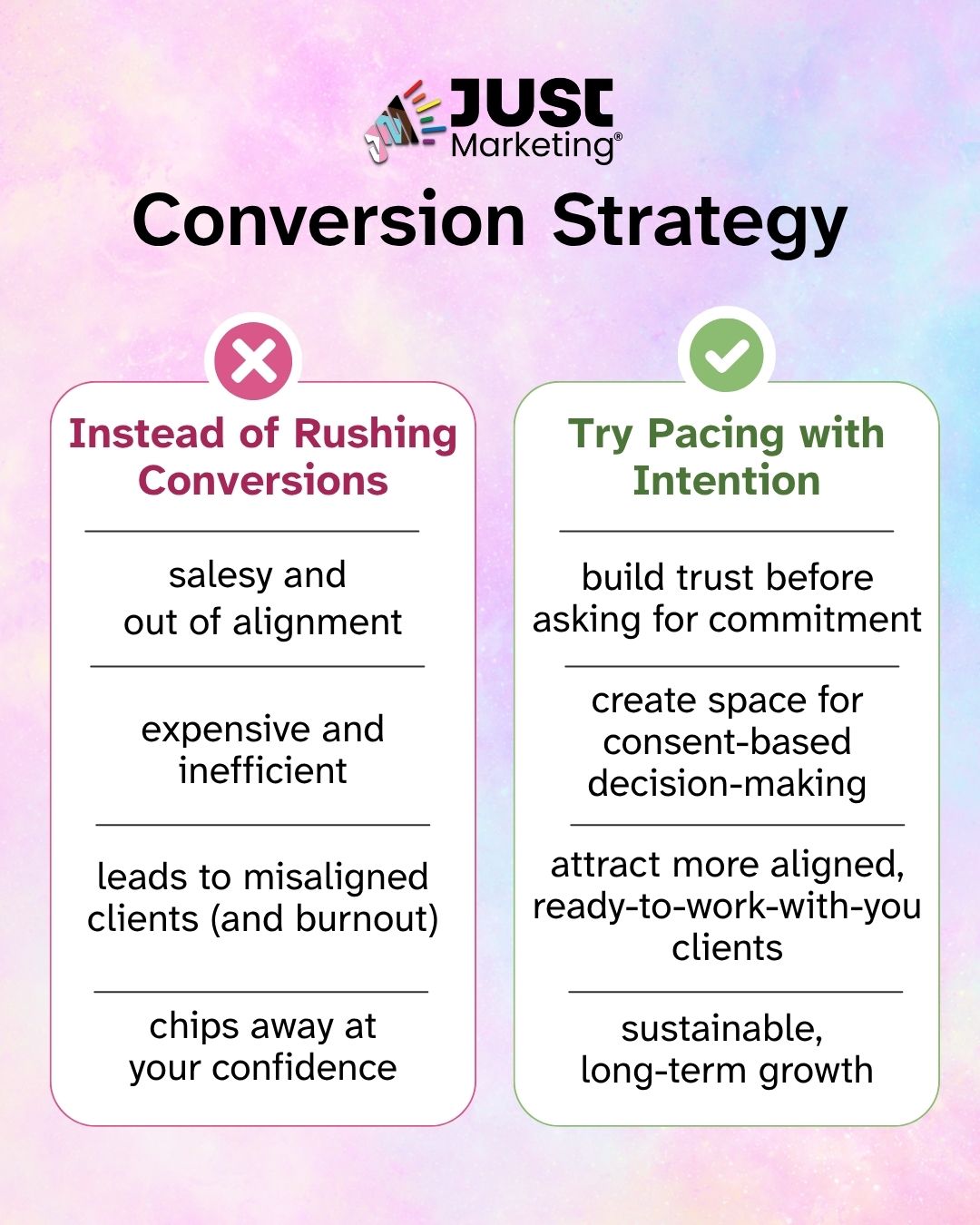
1. It feels salesy and out of alignment
High-pressure tactics (like fake countdown timers, limited-time-only bonuses, or urgency-driven emails) can feel manipulative. For many mission-driven entrepreneurs, this creates a values clash. You want to grow your business—but not at the cost of your integrity.
2. It’s expensive and inefficient
Cold audiences usually require more nurturing, not less. Dumping ad spend into a campaign that rushes people to buy before they’re ready can lead to high bounce rates and low conversion numbers. That means more dollars spent for less impact—and fewer aligned clients.
3. It leads to misaligned clients (and burnout)
When you attract folks based on FOMO or pressure, they’re often not the right fit. That misalignment shows up later as scope creep, missed expectations, and stressful client relationships that drain your energy.
4. It chips away at your confidence
When your “high-converting” funnel flops, it’s easy to internalize it as your failure. You start second-guessing your offers, your message, your worth. But the truth is—it’s the method that’s broken, not you.
You don’t need to trick people into working with you. You just need to build trust first.
The Power of Pacing with Intention
Marketing is a lot like building a relationship. Imagine if you walked up to a stranger and said, “Hey, I just met you… now buy this thing from me.” Awkward, right?
But that’s exactly what rushing cold traffic does. It skips all the connection, consent, and context that make someone feel safe and excited to say “yes.”
Here’s what happens when you slow things down and pace your marketing with intention:
1. You build trust before asking for a commitment
Just like in real life, trust takes time. When you focus on showing up consistently, sharing your values, and offering genuinely helpful content, people start to see you as a trusted resource—not just another voice trying to sell them something.
2. You create space for consent-based decision-making
Pacing gives your audience the breathing room they need to engage when they’re ready. That’s especially important for neurodivergent folks or anyone who needs extra time to process information. When your marketing feels safe and respectful, people are more likely to lean in.
3. You attract more aligned, ready-to-work-with-you clients
The folks who stick around through your nurturing content—the blog posts, emails, social media value drops—are the ones who are actually excited to work with you. They’ve had time to get to know your vibe, and they’re saying “yes” because it’s right, not rushed.
4. You set yourself up for sustainable, long-term growth
Fast sales are tempting, but sustainable growth comes from building a community that vibes with your values. That community becomes your ecosystem—referring you, supporting you, and sticking with you over time.
Pacing with intention isn’t passive. It’s powerful. It means you’re choosing aligned action over anxious urgency.
How to Pace Your Marketing with Intention
Slowing down your marketing doesn’t mean doing less—it means doing what matters more intentionally. You’re still showing up, still sharing your offers, still inviting people to work with you… but in a way that centers trust, consent, and connection.
Here’s how to pace your marketing with purpose:
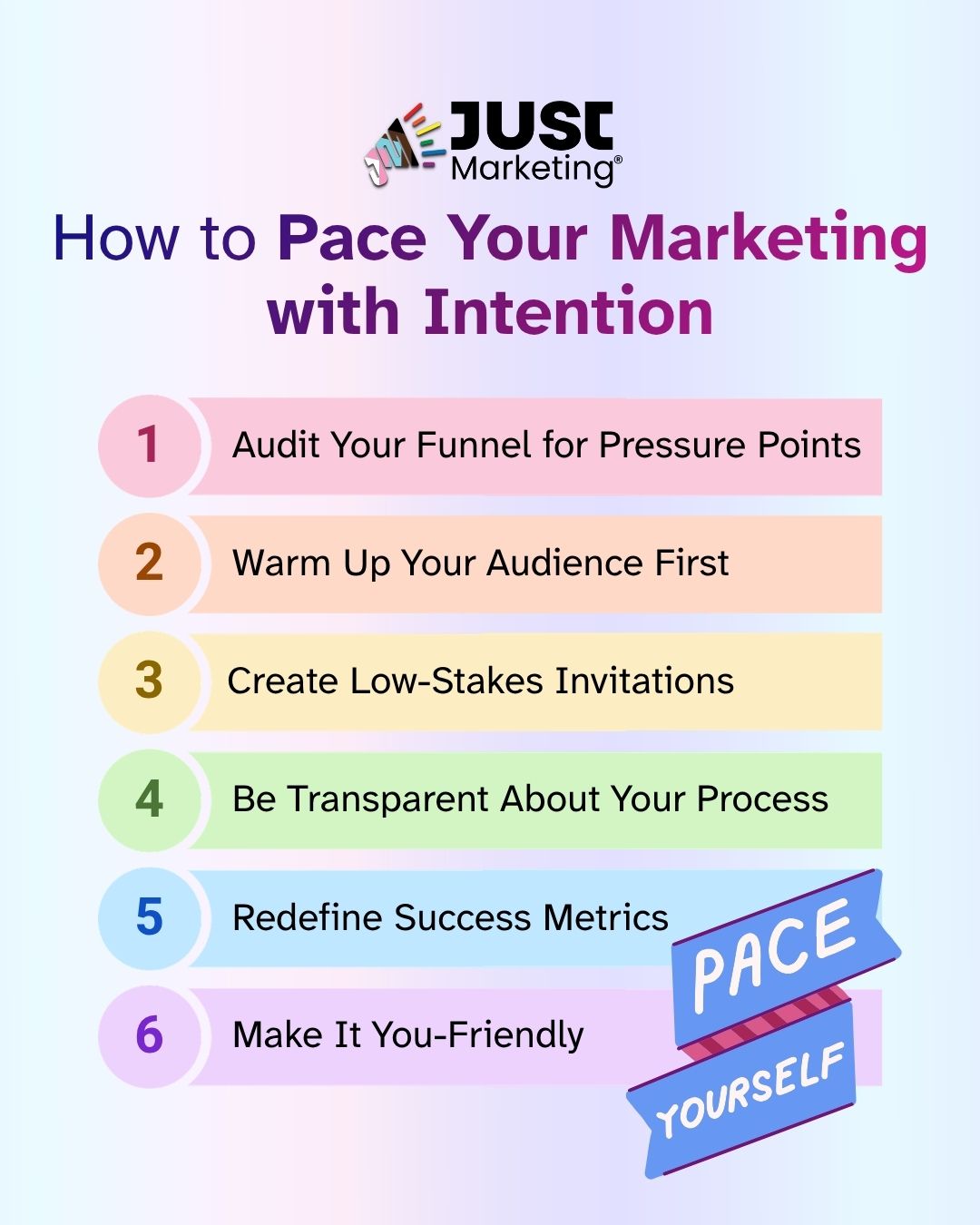
1. Audit Your Funnel for Pressure Points
Take a look at the journey you’re asking your audience to take. Are you rushing to sell in your first email? Is your sales page heavy on scarcity and light on support? Start by identifying where you may be unintentionally pushing people too soon—and ask yourself how you can make those moments feel more like invitations than ultimatums.
2. Warm Up Your Audience First
Use your content—on social media, your blog, or your email list—to nurture before you pitch. Share stories, value-packed insights, behind-the-scenes peeks, and your brand’s unique perspective. Let people feel who you are and what you stand for. That’s what builds the know-like-trust factor that leads to natural conversions.
3. Create Low-Stakes Invitations
Not everyone is ready to buy—but they are often ready to connect. Offer opt-ins like free resources, checklists, or workshops. Invite them to follow you on Instagram or connect on LinkedIn. These small steps give people a way to stay in your world without pressure—and give you a chance to keep the conversation going.
4. Be Transparent About Your Process
People feel safer when they know what to expect. Share what it’s like to work with you, how your offers are structured, and the values behind your approach. Transparency builds trust and makes the decision to work with you feel grounded, not impulsive.
5. Redefine Success Metrics
Conversions are great, but they’re not the only sign your marketing is working. Engagement, saves, shares, thoughtful DMs, and replies to your emails are powerful indicators that people are paying attention. And those interactions? They’re the seeds of future sales.
6. Make It ADHD-Friendly (and You-Friendly)
Simplify your systems so you can stay consistent without burning out. Use templates. Batch when you can. Set realistic goals. The more ease you build into your marketing rhythm, the more sustainable (and joyful) it becomes.
Pacing isn’t about being passive. It’s about creating an experience that’s respectful, values-aligned, and built to last. You’re not losing momentum—you’re building something that’s meant to last.
Realign with Just Marketing® Principles
At the heart of all of this is a truth that too many marketers overlook: ethical marketing isn’t about hacking behavior—it’s about honoring humanity.
When you choose to slow your marketing down, you’re not just doing it for strategy’s sake (though yes, it is more sustainable and effective). You’re doing it because it aligns with your values.
Here’s how intentional pacing connects to Just Marketing® principles:
1. It centers consent.
You’re not pushing people into buying. You’re inviting them into a relationship—one where they have the time, space, and safety to explore, ask questions, and make empowered decisions.
2. It honors accessibility and neurodiversity.
Fast, high-pressure funnels often exclude folks who need more processing time or who feel overwhelmed by urgency-based messaging. Slower, intentional marketing creates room for everyone to engage on their own terms.
3. It builds equity and trust.
You’re not trying to “trick” people into choosing you. You’re showing up with transparency, clarity, and care—and letting your work, values, and integrity speak for themselves.
4. It reflects real relationships.
Relationships take time. They deepen through repeated, meaningful interactions. That’s true for your friendships, your partnerships, and your business. When you give people the chance to really get to know you, they’re more likely to stick around—and tell their friends.
Choosing to pace your marketing isn’t just a business decision—it’s a justice-focused one. It pushes back against urgency culture, scarcity tactics, and systems that prize profit over people.
And let’s be honest: it feels so much better to market this way.
So if you’ve been feeling the pressure to convert quickly, here’s your reminder: you’re allowed to slow down, build trust, and market in a way that actually feels good.
Let’s Keep the Conversation Going
If this blog post had you nodding along, you’re so not alone. More and more entrepreneurs are ditching high-pressure tactics in favor of sustainable, ethical marketing that actually feels human.
Let’s connect! I’d love to hear your thoughts or how you’re pacing your marketing with intention. Come say hi on LinkedIn or Instagram—I’m always down for a nerdy marketing chat or a good GIF exchange.
Curious about working together? If you’re ready to build ethical, sustainable systems that reflect your values (without trying to be everywhere or do everything), you can learn more about how I support entrepreneurs like you right here.
Want more content like this? Join my email list to get weekly insights, strategies, and encouragement to help you market with clarity, confidence, and kindness.