If your business is rooted in justice, equity, and inclusion, then marketing accessibility is a non-negotiable.
And yet, so many service-based entrepreneurs unintentionally create offers that leave people behind. Whether it’s confusing pricing, sensory-overloading visuals, scarcity tactics that induce panic, or paywalled community access – these common practices create real barriers for folks who already face enough of them in their daily lives.
You don’t have to overhaul your entire business to start making a difference… You can create offers that feel good, do good, and still get results. And it starts with awareness, intention, and a few small (but powerful) shifts.
In this post, we’re breaking down four of the most common accessibility barriers in offers – and how to start removing them in a way that supports your audience and your sustainability. Each section links to a deeper dive, so you can move at your own pace and take what serves you.
Let’s build offers that welcome people in – not quietly push them out.
What Marketing Accessibility Really Means
When most people hear “accessibility,” they think of ramps, screen readers, or captioned videos. And yes – those things matter. But marketing accessibility goes way beyond compliance checklists.
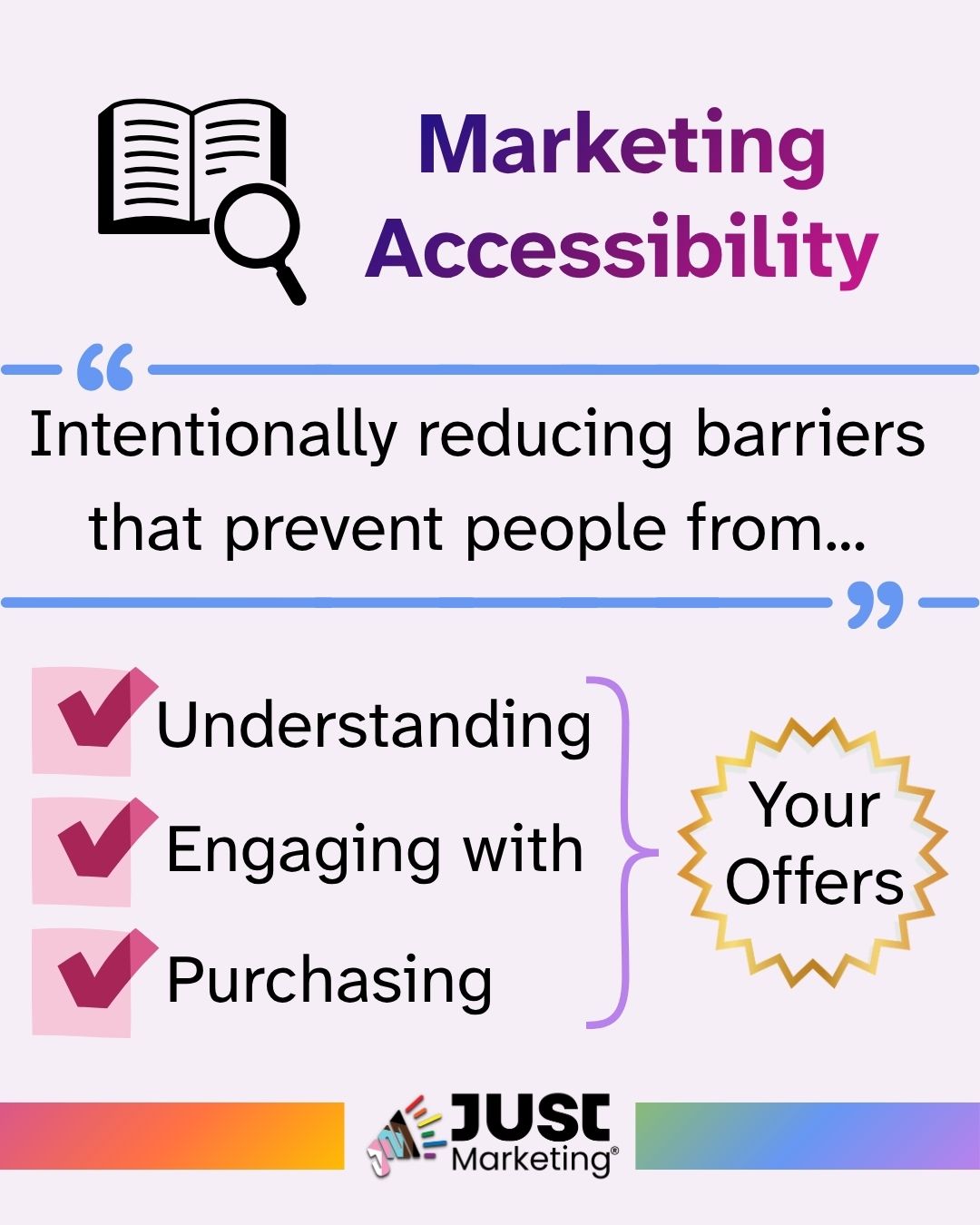
In the context of ethical business, marketing accessibility means intentionally reducing barriers that prevent people from understanding, engaging with, or purchasing your offers.
It’s not just about disability (though that’s important). It’s also about:
- Cognitive overload for neurodivergent folks
- Decision fatigue caused by complex pricing
- Time or financial constraints for low-income buyers
- Visual overwhelm for people with sensory sensitivities
- And access issues for folks who aren’t native English speakers, or who use assistive tech
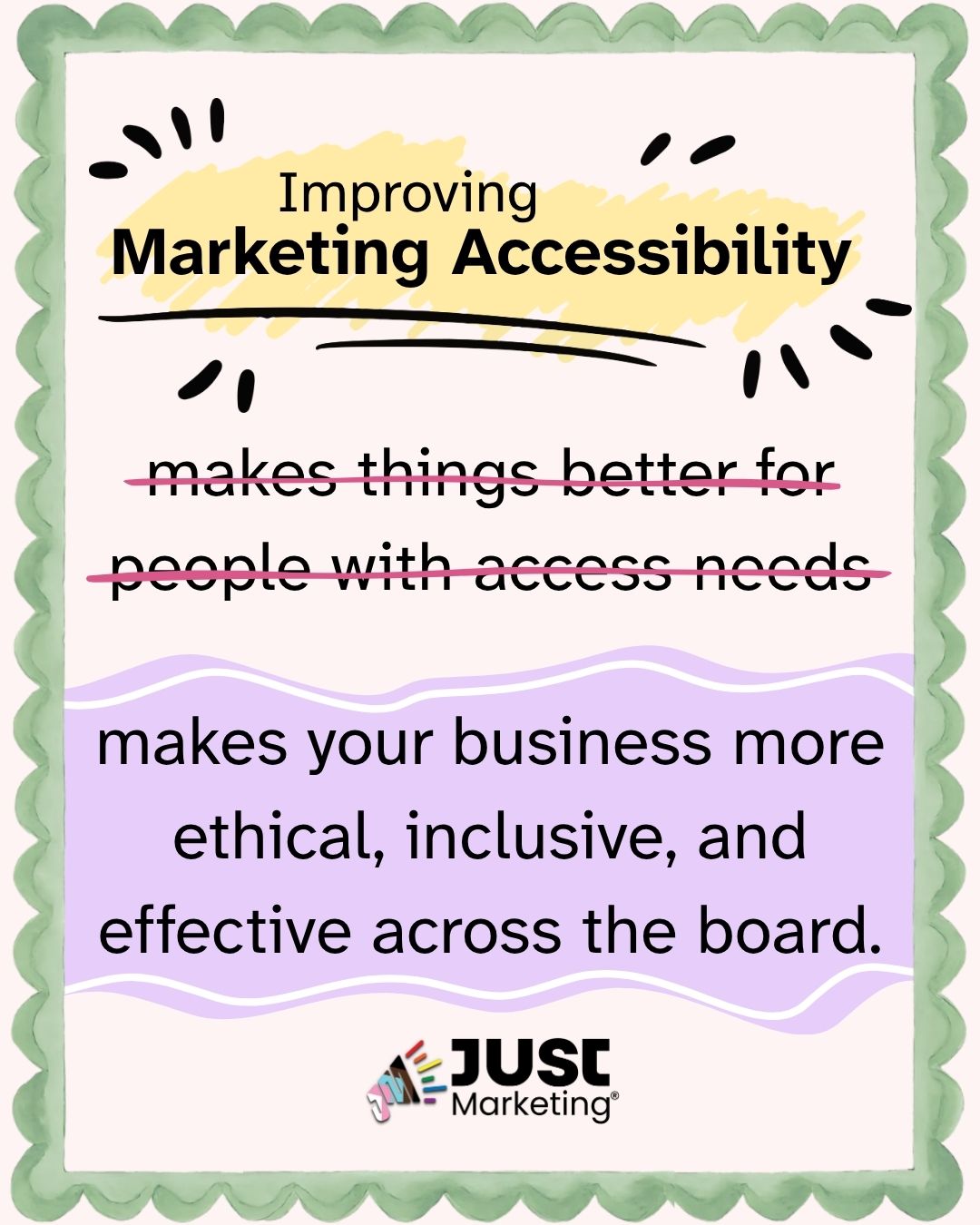
When your offers are easier to understand, easier to engage with, and easier to say “yes” to, everyone wins.
4 Ways to Remove Access Barriers from Your Offers
Creating accessible offers doesn’t mean doing everything at once – it means identifying where your current systems may unintentionally exclude people and making thoughtful adjustments. These four common barriers are a great place to start.
Each one includes a link to a full blog post where we dig deeper with real-world examples, solutions, and inclusive alternatives.
1. Confusing Pricing Models
Barrier: Too many choices. Unclear payment options. Jargon-filled package names. These things don’t just cause confusion – they can create anxiety and shut people out, especially neurodivergent folks or buyers who need more time to process.
Accessibility Shift: Simplify your pricing. Offer clear, tiered options or a pay-what-you-can model. Use plain language to describe what’s included – and don’t hide the price behind a sales call.
Read: Simplify Your Pricing Options: A More Accessible Approach to Your Offers
2. Visual Design That Excludes
Barrier: Flashy graphics. Hard-to-read fonts. No captions or alt text. When your visuals prioritize aesthetics over access, you’re unintentionally telling some people, “This isn’t for you.”
Accessibility Shift: Design with inclusion in mind. Use high contrast colors, legible fonts, descriptive alt text, and always caption your videos. Bonus: it boosts SEO and trust.
Read: Inaccessible Visuals: The Hidden Barrier to Relationships and Revenue
3. Manipulative Scarcity Tactics
Barrier: Countdown timers. “Only 3 spots left!” pressure. 24-hour flash sales. Scarcity triggers urgency – but it also triggers stress, especially for folks with decision fatigue, time blindness, or financial limitations.
Accessibility Shift: Practice ethical urgency. Use transparent timelines and give people time to decide. Create evergreen options or low-pressure pathways to work with you.
Read: Exclusive Discounts: Is Your ‘Limited-Time Offer’ Leaving People Behind?
4. Paywalled Communities and Connection
Barrier: High-ticket programs as the only way to get access to you or community. When everything meaningful is locked behind a hefty price tag, it can feel exclusive in the worst way – especially to folks who are often excluded elsewhere, too.
Accessibility Shift: Offer multiple levels of access. Consider low-cost community tiers, free office hours, or generous content marketing. Build trust before transactions.
Read: Authority Bias: Paywalling Community – When Connection Becomes a Commodity
Quick Wins for More Accessible Marketing Right Now
Accessibility doesn’t have to be overwhelming – and it definitely doesn’t have to wait until “everything’s perfect.” You can start making small, intentional shifts today that will have a real impact on how your offers are received.
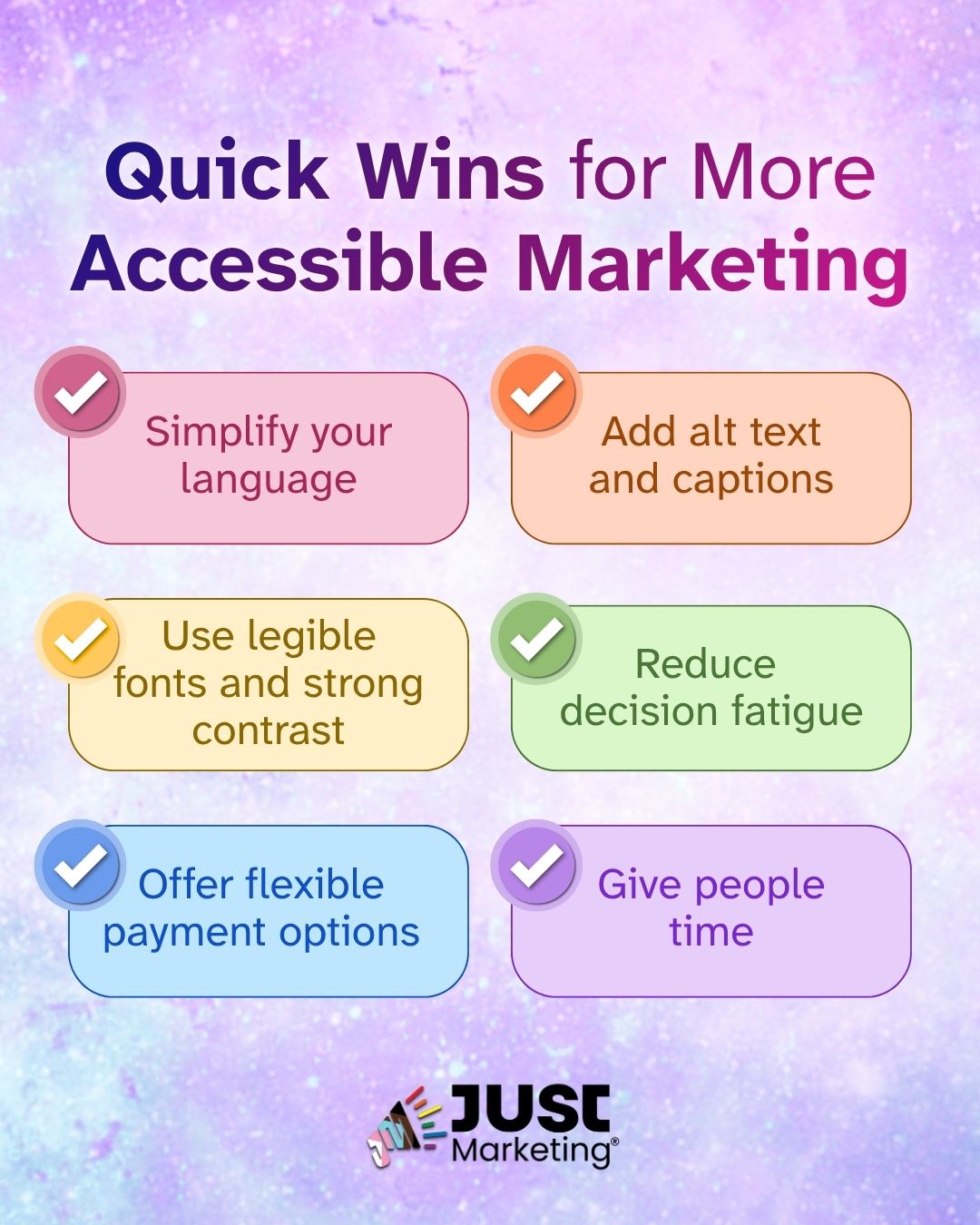
Here are a few low-lift, high-impact ways to reduce access barriers in your marketing right now:
1. Simplify your language
Write like you speak. Cut the jargon, skip the fluff, and make it easy for folks to understand what you do and how you can help – especially on sales pages.
2. Add alt text and captions
Every image should have descriptive alt text. Every video? Captions, always. Bonus: this improves SEO and increases reach.
3. Use clear, legible fonts and strong contrast
Light gray text on a white background might look aesthetic, but it’s a nightmare for accessibility. Go for readable, high-contrast combinations.
4. Reduce decision fatigue
Too many offers or confusing pricing = instant overwhelm. Try bundling, simplifying, or offering a clear “start here” path.
5. Offer flexible payment options
Sliding scale, extended plans, or even community-funded scholarships can make a big difference – especially for values-aligned folks with limited financial access.
6. Give people time
If you’re using deadlines, make them clear and respectful. Skip the countdown clocks and pressure language. Trust that the right people will make empowered decisions when they’re ready.
These tweaks don’t require a rebrand or a full launch overhaul – they’re about being more thoughtful, intentional, and inclusive with the way you show up. And they can absolutely coexist with sustainable, profitable business practices.
Marketing Accessibility Is a Journey – Not a Checkbox
There’s no “perfectly accessible” offer. And truthfully? Chasing perfection can be its own kind of barrier.
The goal isn’t to check every box – it’s to show up with intention, curiosity, and a willingness to do better over time. Because when you commit to making your offers more accessible, you’re not just expanding your reach – you’re building deeper trust with the communities you care about most.
Reflect & Take Action:
What’s one small shift you can make this week to reduce friction and increase access in your offers?
It could be swapping your font, updating your pricing page, or reviewing your last IG post for alt text and readability. Start small. Stay consistent. It all adds up.
Let’s Keep This Conversation Going
Your work deserves to reach the people who need it most – and accessibility helps make that possible.
Want more support, inspo, and community around ethical, inclusive marketing?
- Let’s connect on LinkedIn and Instagram – I share content there regularly to help you market in ways that feel good and do good.
- Curious about working together? Click here to learn more about how I support mission-driven entrepreneurs in building accessible, aligned offers – without the overwhelm.
Join the email list for deeper insights, behind-the-scenes tips, and resources to build sustainable systems that reflect your values.