“You’re amazing – a total rockstar. I just know you’re meant for six-figure success… if you take action right now.”
This kind of high-praise, high-pressure copy might feel flattering at first – like someone finally sees your potential. But, not all compliments are created with kindness in mind.
This tactic has a name: Love Bombing.
Borrowed from the world of psychology, love bombing refers to over-the-top validation used to create emotional attachment – often with strings attached. And yep, it’s shown up in marketing circles too.
Here’s the thing: as values-aligned entrepreneurs, we don’t want to manipulate our audience into a yes. We want to empower them to make informed, confident, consent-based decisions.
In this post, we’ll explore what love bombing in marketing really is, why it can be especially harmful for neurodiverse and trauma-impacted folks, and how to shift toward genuine, grounded encouragement that builds trust – not pressure.
What Is Love Bombing in Marketing?
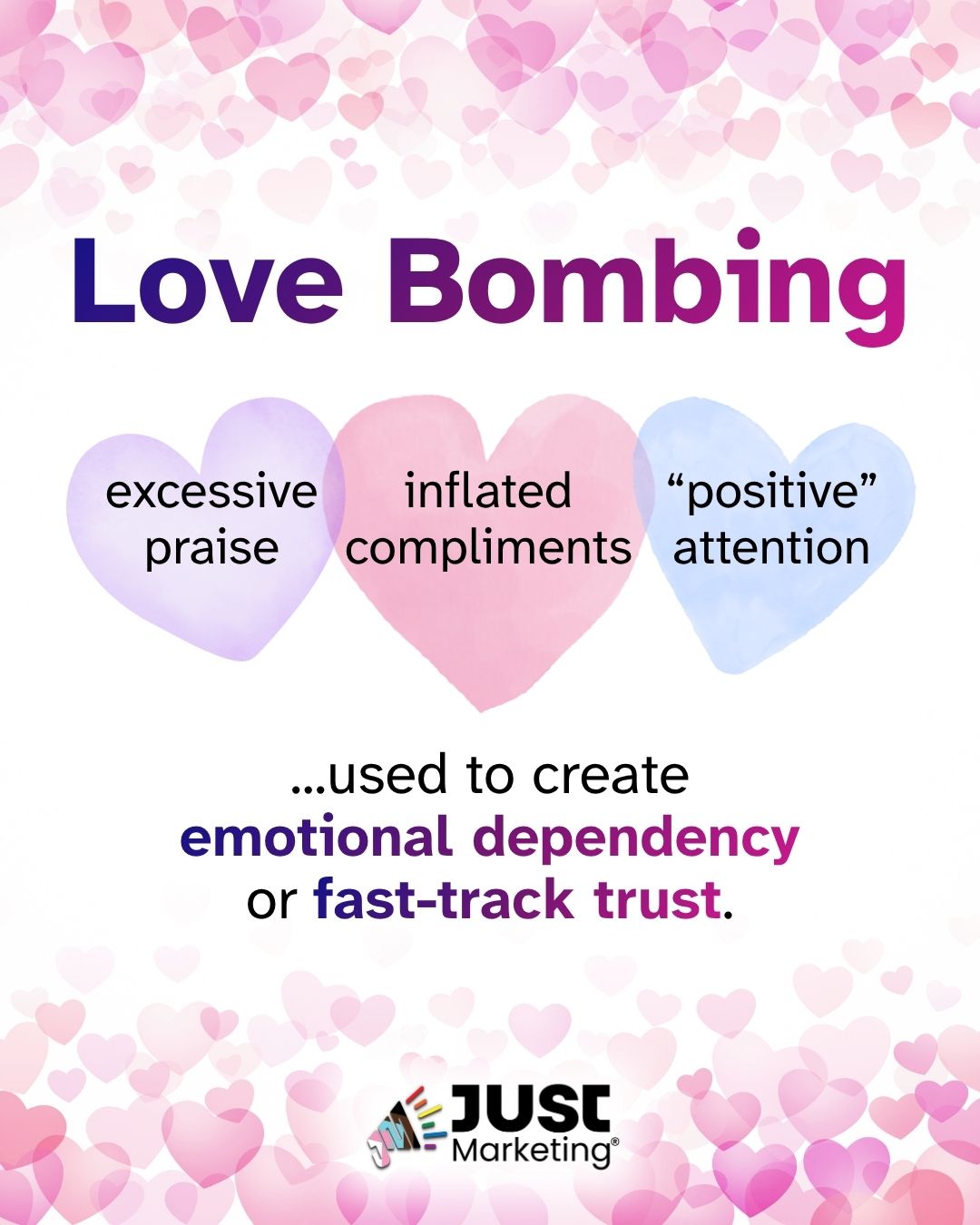
At its core, love bombing is a psychological manipulation tactic – one that shows up in personal relationships and in business. It’s characterized by excessive praise, inflated compliments, and a flood of “positive” attention… all used to create emotional dependency or fast-track trust.
In marketing, it sounds like:
- “You’re clearly meant for more – don’t waste your potential by saying no.”
- “I only work with soul-aligned visionaries, and if you’re reading this, I know that’s you.”
- “You're so ready for your next level. Why wait?”
These phrases might seem kind on the surface – but their real goal is to trigger an emotional response that pushes someone toward a purchase.
Instead of respecting the audience’s autonomy and timing, love bombing turns up the emotional volume in an attempt to convert quickly. It’s persuasion cloaked in praise… and it can be especially harmful to those who are already navigating burnout, rejection sensitivity, or trauma.
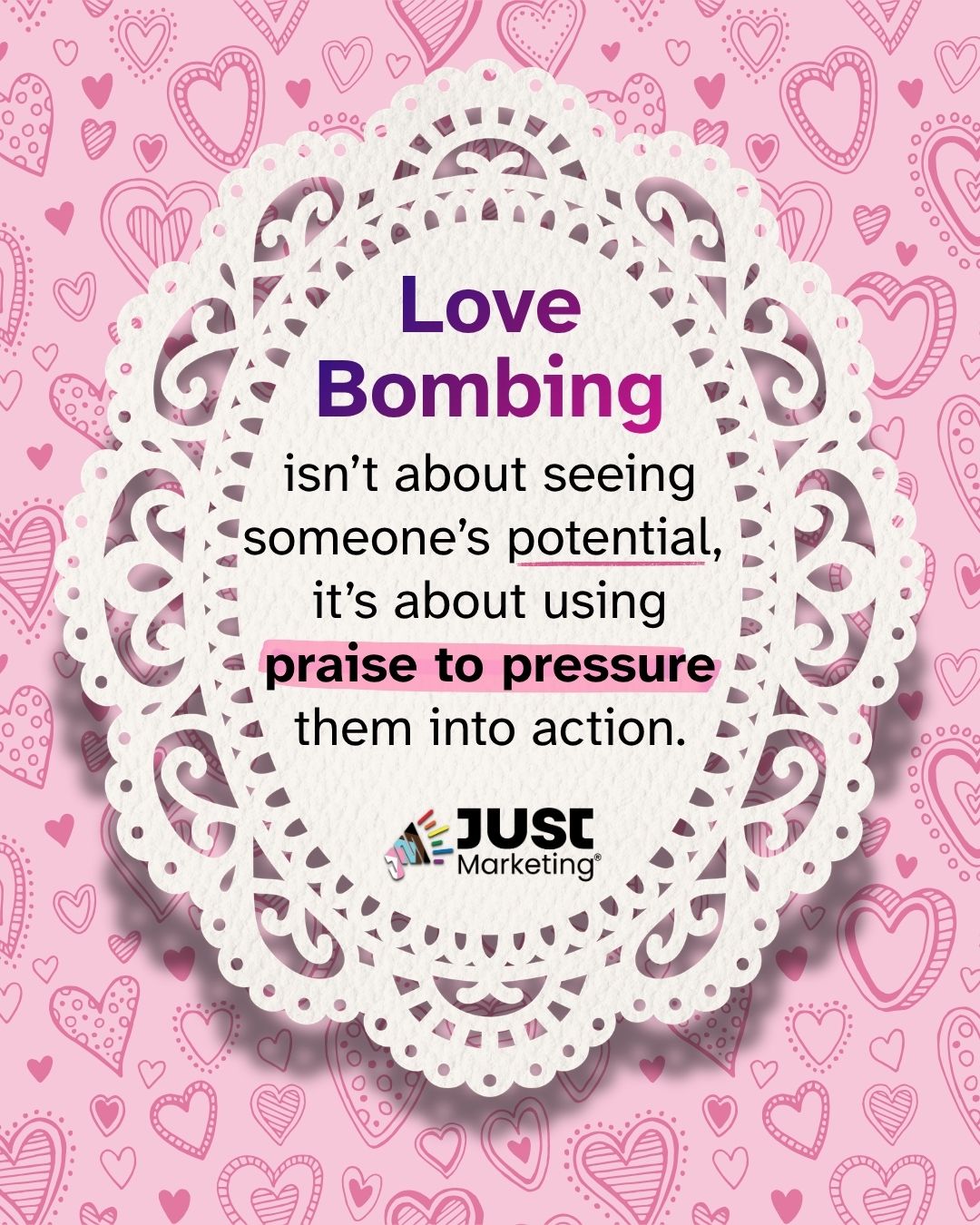
Love bombing isn’t about seeing someone’s potential – it’s about using praise to pressure them into action.
Many marketers don’t mean to cause harm with this kind of language. It’s often taught in traditional sales trainings as a “high-vibe” way to build connection. But good intentions don’t erase harmful impacts – especially when the tactic relies on bypassing informed consent.
Why It’s Problematic (The Just Marketing® Perspective)
Love bombing may sound sweet, but under the surface, it can do real harm – especially when we look at it through a Just Marketing® lens that centers ethics, inclusion, and accessibility.
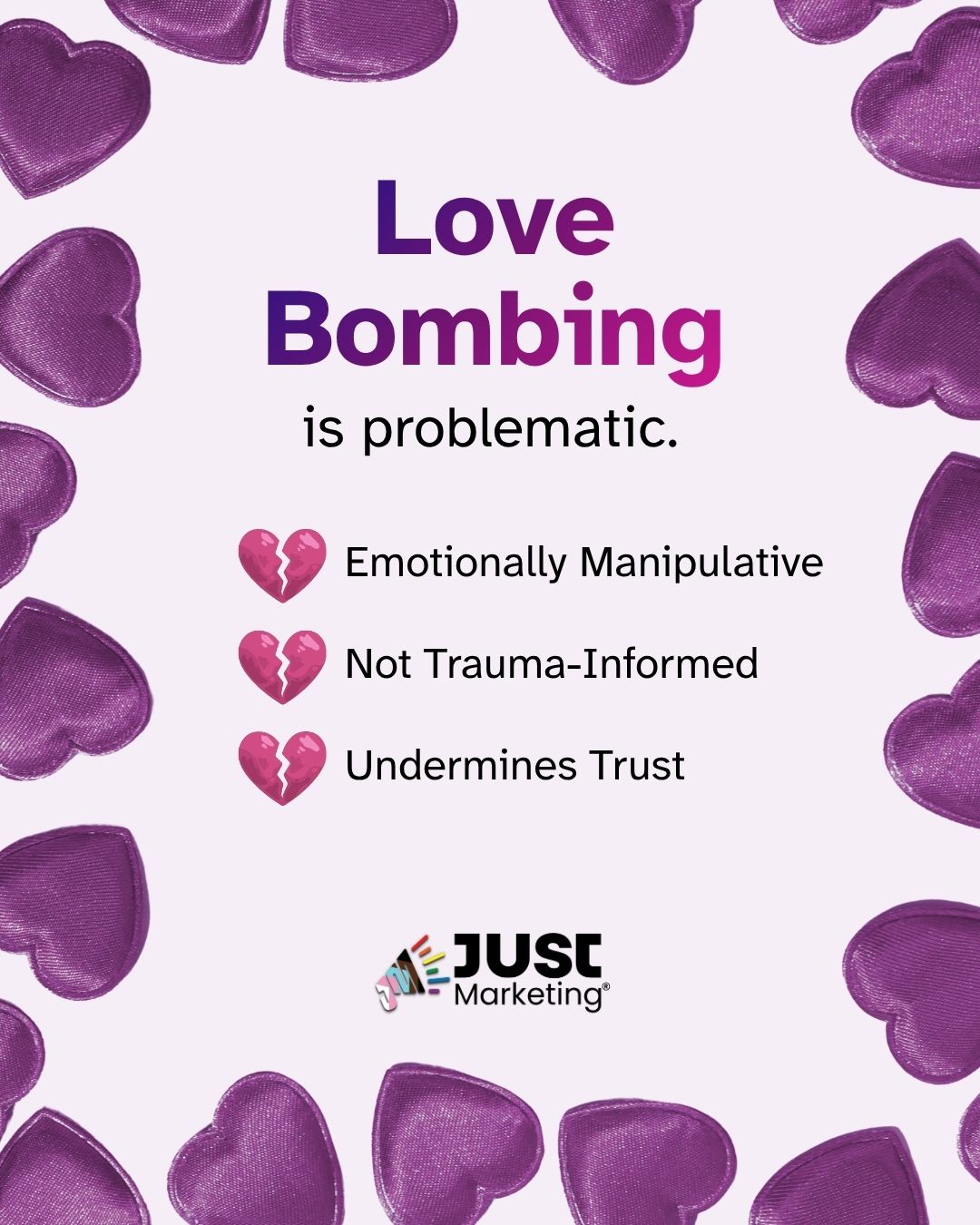
Let’s break down what makes this tactic so problematic:
It’s Emotionally Manipulative
Love bombing leverages excessive praise to create urgency and emotional dependency. It floods the nervous system with feel-good vibes (hello, dopamine!) – but then attaches those feelings to a buying decision.
That’s not empowerment. That’s coercion.
And while the copy might sound kind or encouraging, the intent is often to override a person’s boundaries and get them to say yes before they’re ready.
It’s Not Trauma-Informed
For folks with trauma histories – especially from manipulative or emotionally abusive relationships – love bombing in marketing can be deeply triggering. It mirrors unhealthy dynamics, where over-the-top validation is used to create false intimacy.
This is especially important in service-based industries like coaching, consulting, or healing work, where clients are often already in vulnerable positions.
Ethical marketing should help people feel safe and respected, not love-bombed into submission.
It’s Not Inclusive or Accessible
Love bombing assumes that all people respond well to emotionally charged language – but that’s just not true.
- Neurodivergent folks may prefer clear, straightforward communication over emotional hype.
- Some people may feel deeply uncomfortable with unsolicited praise, especially if they’ve been socialized to distrust flattery.
- Others may find this language performative, disingenuous, or difficult to process in the moment – especially during decision fatigue or sensory overload.
Over-the-top positivity can be just as inaccessible as negative pressure.
It Undermines Trust
At first glance, love bombing might feel like relationship-building. But when people realize that all the validation was just a setup for a pitch, it erodes trust.
And trust? That’s the foundation of long-term, values-aligned relationships.
Manipulative praise may get short-term conversions, but it rarely leads to sustainable business growth.
In Just Marketing®, we believe your audience deserves truth over tactics, clarity over hype, and genuine connection over emotional manipulation.
Let’s look at what that can actually sound like in your copy…
A Just Marketing® Alternative: Grounded Empowerment & Consent-Based Connection
You don’t need to sprinkle glittery praise all over your sales page to connect with your audience. In fact, your words will land more powerfully when they’re honest, grounded, and consent-driven.
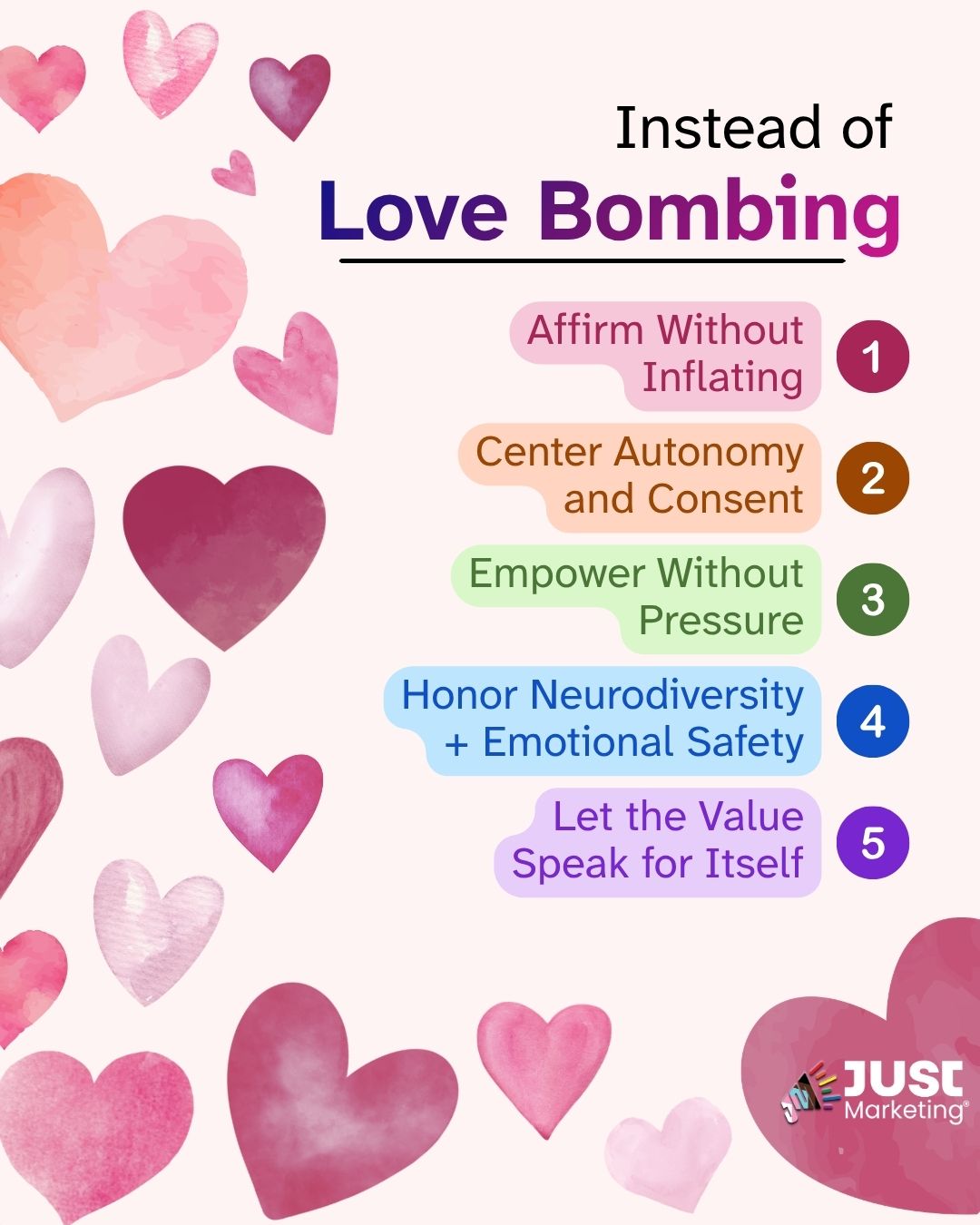
Let’s look at how to shift away from love bombing and toward ethical, empowering messaging.
1. Affirm Without Inflating
Affirmation can be powerful – when it’s genuine and specific. Instead of grand, vague compliments that sound like flattery, focus on what’s real.
Instead of: “You’re a total rockstar and absolutely meant for this transformation!”
Try: “If you’ve been exploring ways to grow sustainably and in alignment with your values, this might be the support you’ve been looking for.”
Speak to their actions, goals, or values – not their worth.
2. Center Autonomy and Consent
Love bombing tells people who they are and what they should do. Just Marketing® invites them to decide for themselves.
Instead of: “You’re ready for this – I just know it.”
Try: “You know yourself best. If this feels like a fit, I’d love to support you.”
Respect their timing, needs, and decision-making process.
3. Empower Without Pressure
You can still cheer folks on – without using their potential as leverage.
Instead of: “Don’t waste your potential by walking away.”
Try: “Whether you move forward with this offer or not, your work matters – and I’m cheering you on.”
That kind of encouragement builds trust, not urgency.
4. Honor Neurodiversity + Emotional Safety
Avoid emotionally overwhelming language that assumes everyone responds the same way. When in doubt, choose calm, clear copy that gives people space to process.
Grounded doesn’t mean boring – it means safe, respectful, and aligned.
5. Let the Value Speak for Itself
When your offer is solid and your intentions are clear, you don’t need to overcompensate with hype.
- Use transparent language.
- Share clear benefits.
- Offer real stories or results – not fluffed-up testimonials or inflated transformation promises.
Trust that the right-fit clients will recognize themselves in your words – not because you told them they were “meant for it,” but because they felt seen and respected.
How to Audit Your Own Messaging
A lot of us – especially those of us who learned marketing from traditional (aka bro-marketing) spaces – have probably used love bombing without realizing it.
No shame. No guilt trip. Just an invitation to pause, reflect, and shift.
This is about learning, unlearning, and doing better – not being perfect.
Here’s a simple, self-check audit you can use to spot potential love bombing in your own content:
Love Bombing Self-Audit Checklist:
- Am I using flattery to push urgency or encourage a “yes”?
Is the compliment genuine, or is it a stepping stone to a sales pitch?
- Does this message assume something about the reader’s identity or worth?
Am I telling them who they are, or inviting them to reflect on what’s right for them?
- Would this message still feel respectful to someone who’s neurodivergent, trauma-impacted, or burnout-prone?
Consider tone, intensity, and emotional safety.
- Is this praise grounded in something real – like their actions, goals, or values – or is it vague and inflated?
Real connection > generic hype.
- Would I say this to a friend, face-to-face, without it feeling weird?
If it would feel manipulative or disingenuous in a conversation, it probably reads that way in copy too.
This isn’t about stripping all personality out of your marketing – it’s about making your words safer, clearer, and more trust-building for the people you actually want to serve.
And when in doubt?
Ask: “Does this empower choice… or override it?”
Flattery Isn’t a Marketing Strategy
At the end of the day, love bombing might seem like harmless positivity – but when we dig deeper, it’s clear how it can undermine consent, emotional safety, and accessibility.
You don’t need exaggerated praise or emotional hype to be compelling… you just need clarity, respect, and connection.
- Your words can uplift without manipulating.
- Your message can inspire without inflating.
- Your marketing can convert and be kind.
By replacing love bombing with grounded encouragement and consent-based communication, you're not just doing better marketing – you're building a business that truly honors the people you serve.
Let’s Keep the Conversation Going
If this post made you pause and think – I’d love to stay connected.
- Connect with me on LinkedIn
- Come hang out on Instagram
- Explore ways to work together if you’re ready to rewrite your marketing story – with ethics, empathy, and ease.
- Join my email list for ethical marketing insights, ADHD-friendly tips, and inclusive content strategies.