In a world where standing out feels harder than ever, the temptation to lead with big, flashy credentials is real. And let’s be honest – there’s nothing wrong with celebrating your experience or education. You’ve worked hard. You’ve earned it.
“Harvard-trained.”
“6-figure coach.”
“#1 expert in [insert industry here].”
But here’s the thing: there’s a fine line between establishing credibility and manipulating trust. That’s where authority bias comes in.
The gist: Authority bias is the tendency to trust or follow someone simply because they seem like an expert. In marketing, ethical authority comes from honest context about your experience and a collaborative tone, so your audience feels free to ask questions and make their own decisions.
Part of the Persuasion Tactics series.
Authority bias is a psychological shortcut that makes people more likely to believe or buy from someone who seems like an expert. It’s a legit human tendency – and marketers know exactly how to use it to their advantage. But when authority is overhyped or inflated, it can create a power dynamic that disempowers your audience, silences questions, and excludes voices that don’t fit the “expert” mold.
If you’ve ever felt like you had to prove your worth just to get noticed… Or if you’ve ever hesitated to question someone’s bold claim because “they must know better”… This one’s for you.
In this post, we’re unpacking the use of authority bias in marketing – how it shows up, why it can be harmful, and what a Just Marketing® alternative looks like. Because real authority doesn’t need smoke and mirrors – it’s built on trust, transparency, and mutual respect.
What Is Authority Bias in Marketing?
Authority bias is often linked to Stanley Milgram's 1960s obedience studies, and Robert Cialdini named authority as one of his principles of influence.
Authority bias is our brain’s tendency to trust or follow someone just because they seem like an expert – even if we don’t have the full story. It’s not always intentional, and it’s not always harmful. But in marketing, this bias gets used a lot – and not always in ethical ways.
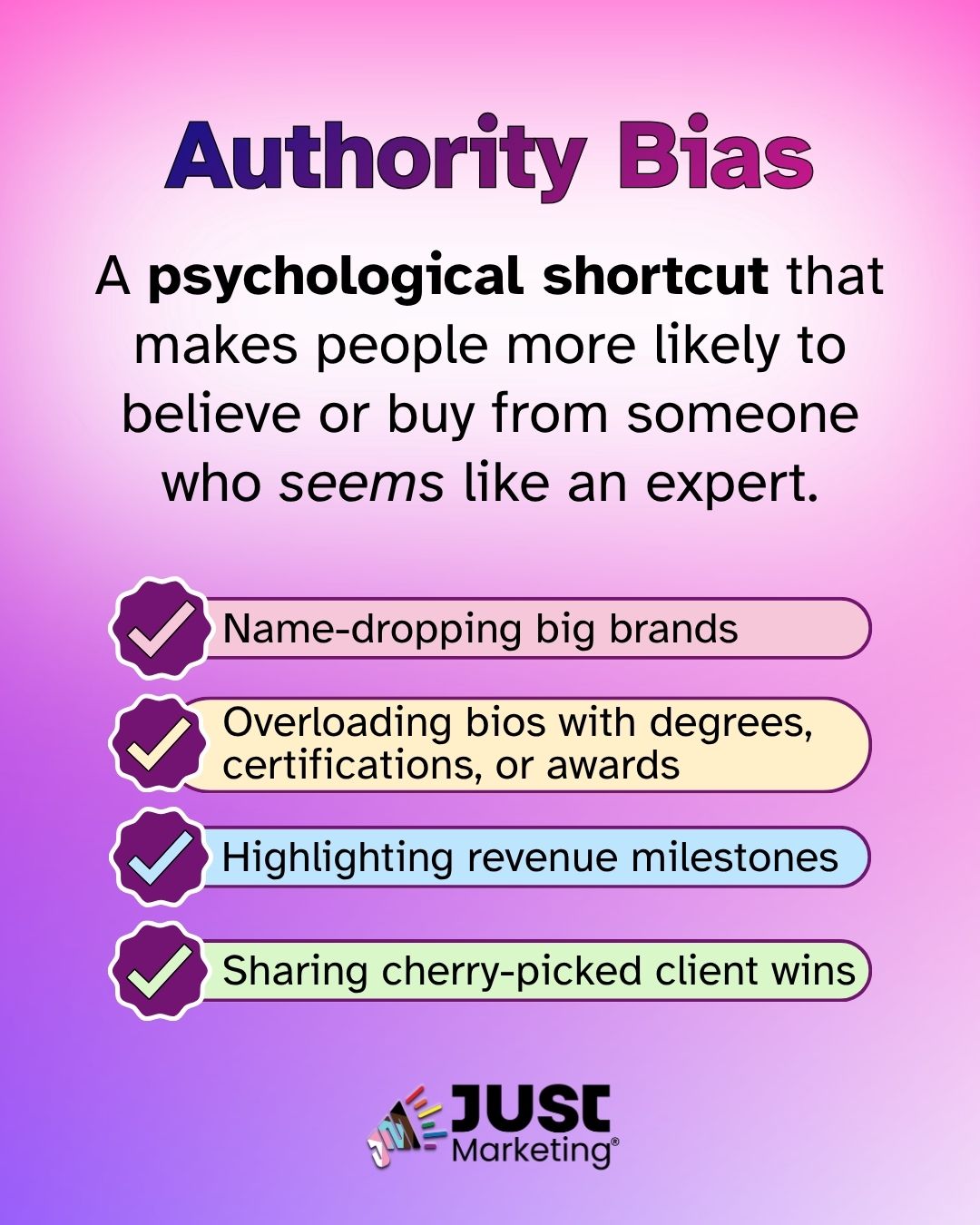
Here’s how it often shows up:
- Name-dropping big brands you’ve worked with – without context.
- Overloading bios with degrees, certifications, or awards that sound impressive but aren’t always relevant.
- Highlighting revenue milestones (“I built a 6-figure business in 6 months!”) as proof of credibility.
- Sharing cherry-picked client wins without the nuance of who that worked for – and who it didn’t.
At first glance, these tactics seem harmless. After all, people do want to know that you know your stuff. But the problem starts when the performance of authority becomes more important than actual trust-building.
In other words: if someone has to keep shouting “I’m the expert!” – it’s fair to wonder who they’re really trying to convince.
Why Can Authority Bias Be Harmful in Marketing?
Authority bias isn’t just about flexing your credentials – it’s about how those flexes affect the people you’re trying to reach. When used without care, it can shift your messaging from empowering to manipulative. Let’s break down what that looks like through the Just Marketing® lens.
Ethical Red Flags
When authority is inflated or strategically vague, it can:
- Shut down healthy skepticism – if someone sounds like the expert, people might feel pressured to accept everything they say without question.
- Blur the line between confidence and coercion, especially when paired with urgency tactics like “limited spots” or “you’ll fall behind if you wait.”
- Prioritize persuasion over consent, nudging people into saying yes before they’re truly informed or ready.
That’s not influence – that’s control.
Inclusion Gaps
Let’s talk privilege. Traditional “authority signals” often come from systems that have historically excluded marginalized folks:
- Prestigious degrees, expensive certifications, and elite networks are not equally accessible to everyone.
- Neurodivergent, disabled, and BIPOC entrepreneurs may hold deep, lived expertise that doesn’t look flashy on paper – but is just as (if not more) valuable.
- Constantly seeing “authority” modeled in one narrow way (polished, neurotypical, extroverted, able-bodied, white, cis) can make others feel like they don’t belong in the business space.
When we only uplift one kind of expert, we silence many others.
Accessibility Issues
Overhyping authority often involves:
- Jargon-filled bios that are hard to parse.
- Visuals that prioritize aesthetics over clarity (tiny text, cluttered design).
- Fast-paced, hype-heavy messaging that overwhelms folks with ADHD or anxiety.
These elements can create unnecessary barriers – making it harder for people to understand your offer, trust your process, or even feel welcome in your space.
In short: Authority isn’t the problem.
It’s how we use it – and who it excludes – that deserves our attention.
How Can You Build Authority Ethically?
You don’t need to shout your credentials from the rooftops to earn respect.
In fact, some of the most trustworthy brands lead with clarity, compassion, and collaboration – not just their resumes.
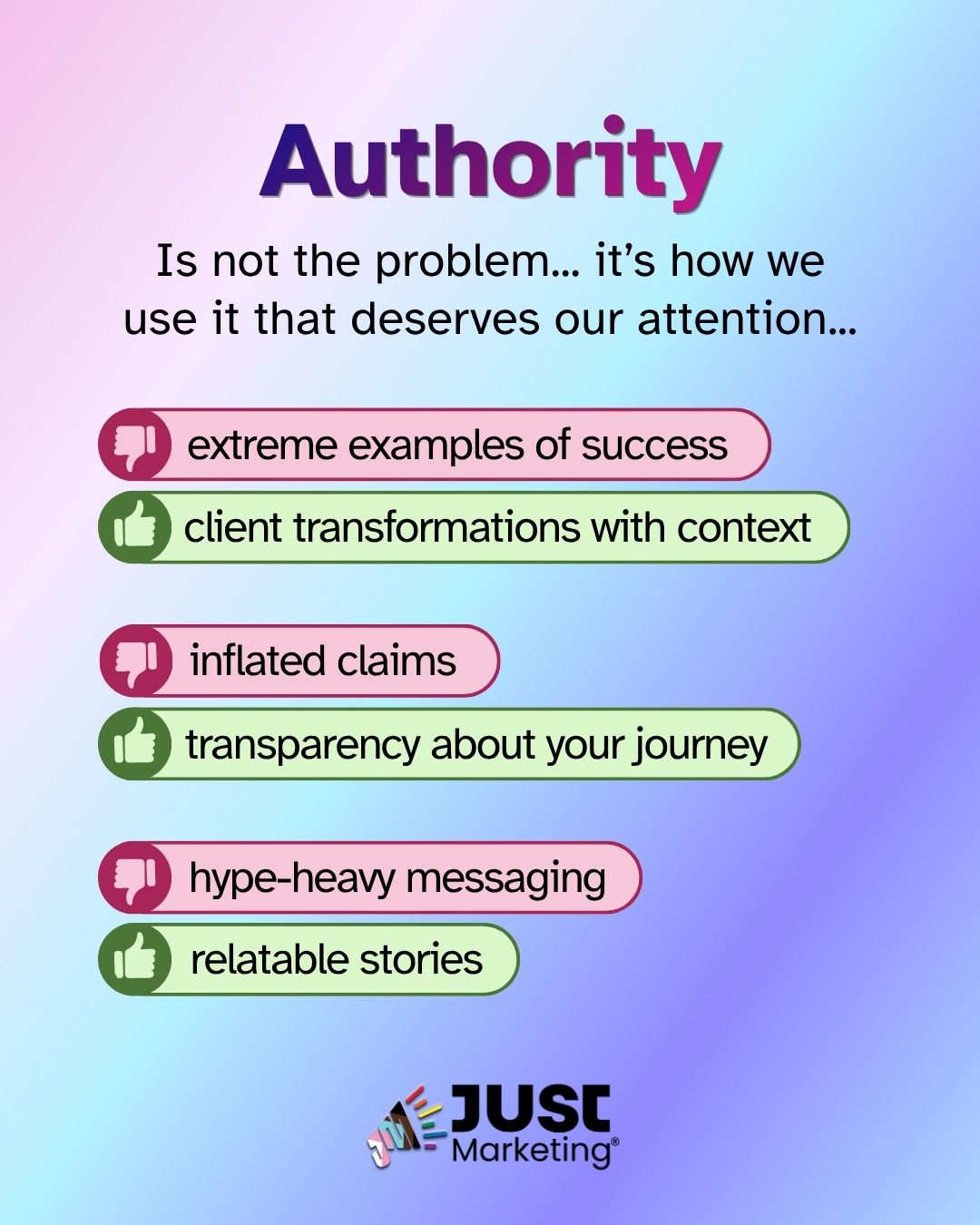
Here’s how to reframe authority in a way that feels aligned with your values and accessible to your audience.
1. Show, Don’t Shout
Instead of relying on inflated claims, show people what you actually do and why it matters. Try:
- Sharing relatable stories about your work or personal experience.
- Highlighting client transformations with context – what made the success possible, and who your offer works best for.
- Letting your values shine in your messaging, so people know what you stand for and what you won’t compromise on.
Instead of: “I’ve helped 500+ clients scale to 6 figures.”
Try: “I've supported dozens of neurodivergent entrepreneurs in building sustainable businesses that honor their energy and values.”
2. Center Collaboration, Not Hierarchy
Let your audience know you’re walking with them, not preaching from a pedestal.
Try phrases like:
- “Here’s what’s worked for me and my clients – and how we adapt it to fit each person.”
- “I don’t believe in one-size-fits-all solutions, but I do believe in frameworks that flex with your needs.”
- “We’ll co-create a plan that works for your brain, your body, and your bandwidth.”
This language levels the playing field – and makes space for mutual respect.
3. Be Transparent About Your Journey
Real authority isn’t about being perfect. It’s about being honest, self-aware, and open to growth.
You can build trust by:
- Naming your limitations (“I specialize in X, and refer out for Y.”)
- Owning your learning edges (“I’m continuing to unpack my own internalized ableism.”)
- Showing your process, not just polished results.
This kind of transparency isn’t weakness – it’s leadership rooted in integrity.
You are the expert – but your audience doesn’t need to be dazzled. They need to feel seen, safe, and supported.
Empowered Messaging, Not Manipulation
When we strip away the hype, what’s left?
- A message that respects your audience.
- A brand that builds trust over time.
- A business that reflects your values – not outdated marketing norms.
You don’t have to overstate your credentials or force authority to prove you’re legit. Your lived experience, your impact, your ability to meet folks where they are – that’s the real magic.
When we shift from “convince and convert” to “connect and co-create,” we open the door to relationships rooted in mutual respect, not manipulation.
So next time you feel the pressure to puff up your bio or drop a humblebrag on your sales page, pause. Ask yourself: Is this helping my audience feel empowered – or just trying to make me look impressive?
There’s a difference – and Just Marketing® is all about choosing the former.
Let’s Reimagine Authority, Together
If this post made you pause, reflect, or reimagine your own messaging – you’re not alone. I’m building a community of mission-driven, values-first entrepreneurs who are done with manipulative marketing and ready to do things differently.
- Let’s connect over on LinkedIn and Instagram – I’d love to hear your take on this.
- Want more content like this, plus behind-the-scenes tips on ethical marketing with ADHD in mind? Join my email list.
- Curious about how we can build your messaging in a way that feels empowering and aligned? Learn more about working together.
You don’t need to shout.
You just need to show up as you – the right people will feel it.
FAQs
Leading a sales page with “Harvard-trained” or “#1 expert” is a common example, especially when the credential isn't connected to what the buyer needs. Name-dropping big brands without context works the same way. These signals encourage people to trust quickly instead of evaluating the offer itself.
Absolutely! Share the credentials that are relevant to your clients and explain how they shape your work with them. Context helps people understand your expertise without feeling pressured by it. Just Marketing® is ethical, inclusive, and accessible, so your audience feels supported and your business grows sustainably. Learn more in the complete guide to Just Marketing®.
Lived experience, real client stories shared with consent, and a peek at your process all build genuine trust. Being clear about what you specialize in, and when you refer out, shows integrity. Many clients connect more deeply with relatable expertise than with polished titles.
Explain in plain language who you help and how you help them. Then share the experience that matters most to your ideal client, skipping jargon and long lists of acronyms. A short note about your values helps the right people feel at home.
Authority bias is the pull to trust someone who appears to be an expert. Social proof is the pull to follow what many other people are doing. Both can build trust when used honestly. Learn more about using social proof without FOMO.
Revenue numbers can be meaningful when they relate to what your clients want and come with honest context. Many readers find client outcomes and stories about your process more helpful than income figures. For tips on sharing results with care, see how to share client wins without exploitation.