We’ve all been there – caught in a whirlwind of pop-ups, countdown timers, and “just one more offer” before you can finally complete your purchase. What was supposed to be a simple “yes” turns into a confusing, high-pressure maze of upsells, FOMO, and guilt.
These are the classic moves of traditional sales funnels – and they’re everywhere in the online business world. Tactics like tripwires, one-time offers, and abandoned cart emails are marketed as smart strategy… but more often than not, they create friction, not flow. Especially for neurodivergent folks, overwhelmed entrepreneurs, or anyone trying to make values-aligned decisions, these funnels can feel less like support and more like manipulation.
The gist: A sales funnel is the path someone takes from discovering your work to deciding whether to buy from you. An ethical, consent-based funnel guides people toward your offers with clear expectations and genuine invitations, so they can say yes when they feel ready.
This post is your no-shame, no-fluff round-up of six common sales funnel tactics that deserve a second look – because when we know better, we can do better.
If you’re craving a marketing approach that centers consent, accessibility, and actual connection (instead of coercion), you’re in the right place.
Let’s unpack what these tactics are, why they’re so problematic, and what kinder, more ethical alternatives could look like – so you can build marketing systems that feel good for you and your audience.
Table of Contents
What Is a Sales Funnel?
Let’s start with a quick gut-check: the phrase “sales funnel” can feel a little… icky, right? It conjures up images of complicated diagrams, high-pressure tactics, and that bro-marketing vibe we’re all trying to unlearn. But at its core, a sales funnel is simply the path someone takes from discovering your work to deciding whether or not to buy from you.
The problem isn’t the funnel itself – it’s how that path is often paved with pressure, urgency, and manipulation.
Traditional funnels are designed to push people toward a sale as quickly as possible. And while that might boost short-term revenue, it often comes at the cost of long-term trust – especially when the process includes surprise pop-ups, shame-based follow-ups, or tactics that prey on impulse rather than informed choice.
Here’s the thing: when we treat people like “leads” to convert instead of humans to connect with, our marketing starts to feel transactional, extractive, and out of alignment with our values.
And for mission-driven, neurodivergent, or equity-minded entrepreneurs? That just doesn’t sit right.
But don’t worry – this isn’t a “funnels are bad” post.
This round-up dives into six of the most common (and most problematic) conversion tactics you’ve likely seen – or used – so you can reimagine them in ways that center clarity, care, and choice.
Because a funnel that feels good works better – for everyone.
6 Sales Funnel Tactics That Deserve a Rethink
Honestly, most of these tactics didn’t start out feeling shady. Many of us were taught to use them by mainstream marketing “experts” who prioritized conversion rates over consent. But once you start to look at how they actually impact your audience – especially those who are neurodivergent, disabled, or navigating trauma – it becomes clear: they’re doing more harm than good.
The good news? You don’t have to rely on pressure to make a sale. You can create supportive, accessible funnels that honor your people’s autonomy and build real trust.
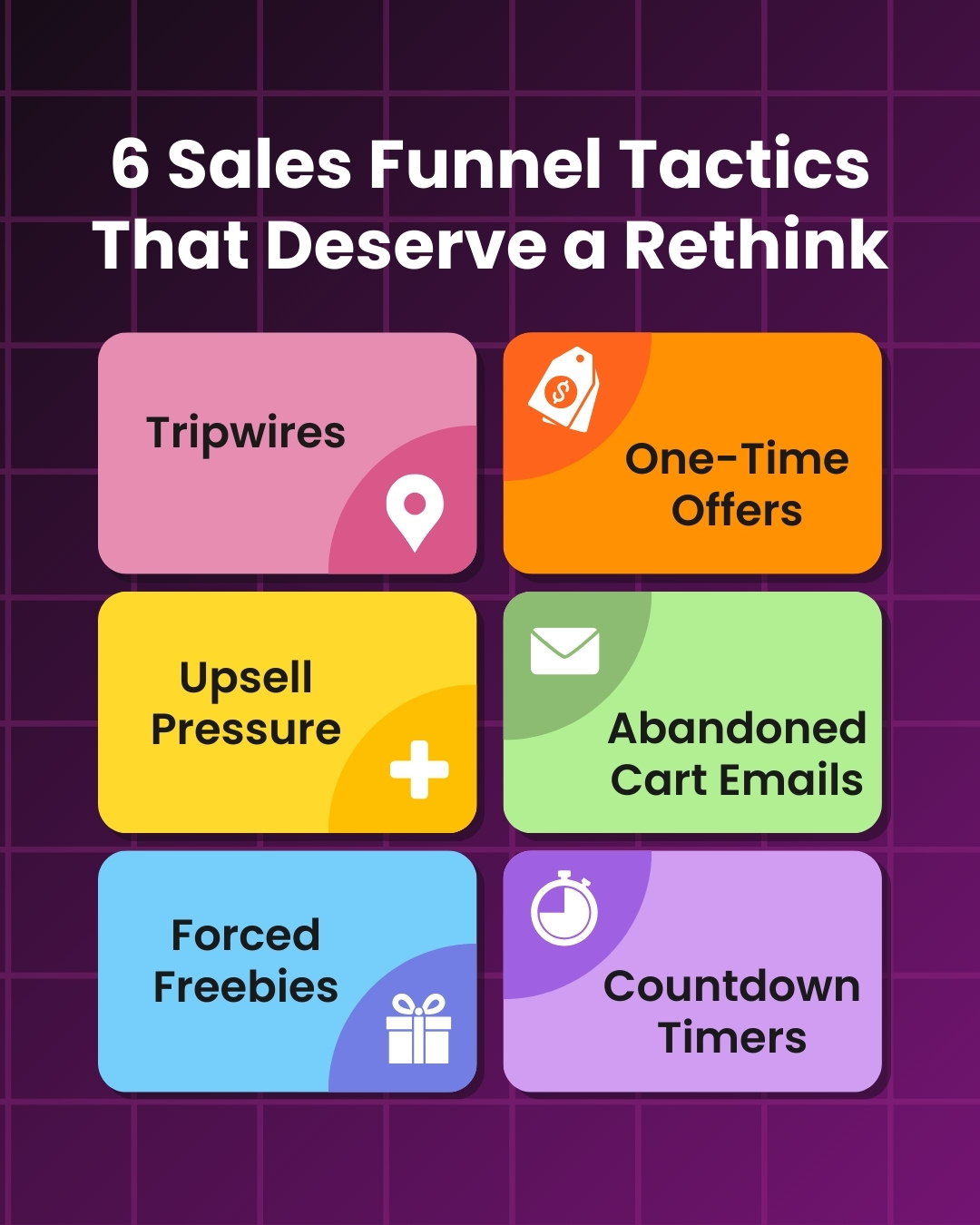
Here are six of the most common conversion tactics that could use a compassionate makeover:
1. Tripwires
The tactic: A low-cost offer ($7, $27, etc.) positioned as a “no-brainer,” followed by a surprise upsell sequence the second someone clicks “buy.”
Why it’s harmful: Tripwires can create a bait-and-switch dynamic. They prey on impulse buying and often lead people into a funnel they didn’t fully consent to – especially when followed by pressure-heavy upsells, timers, or aggressive copy. For folks with ADHD or financial sensitivity, this can be overwhelming and even triggering.
A better way: Let your low-cost offer stand alone as a full, valuable experience. Be upfront about what comes next, and use invitational – not manipulative – language.
[Read the full post on Tripwires →]
2. One-Time Offers (OTOs)
The tactic: A post-purchase pop-up that promises an “exclusive” upgrade – available only right now.
Why it’s harmful: OTOs are designed to capitalize on that “already in buying mode” moment. But the pressure to decide immediately – especially under the threat of never seeing the offer again – can create stress, not empowerment. It compromises consent and can lead to buyer’s remorse.
A better way: Offer upgrades through a post-purchase nurture sequence or transparent product path. Give people time and space to decide, and trust that the right buyers will say yes when they’re ready.
[Read the full post on One-Time Offers →]
3. Upsell Pressure
The tactic: A gauntlet of pop-ups, add-ons, and “wait – don’t miss this!” offers that delay checkout and disrupt the buyer’s flow.
Why it’s harmful: This tactic piles on decision fatigue at the worst possible moment. It undermines trust and signals that your original offer wasn’t actually complete or valuable on its own. For neurodivergent folks especially, it can lead to cognitive overload or checkout abandonment.
A better way: If you offer an upgrade, make it simple, optional, and directly aligned with what the person already said yes to. No detours, no guilt trips, no overwhelm.
[Read the full post on Upsell Pressure →]
4. Abandoned Cart Guilt Emails
The tactic: Follow-up emails with subject lines like “You forgot something!” or “Don’t miss out!” aimed at pressuring folks back into the sale.
Why it’s harmful: These messages can come across as patronizing or shame-inducing – especially when someone is already navigating decision fatigue, financial limitations, or a busy, neurodivergent brain.
A better way: Send supportive, curiosity-based check-ins that acknowledge life happens. Offer to answer questions, and always include a clear, shame-free opt-out.
[Read the full post on Guilt-Based Abandoned Cart Emails →]
5. Forced Freebies
The tactic: Requiring an email address to access something labeled as “free.”
Why it’s harmful: When your “free” resource comes with strings attached, it’s no longer free – it’s a transaction. This creates access barriers, undermines trust, and assumes consent that wasn’t clearly given.
A better way: Share genuinely free content whenever possible. If you do gate something, explain why and give people an honest choice about opting into further communication.
[Read the full post on Forced Freebies →]
6. Countdown Timers
The tactic: A ticking clock placed on sales pages, checkouts, or pop-ups to create urgency and nudge buyers into acting fast.
Why it’s harmful: Countdown timers often create manufactured urgency – especially when there’s no legitimate reason for the deadline. This kind of pressure can trigger anxiety, especially for folks with executive dysfunction, time blindness, or trauma related to scarcity and urgency. It also creates a false sense of scarcity that chips away at trust.
A better way: If there is a real deadline (like a live start date or capacity limit), communicate it transparently and with context. If not? Skip the timer. Trust is more powerful than panic.
[Read the full post on Countdown Timers →]
Why Do Pressure-Based Funnel Tactics Feel So Gross?
These funnel tactics do “work” – if your only goal is to squeeze a few extra dollars out of every sale. That’s why they’re so common in the online business world. They prey on urgency, impulse, and decision fatigue to drive conversions fast.
But just because something works on paper doesn’t mean it works in practice – especially if it leaves your audience feeling manipulated, overwhelmed, or regretful.
If you’ve ever clicked “buy” and immediately thought “ugh, that didn’t feel good,” you already know the truth: These tactics might boost short-term revenue, but they damage long-term relationships.
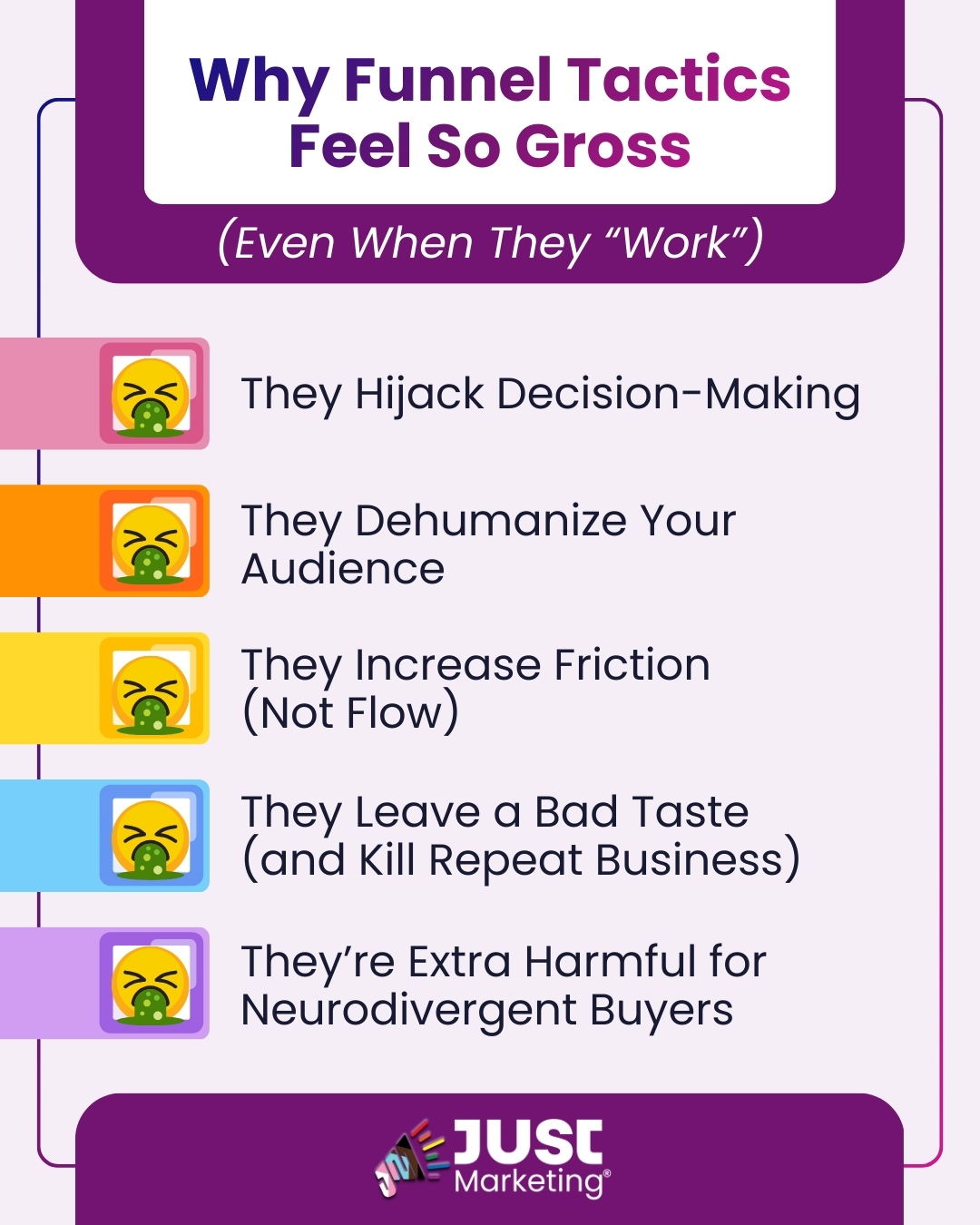
Let’s break down why they feel so gross (and why that feeling is worth listening to):
1. They Hijack Decision-Making
Countdown timers, surprise OTOs, and guilt-based emails are all designed to push people into quick decisions – without giving them time to think clearly or fully consent. For folks with ADHD, anxiety, or trauma histories, that kind of pressure can cause shutdown, not conversion.
2. They Dehumanize Your Audience
Traditional funnel strategies treat people like “leads” to move through a pipeline – not full humans with agency, emotions, and boundaries. It’s easy to forget that behind every email address is a real person. And when we prioritize profit over people, we chip away at the trust we’re trying to build.
3. They Increase Friction (Not Flow)
Funnels are supposed to make the buying process easier – but these tactics often do the opposite. They interrupt the flow, add emotional and cognitive load, and create decision fatigue. Instead of a smooth yes, your audience gets stuck in a spiral of pop-ups, pressure, and second-guessing.
4. They Leave a Bad Taste (and Kill Repeat Business)
Even if someone does buy under pressure, they’re less likely to come back. That quick win might cost you long-term loyalty. If someone feels tricked, shamed, or rushed, it’s not just a lost sale – it’s a broken relationship. And in values-aligned businesses, relationships are everything.
5. They’re Extra Harmful for Neurodivergent Buyers
If your audience includes folks who are neurodivergent (and let’s be real, they probably do), these tactics can be especially inaccessible. Countdown timers increase anxiety. Stacked upsells create executive dysfunction. Hidden OTOs trigger decision paralysis. It’s not just bad UX – it’s exclusionary.
The bottom line? These tactics compromise consent, increase stress, and erode trust.
Ethical funnels prioritize clarity, autonomy, and accessibility – because your audience deserves better. And so do you.
What Does an Ethical Sales Funnel Look Like?
If you're side-eyeing your sales funnel right now, wondering if it’s a little more pressure-filled than you’d like… you’re not alone.
And you’re not a bad marketer. You’re someone who was handed a playbook that prioritized manipulation over meaning – and now you’re ready to write a new one.
The truth is: you can sell your offers, support your audience, and grow your business without pressure, shame, or urgency tactics.
The key? Build a funnel rooted in care, consent, and clarity – not coercion.
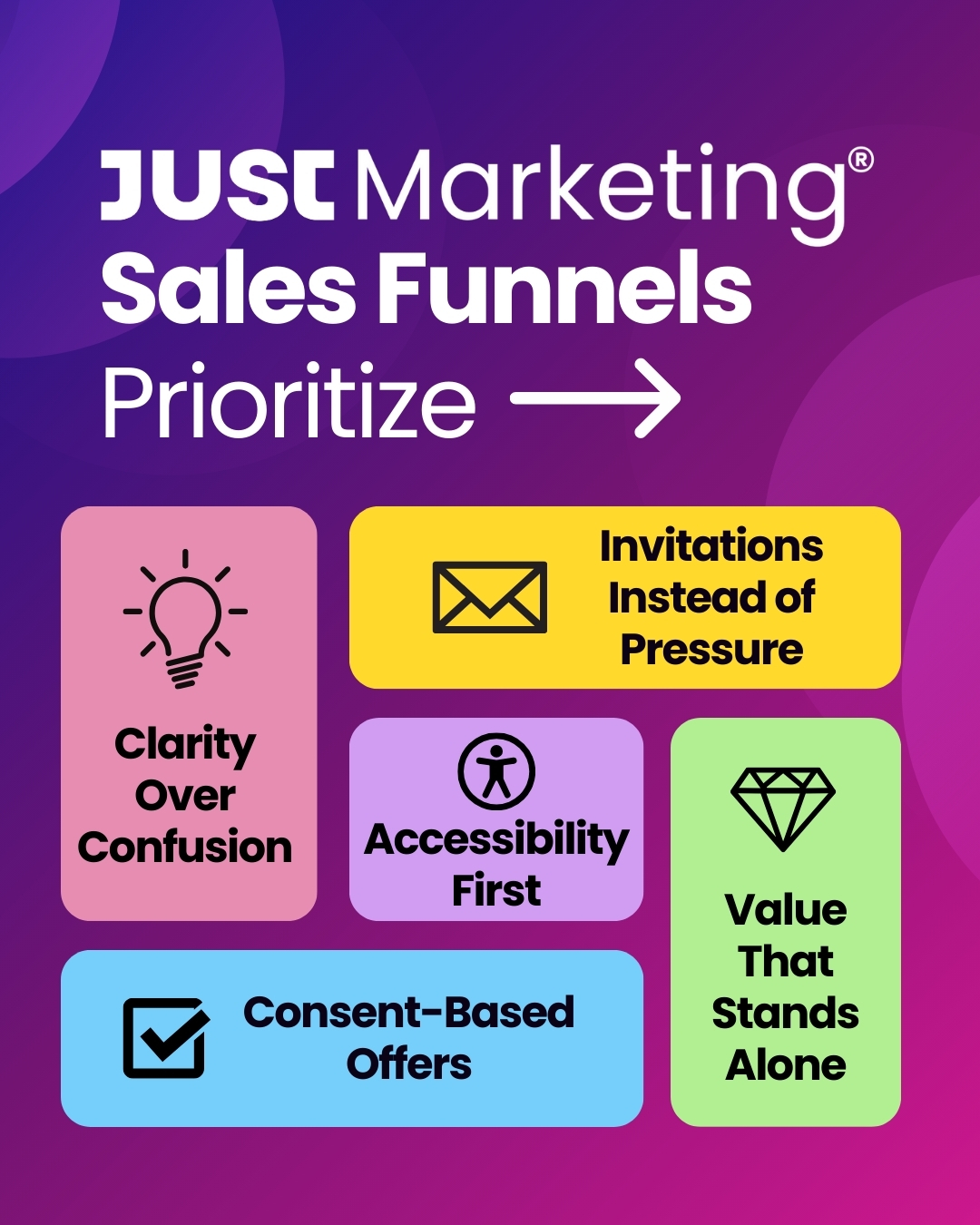
Let’s look at what ethical sales systems can actually look like in practice:
1. Clarity Over Confusion
Be transparent from the start. Let your people know what’s coming (and what’s not). If you’re offering a follow-up, an upsell, or a nurture sequence, say so before they enter it. Trust grows when there are no surprises.
2. Invitations Instead of Pressure
You don’t need to “convince” people. You need to create space for them to say yes – when and if they’re ready. Use invitational language like:
- “Want to go deeper?”
- “If this was helpful, here’s what’s next.”
- “No rush – this offer will still be here when you are.”
3. Consent-Based Offers
Just because someone grabs your freebie doesn’t mean they’ve consented to a sales sequence. Just because they bought your tripwire doesn’t mean they want a pop-up OTO. Ask for permission, honor their preferences, and make it easy to opt in – or opt out.
4. Accessibility First
Design your funnel with neurodivergent folks in mind. That means:
- Fewer clicks
- Minimal cognitive load
- Clear paths to purchase
- No “gotchas” or urgency triggers…
This isn’t just ethical – it’s good user experience (and good for conversions).
5. Value That Stands Alone
Whether it's a $7 offer or a “free” resource, let it be enough. Don’t treat it like bait. Build offers that can stand on their own, so that every interaction with your brand builds trust – not dependence.
Ethical funnels aren’t about doing less. They’re about doing it differently – with more intention, more inclusivity, and more respect for the real humans on the other side of the screen.
It’s not just possible – it’s powerful. And yes, it still converts (sometimes even better, because people feel safe to say “yes”).
Let’s Rebuild Funnels That Feel Good
Here’s the truth a lot of marketing “experts” won’t tell you:
- You don’t have to trick, trap, or pressure people into buying from you.
- Or, sacrifice your values to be profitable.
- And you can create a sales experience that supports your people and sustains your business.
And the best part? When your funnel feels good – for you and for your audience – it works better. Because trust is the ultimate conversion strategy.
Let’s reframe what your funnel could be:
- Not a pushy path, but a supportive journey.
- Not a game of “gotcha,” but a space for informed, empowered choice.
- Not a grind for growth, but a system rooted in generosity, accessibility, and real connection.
If you’ve used some of the tactics in this round-up before – no shame. Seriously. Most of us have. You were following advice that’s been recycled for years in online business spaces that rarely center consent, equity, or accessibility.
Now that you know better, you get to do better.
So here’s your permission slip to change your funnel…
- Delete the countdown timer.
- Turn that OTO into a kind follow-up email.
- Un-gate that freebie.
- Rewrite your abandoned cart sequence with empathy.
Because the moment you shift your funnel from “how do I get more sales?” to “how do I build more trust?” – you start creating a business that people actually want to stay connected to.
Marketing That Honors People First
Funnels aren’t the enemy. But the way we’ve been taught to build them is worth a second look.
Because you didn’t start your business to manipulate people into saying “yes.” You started it to help. To serve. To share something meaningful with the world. And that mission deserves a marketing system that reflects your values – not someone else’s sales script.
So if you’ve ever felt gross about your funnel…
If you’ve hesitated to hit “publish” because something didn’t sit right…
Or, if you’ve been quietly wondering, “Is there a better way?”
This is your reminder:
- Ethical funnels exist.
- Consent-based marketing works.
- You don’t have to choose between your integrity and your income.
Let’s build systems that support our people instead of pressuring them.
Create buying journeys that feel good before, during, and after the sale.
And let’s make trust the foundation – not just the byproduct – of how we sell.
Let’s Keep the Conversation Going
What sales tactics have made you cringe?
Which ones are you rethinking – or ready to release altogether?
What would a funnel built with empathy and accessibility look like for your audience?
Let’s talk about it.
Connect with me on LinkedIn or Instagram – I’d love to hear your take.
And if you’re ready to reimagine your funnel in a way that reflects your values and supports your community with care?
Let’s connect. We can build something better – together.
FAQs
A consent-based funnel often starts with a genuinely helpful free resource, followed by a transparent nurture sequence and an optional invitation to buy. It keeps checking in with care after the sale, too. Every step tells people what's coming so they can choose freely. Learn more about building consent-based funnels.
Most do, even if it's a simple one! For a coach or consultant, a funnel can be as easy as a helpful blog post that invites readers onto your email list. A clear path like that helps the right people find their way to working with you.
A tripwire is a low-cost offer, often priced under $30, used to turn subscribers into first-time buyers. Traditional versions are followed by a surprise sequence of upsells. A more ethical tripwire works as a complete, valuable product on its own, with clear information about anything that comes next.
A sales funnel maps the path to purchase from the business's point of view. A customer journey looks at the whole experience from the buyer's perspective, including everything after the sale. Ethical marketing brings the two together by designing your funnel around how your people actually feel at each step.
Yes! Consent-based funnels may grow a little more slowly, and the buyers they attract tend to trust you more and come back again. When people feel safe and informed, saying yes becomes much easier.
Keep the path to purchase short and clear, with as few clicks as possible. Share real deadlines with context and leave out ticking clocks and surprise pop-ups, since both add stress. For more, see why countdown timers can backfire.