You’ve seen it a hundred times – maybe you’ve even done it yourself (no judgment, we’ve all been there):
“Want this freebie? Just drop your email below and it’s all yours…”
This strategy is everywhere in online business. It’s framed as a win-win: your audience gets a “free” resource, and you grow your email list. But here’s the truth that often gets glossed over: when we require personal information in exchange for something we call “free,” it’s not actually free – it’s a transaction.
The gist: Forced freebies are free resources, like checklists or video trainings, that require an email address before anyone can access them. A more ethical approach shares helpful content openly and then invites people to join your list, so subscribers choose to stay connected because they genuinely want more.
Now, before you panic and start deleting your opt-in forms, take a deep breath. This isn’t about shame. It’s about reclaiming our marketing practices so they reflect the values we actually believe in – like transparency, consent, accessibility, and equity.
In this post, we’re unpacking the problems with “forced freebies” – and exploring how to share your knowledge in ways that build trust, reduce friction, and respect your audience’s autonomy. Whether you’re a coach, a creator, or a consultant trying to grow your list without feeling salesy, this one’s for you.
Let’s rethink what it means to give freely – and why sometimes, the most powerful funnel starts with generosity.
What Are Forced Freebies?
Let’s break it down: “Forced freebies” are free resources – like guides, templates, or video trainings – that require someone to hand over their email address in order to access them.
They’re usually positioned as lead magnets:
“Get my free checklist – just enter your email below!”
“Access this exclusive resource when you subscribe!”
The logic behind this strategy makes sense. You’re offering value in exchange for a spot in someone’s inbox. And to be clear: there’s nothing inherently wrong with wanting to grow your email list. Email marketing can be a powerful, ethical way to build relationships, share your work, and support your business goals.
The issue isn’t offering a free resource – it’s when that “free” thing comes with strings attached, especially when those strings aren’t necessary.
For example:
- A short checklist that could easily live on your blog without a gate.
- A simple tutorial that would be just as impactful embedded in a post or shared on YouTube.
When we create friction between our audience and the help they’re seeking – especially when it’s something we want them to have – we risk undermining the very trust we’re trying to build.
Let’s be real: Sometimes the gate doesn’t protect value – it just protects your stats.
And that’s worth questioning.
Why Can Forced Freebies Be Harmful?
Here’s the thing: Forced freebies aren’t evil. Most of us started using them because that’s what the “experts” told us to do. But when we pause to consider how they actually impact our audience – especially those who are neurodivergent, disabled, or simply tired of manipulative marketing – the cracks start to show.
Let’s unpack a few reasons why this tactic can do more harm than good…
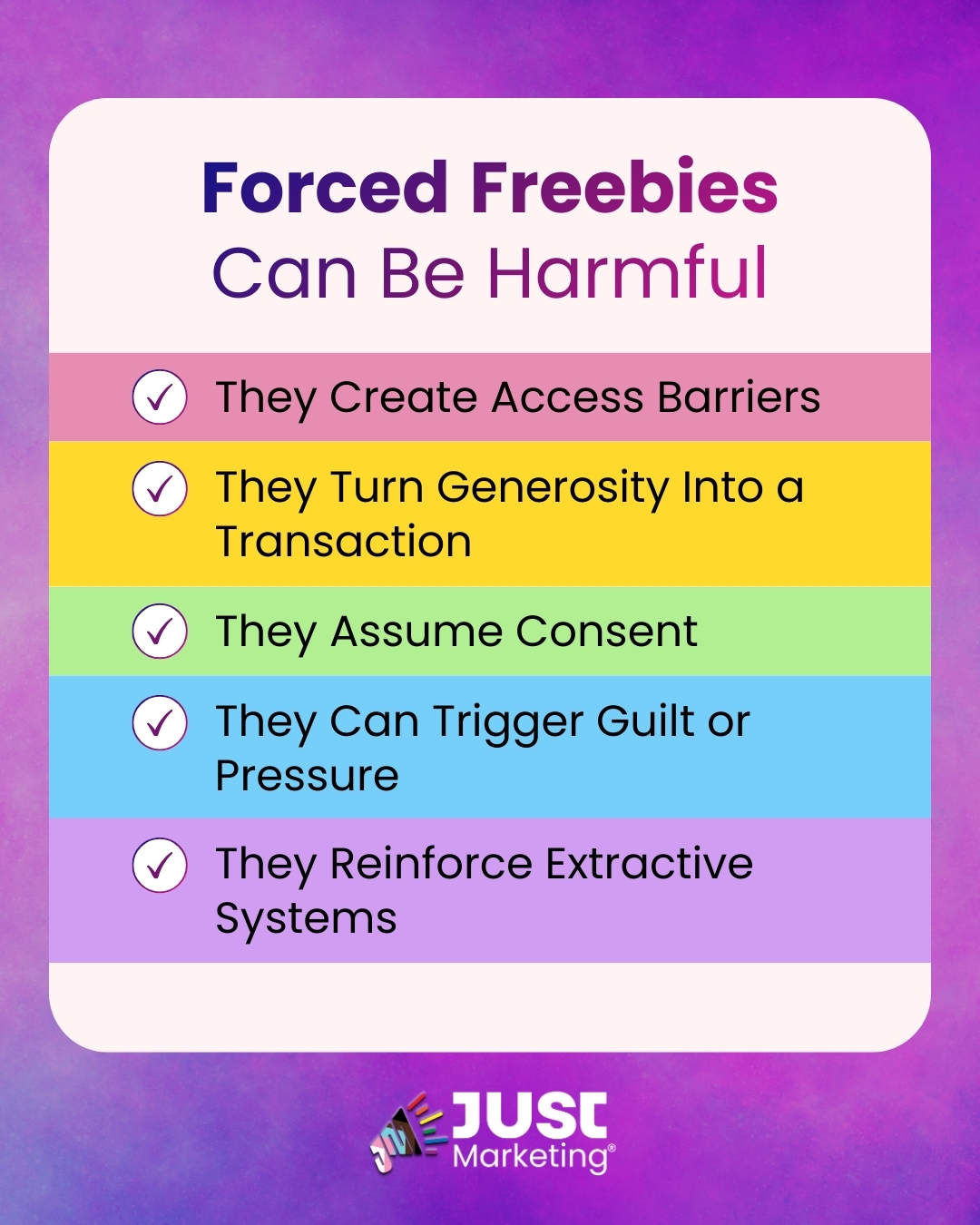
1. They Create Access Barriers
When a resource that could be freely shared is locked behind an email form, it immediately limits who can benefit. Some folks don’t have the bandwidth to fill out forms. Others may be cautious about sharing personal info because of privacy concerns, overwhelm, or past negative experiences with spammy marketing.
In short: what was meant to help becomes another hoop to jump through.
2. They Turn Generosity Into a Transaction
When your “free” gift comes with a hidden cost (like inbox access), it sends the message that you’re not really giving – you’re trading.
That tiny shift in energy can erode trust, especially for audiences who value authenticity and autonomy.
3. They Assume Consent
Automatically adding someone to a nurture sequence or newsletter after they grab a resource might feel like standard practice, but it assumes consent that hasn’t actually been given. Ethical marketing honors choice – it says, “You’re invited to stay connected, not obligated.”
4. They Can Trigger Guilt or Pressure
Some “freebie” funnels lean on urgency or shame – like “Don’t miss out!” or “You’re leaving value on the table!” – which can feel manipulative, especially for folks with rejection sensitivity or decision fatigue.
5. They Reinforce Extractive Systems
At a bigger-picture level, gatekeeping information reinforces the idea that value must always be monetized or measured – instead of shared as part of a more equitable, community-centered economy of knowledge.
Forced freebies might grow your list, but they can also shrink your audience’s trust – and that’s a trade no ethical entrepreneur wants to make.
What Can I Offer Instead of a Forced Freebie?
You don’t have to choose between sharing value and growing your business. The real magic happens when you align your marketing with your mission – and create systems that honor your audience’s autonomy and your goals.
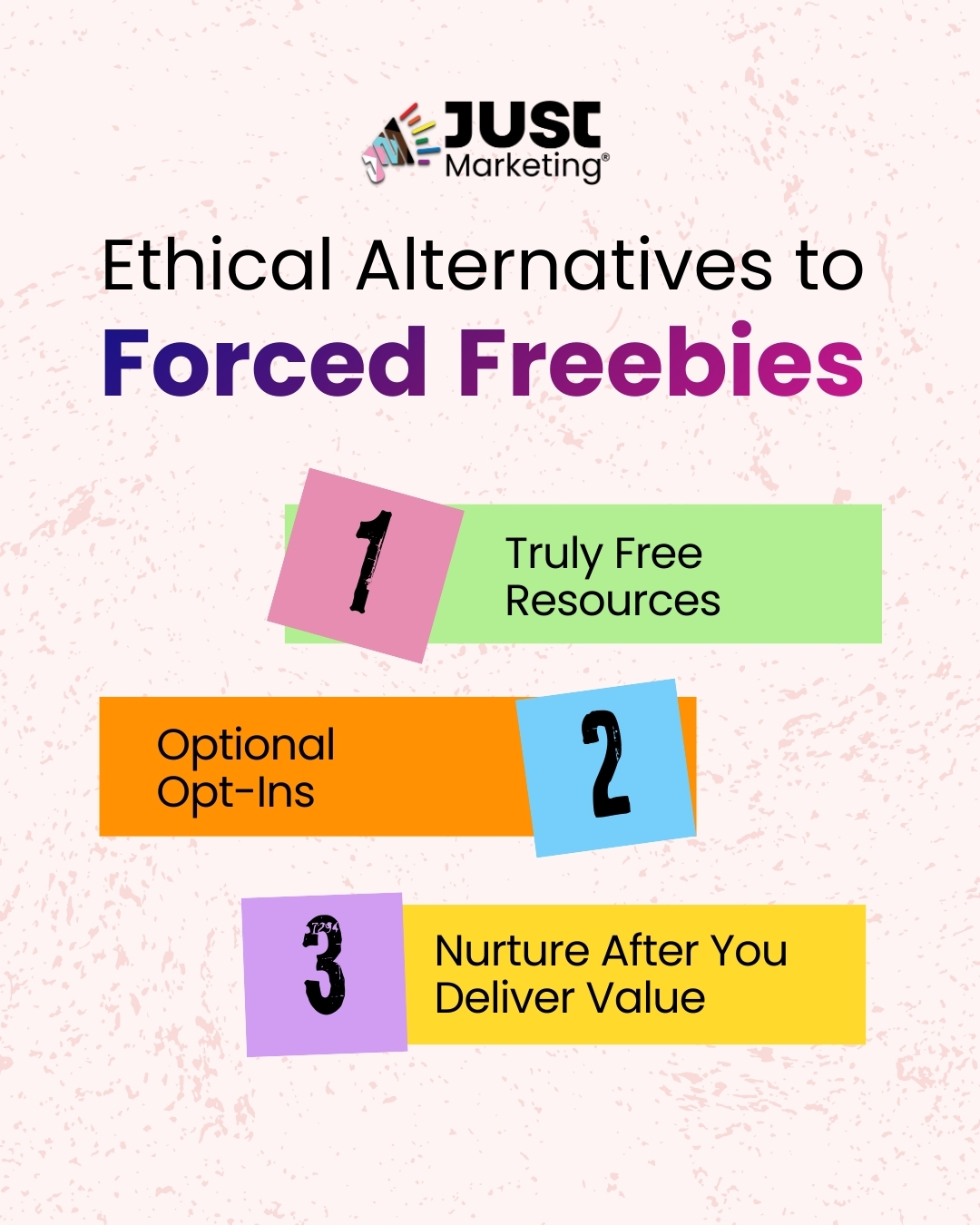
Here are three ethical reframes to consider when it comes to offering free resources:
Option 1: Truly Free Resources
This one’s simple but powerful: Just… give the thing away.
No forms. No hoops. Just value, openly shared.
You can:
- Host the PDF or checklist as a direct download on your blog
- Embed your video tutorial right into a post – no opt-in required
- Share the content directly on social media (carousel, caption, or link)
Why it works: You immediately build trust by doing what you said you would do – helping your audience, no strings attached. And ironically? That kind of transparency often leads to more engagement, not less.
Option 2: Optional Opt-Ins
Instead of making your freebie the “bait,” try shifting the offer:
“Want this resource? Here it is – and if you’d like more like this, join my list!”
You’re still inviting folks to stay connected, but you’re not withholding the value unless they agree. You might even offer two versions:
- A public, instant-access version
- A “bonus” version with added features delivered via email (only if they want it)
Why it works: It centers consent and gives your audience options. And when people choose to stay in your world, it’s because they want to – not because they had to.
Option 3: Nurture After You Deliver Value
Another gentle shift: Let folks access the freebie, then invite them into your email community after they’ve received the resource.
You can add a soft CTA like:
“Was this helpful? Join my list for more tools like this – no fluff, no spam, just real support.”
Why it works: You’ve already proven your value. Now your invitation to connect feels like a gift, not a pitch.
These approaches might not give you the same instant list growth as a traditional opt-in funnel – but they’ll help you build something even better: a community built on trust, transparency, and aligned values.
And that’s the kind of funnel that actually works long-term.
When Is It Okay to Gate Content?
Not all gated content is unethical. There are situations where asking for an email address is reasonable – even respectful – especially when it’s done with transparency and consent.
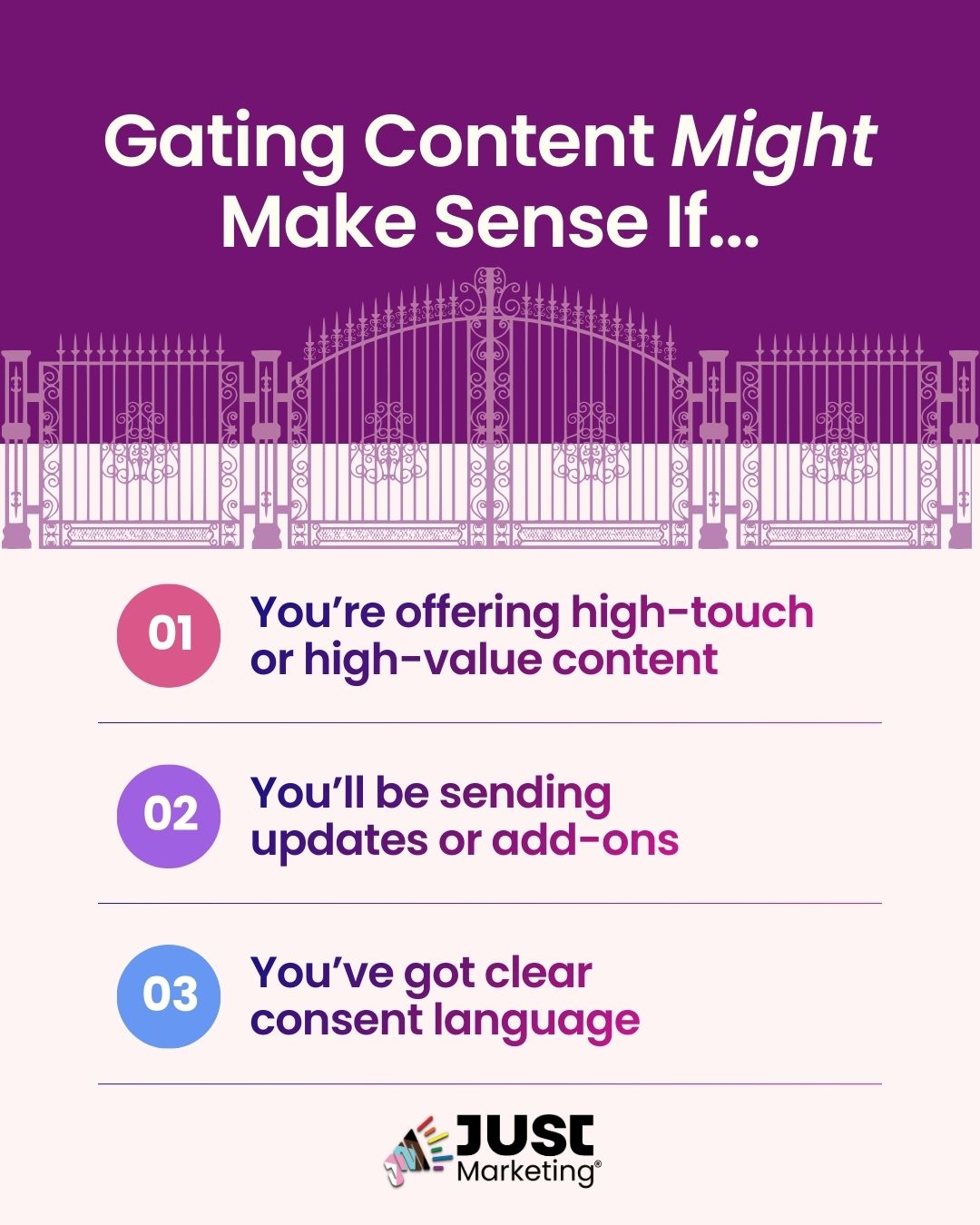
Here’s when it might make sense to ask for that opt-in:
You’re Offering High-Touch or High-Value Content
If you’ve created something that took significant time, energy, or investment – like a multi-module mini course, an in-depth workbook, or a private training – it’s fair to request contact info in exchange.
Just be clear about what people are signing up for, and why.
Avoid vague promises like “Get this amazing thing FREE!” and instead say:
“Sign up to receive this 10-page workbook and get occasional emails with resources that support your growth – unsubscribe anytime.”
You’ll Be Sending Updates or Add-Ons
If your resource is something you plan to improve or expand (like a living document or evolving template), it makes sense to gate it so folks can receive updates directly.
Ethical twist: Make this the reason for the opt-in, not a hidden surprise.
You’ve Got Clear Consent Language
This is where a lot of traditional funnels go sideways. People grab the freebie… and suddenly find themselves in a 27-email nurture sequence they didn’t know was coming.
Instead, try:
“By signing up, you’ll also receive my weekly newsletter. No spam, just real talk. Unsubscribe anytime.”
Consent = clarity + choice. Always.
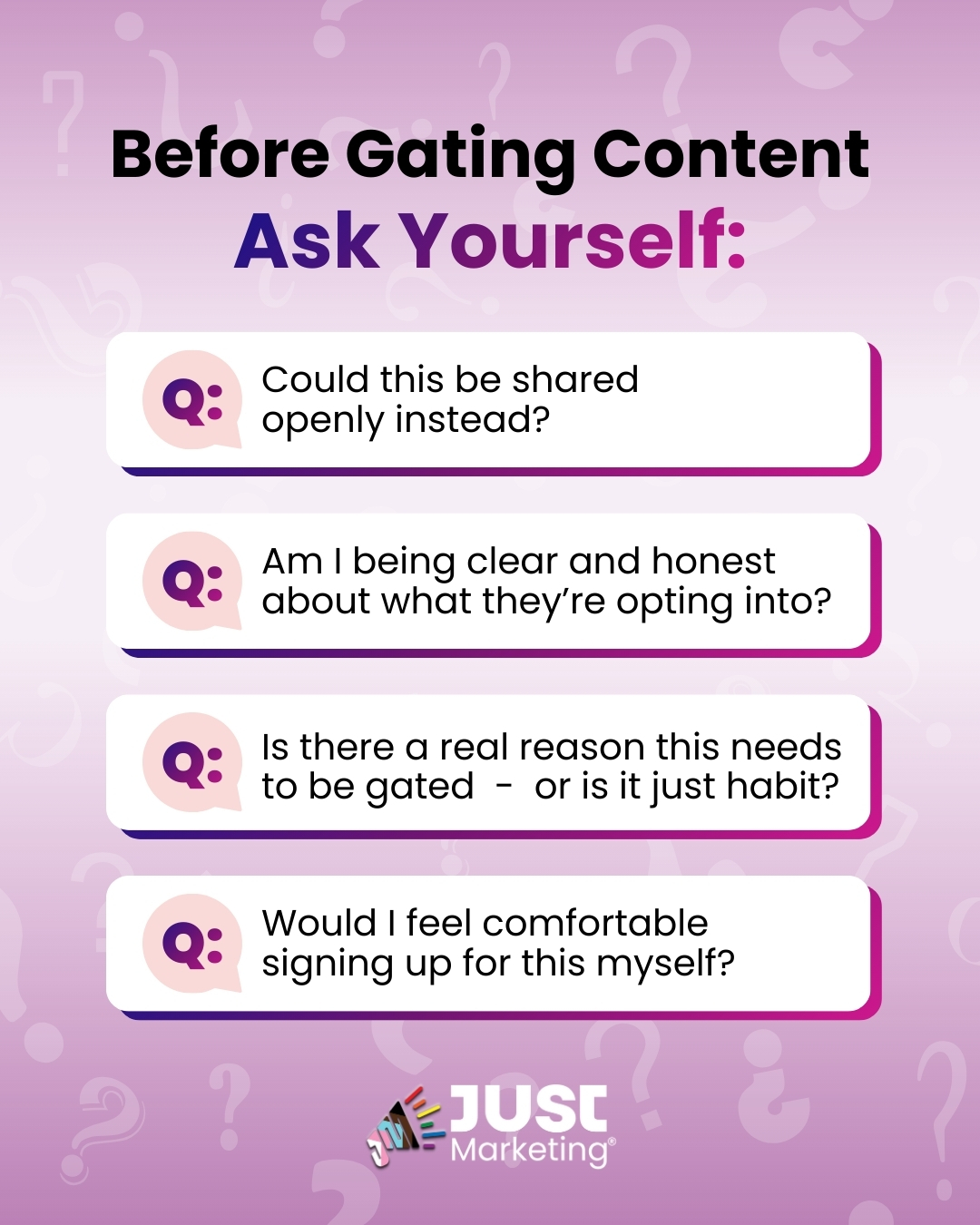
A Quick Gut-Check Before Gating
Ask yourself:
- Could this be shared openly instead?
- Am I being clear and honest about what they’re opting into?
- Is there a real reason this needs to be gated – or is it just habit?
- Would I feel comfortable signing up for this myself?
If the answer to any of those feels squishy, it might be time to rethink the funnel.
How Can I Build My Email List Ethically?
The truth is, your marketing doesn’t have to rely on tactics that make people feel tricked, trapped, or guilted into connection.
You’re allowed to build a business rooted in consent, curiosity, and community.
You’re allowed to trust that the right people will stick around – not because they were funneled into your list, but because they want to be there.
So here’s your invitation: Before creating your next freebie or opt-in form, ask yourself:
- What experience do I want my audience to have when they find this?
- How can I make this feel good for them – and for me?
- Where can I loosen the grip and lead with trust instead of tactics?
Because you don’t need to gatekeep your generosity to grow. And in a world full of pop-ups, pressure, and passive-aggressive follow-ups… being radically open might just be your most powerful strategy.
Let’s Keep the Conversation Going
Have you ever clicked on a “free” resource only to hit a wall that says, “But first… your email, please”?
Maybe it made you pause. Maybe it made you bounce. Or maybe you gave in – and immediately got flooded with emails you didn’t really ask for.
Or maybe you’ve created freebies yourself and thought, “This is what I’m supposed to do… right?”
But deep down, you wondered: Is this actually building trust – or just collecting contacts?
I’d love to hear your take… What freebie experiences have felt generous and supportive to you – and which ones felt like a trap?
Let’s connect on LinkedIn or Instagram and talk about what it really looks like to share resources in a way that honors your audience’s autonomy and reflects your values. Because generosity-based, consent-forward marketing isn’t just possible – it’s powerful.
And it starts with conversations like this.
FAQs
A lead magnet is a free resource, such as a checklist, template, or mini training, that businesses offer to attract potential clients and grow an email list. It can sit behind an email form or be shared openly with an invitation to subscribe. Either way, it works best when it's genuinely useful on its own.
It can be, especially for in-depth resources or ones you plan to update over time. The key is being upfront about what people are signing up for and how often you'll email them. An easy, guilt-free unsubscribe link rounds it out.
Share your resource openly, then add a friendly invitation to join your list for more support. You can also offer a bonus version by email, like an extended workbook, for folks who want extra. For what to send once they join, see how to write a welcome sequence that nurtures without manipulating.
Telling people clearly on the form that they'll also receive your newsletter keeps everything consensual and builds trust from day one. Privacy laws in some places, like the EU, require clear consent for marketing emails, so transparent wording also keeps you on solid ground.
Spell out what people will receive and how often, plus a reminder that they can leave anytime. For example: “Sign up to get this 10-page workbook plus my weekly newsletter with practical marketing tips. Unsubscribe anytime.” Clear wording like this helps the right people say yes with confidence.
You may see fewer instant sign-ups, and the subscribers you do get tend to be more engaged because they chose to join. Those are the folks most likely to open your emails and eventually become clients. Learn more about building consent-based funnels that convert.