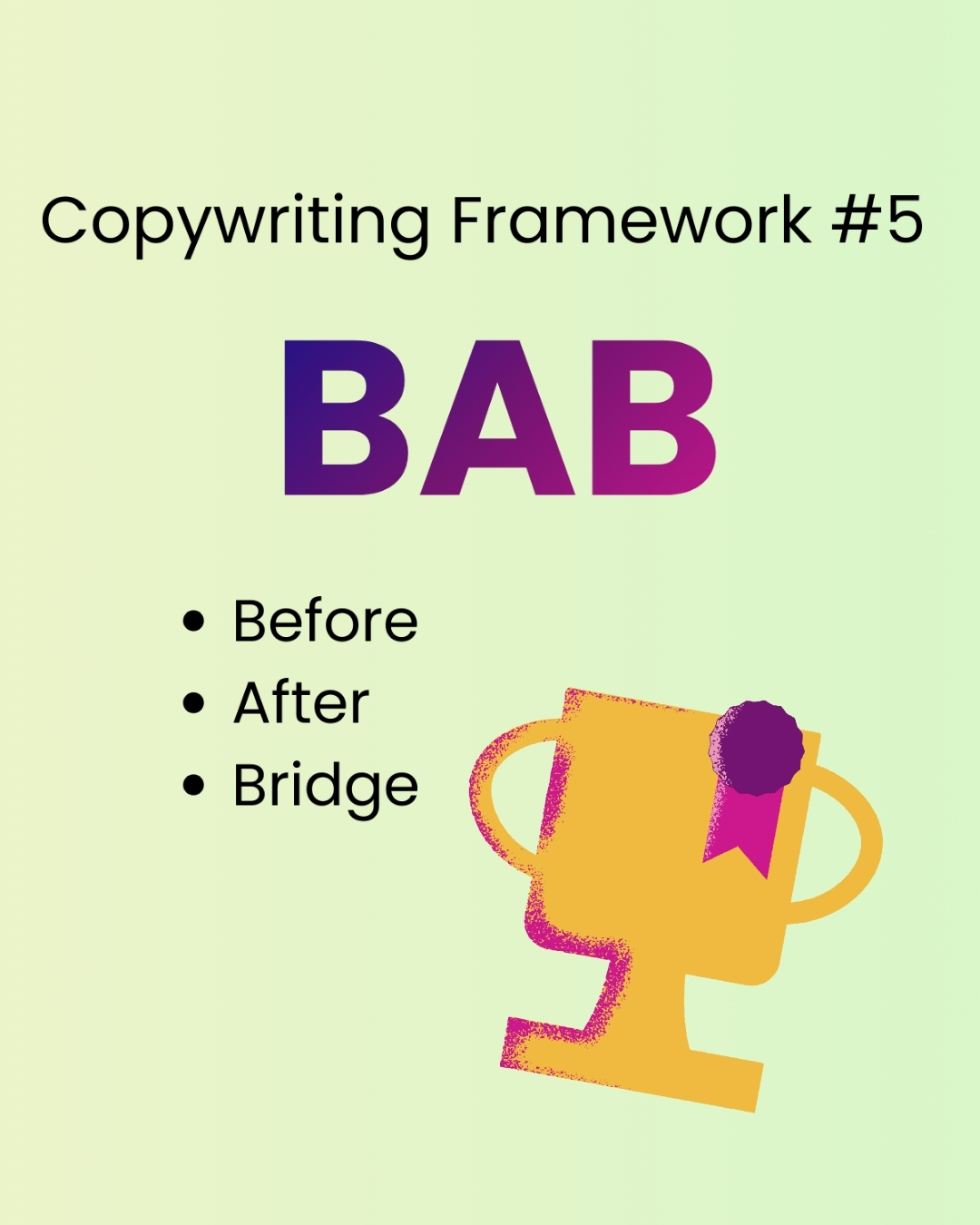
In the world of conversion copywriting, the Before–After–Bridge (BAB) framework is a go-to favorite.
Why? Because it’s simple. It’s story-driven. And it works.
You show what life is like before someone uses your offer. Then you paint a picture of what’s possible after. And finally, you position your offer as the bridge that gets them from Point A to Point B.
The gist: Before–After–Bridge (BAB) is a copywriting framework that shows readers where they are now and what's possible next, with your offer as the path between. The Just Marketing® approach describes the Before with compassion and presents your offer as a supportive partner on the way to realistic progress.
Part of the Conversion Copywriting Framework guide.
Sounds helpful, right?
It can be – but like many traditional marketing tools, this framework has a not-so-secret shadow side.
Too often, “Before–After–Bridge” is used in ways that shame people into buying – by highlighting their struggles as personal failures, exaggerating pain points, or promising unrealistic transformations. That might get clicks, but it doesn’t build the kind of trust that values-aligned businesses want (or need).
As a Just Marketing® advocate, I believe transformation should be presented with dignity – not drama.
In this post, we’ll unpack the BAB framework, explore what makes it problematic from an ethical, inclusive, and accessible lens, and walk through ways to use it in alignment with your values.
Because storytelling can still convert without manipulation.
What's Wrong With Traditional Before–After–Bridge Copy?
Let’s be real: storytelling is powerful. That’s why frameworks like Before–After–Bridge are so widely used. But power without intention? That’s where things get murky.
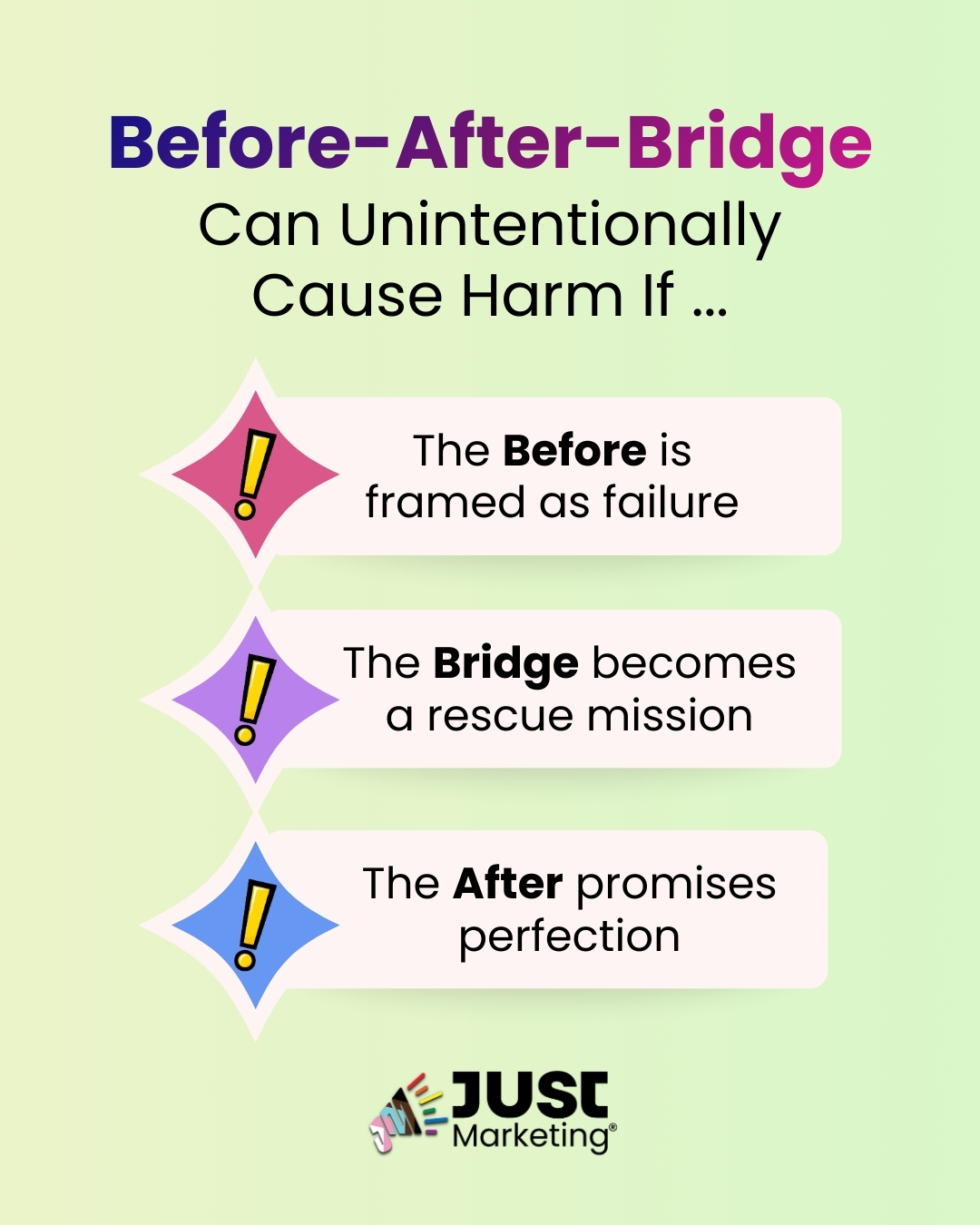
Here’s how this seemingly simple structure can unintentionally cause harm:
The “before” is framed as failure
Marketers often paint the “Before” like a disaster scene:
“You’re drowning in chaos, constantly dropping the ball, and failing at life.”
Oof. That might grab attention – but at what cost?
When we frame someone’s current state as broken or embarrassing, we’re not just describing a problem – we’re reinforcing shame. Especially for neurodivergent folks, this kind of language can echo years of internalized messaging that they’re “too much” or “not enough.”
The “bridge” becomes a rescue mission
Many brands position themselves as the hero – the only solution that can “save” the reader. That’s a big red flag from a Just Marketing® perspective.
Ethical marketing is rooted in collaboration, not saviorism. You’re not here to rescue anyone. You’re here to support, guide, and empower.
The “after” promises perfection
We’ve all seen those dreamy Afters:
“Now you’re making six figures in your sleep and working from a beach in Bali!”
Look, I love a good success story. But when we only show extremes, we alienate the very people we’re trying to reach. Not everyone wants (or can relate to) a dramatic lifestyle shift. Many of us just want a little more clarity, energy, or ease.
Why Does Shame-Based Copy Hurt Trust?
It's easy to brush off messaging choices as marketing-must-haves, but the truth is – our words shape perceptions, and those perceptions impact people.
If your marketing relies on shame, pressure, or unrealistic promises, you might get short-term wins… but at the expense of long-term trust and community alignment.
Here’s what’s really at stake:
It can be triggering for neurodivergent folks
Many ADHDers and neurodivergent entrepreneurs already carry a heavy load of internalized “shoulds.” When the “Before” paints their current reality as a personal failure, it reinforces harmful narratives they’ve spent years trying to unlearn.
It erodes psychological safety
When people feel judged or manipulated, they might still buy – but they won’t feel safe, seen, or supported. That’s not the foundation for sustainable, values-aligned growth.
It undermines informed, empowered decisions
Just Marketing® is about consent – not coercion. We want our communities to make buying decisions from a place of clarity, not crisis. That requires messaging that respects their autonomy and intelligence.
It misaligns your brand with your values
If your goal is to support transformation, your copy should reflect that. Dignity and agency aren’t soft skills – they’re strategic, especially if you're building a mission-driven brand that’s rooted in justice, equity, and inclusion.
How Can You Use Before–After–Bridge Ethically?
You don’t have to toss this framework entirely – just rethink how you use it.
Before–After–Bridge can still tell compelling stories and support conversions without relying on shame, fear, or saviorism. The key is to center empathy, agency, and dignity.
Here’s how to give it a Just Marketing® makeover:
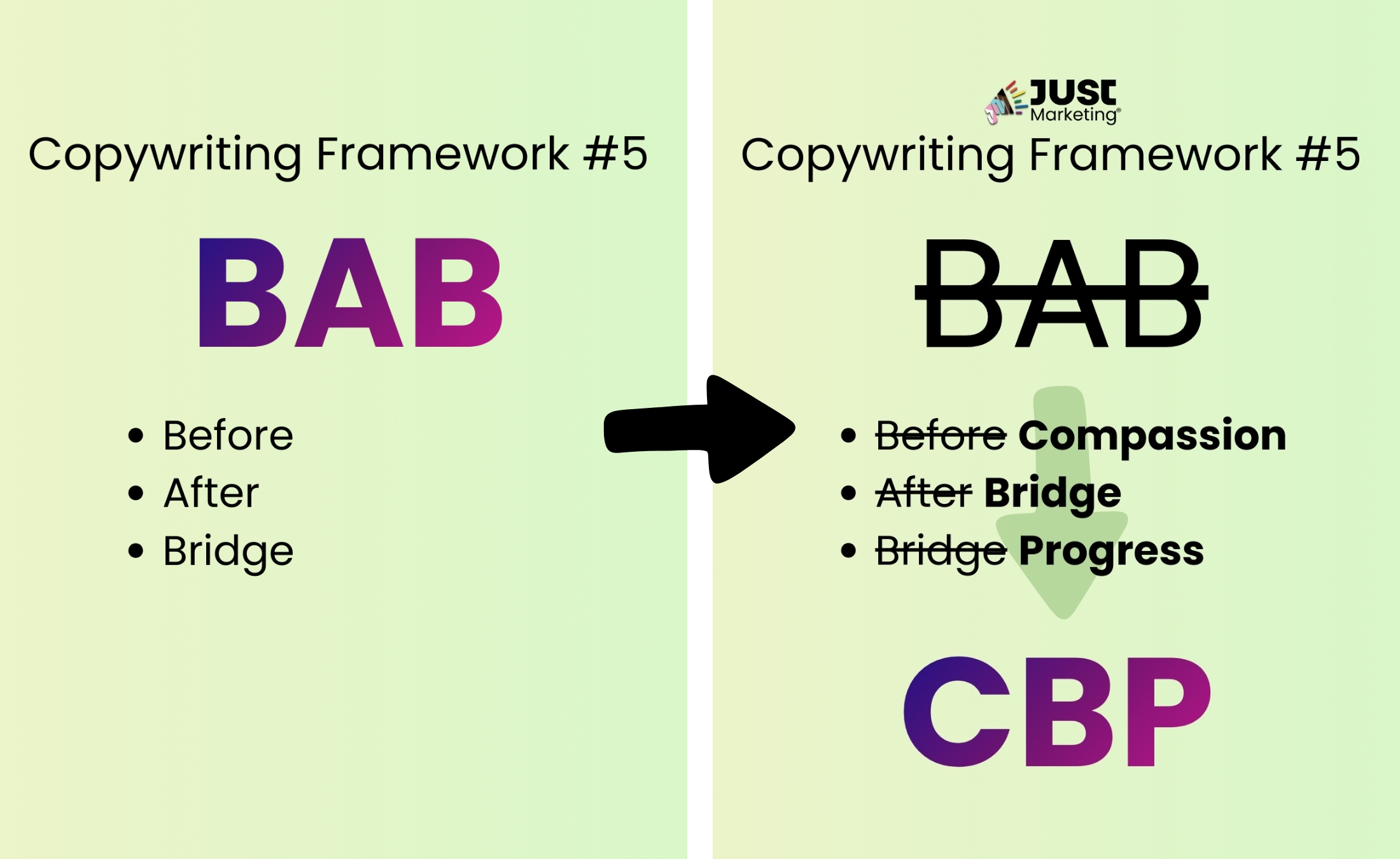
Step 1 Reframes the “Before” with Compassion
Instead of painting your audience as broken, reflect their reality with empathy and respect.
Use language like:
- “You’re juggling so much.”
- “You’re doing all the right things, but it still feels off.”
- “You care deeply, but the strategies you’ve tried haven’t worked for your brain.”
Shift the tone from: “You’re a mess”
To: “You’re trying – and it’s okay that it’s hard.”
Step 2 Becomes the Bridge to Your Offer
Position your offer as a partner – not a lifeline.
Your offer is valuable, yes – but it’s not a magic fix. You’re here to walk alongside, not swoop in and save. Try language like:
- “Here’s one way we can co-create this transformation.”
- “I’ll bring the strategy – you bring your brilliance.”
- “Let’s build something sustainable together.”
Step 3 Celebrates Progress as the “After”
The goal isn’t to promise overnight success. It’s to show what’s possible when folks are supported in ways that align with their values and needs.
Example:
- “You have systems that actually work for your brain.”
- “You’re showing up with confidence, not second-guessing every post.”
- “Your business feels more like you.”
Highlight growth, not fantasy.
Respect your audience’s agency. Empower, don’t pressure.
Rewriting Before–After–Bridge With a Justice Lens: Quick Tips
You don’t need to reinvent your entire copy strategy to make it more ethical – you just need to get intentional. Here are five ways to rewrite the Before–After–Bridge framework so it reflects your values and resonates with your audience (without manipulation):
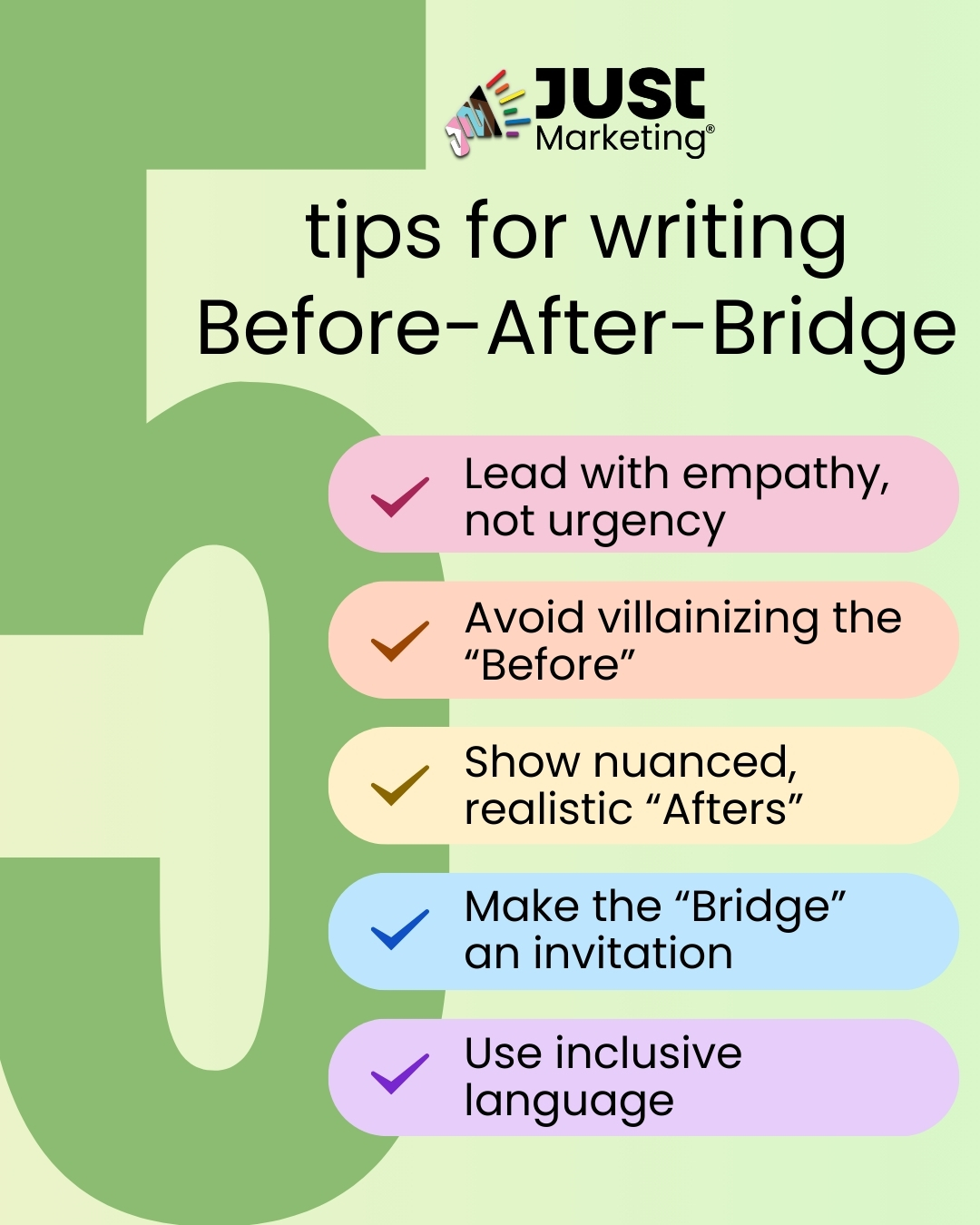
1. Lead with empathy, not urgency
Instead of dramatizing pain or stoking fear, speak to your audience like a trusted peer. Use language that acknowledges their challenges without making them feel broken.
Try this: “Marketing your business shouldn’t feel like a second full-time job.”
Skip this: “You’re wasting hours and leaving money on the table!”
2. Avoid villainizing the “Before”
It’s okay to describe discomfort – but don’t make the reader’s current situation sound like a moral failure. Your audience isn’t a problem to be solved.
Try this: “You’ve been showing up with heart, even when it’s hard.”
Skip this: “You’ve been doing it all wrong.”
3. Show nuanced, realistic “Afters”
You don’t need to promise a six-figure launch or instant clarity. Paint a picture of sustainable progress, not perfection.
Try this: “You finally have a strategy that feels aligned and achievable.”
Skip this: “Your business explodes overnight.”
4. Make the “Bridge” an invitation, not a pressure tactic
Frame your offer as one empowering option – not the only lifeline.
Try this: “If you’re ready for support, I’d love to collaborate.”
Skip this: “You can’t afford to miss this opportunity.”
5. Use inclusive language that honors diverse experiences
Not everyone is motivated by urgency, money, or hustle. Choose words that reflect your audience’s values – not just your conversion goals.
Try this: “Marketing that reflects your values and supports your capacity.”
Skip this: “Finally unlock your true potential and crush your goals!”
Ready to Tell Empowering Stories That Build Trust?
Your marketing doesn’t have to rely on shame to be effective.
You can still guide your audience toward transformation – with dignity, compassion, and clarity.
If you’re exploring how to align your content with your values and support your neurodivergent brain in the process, let’s connect – come say hey on LinkedIn or Instagram. Let’s talk about what ethical marketing looks like in real life.
Want more like this? Join my email list for actionable Just Marketing® tips, neurodivergent-friendly strategies, and honest conversations about doing business differently.
Curious about working together? I offer 1:1 strategy support for mission-driven entrepreneurs who are ready to ditch shame-based marketing and build sustainable systems. Learn more about how we can collaborate.
FAQs
Here's a values-aligned version: “You're juggling so much, and the strategies you've tried haven't fit your brain. Imagine having marketing systems that feel like you. If you'd like support, let's build something sustainable together.” It moves from empathy to possibility to a gentle invitation.
PAS (Problem, Agitate, Solution) focuses on stirring up the reader's pain before offering a fix. Before–After–Bridge centers the contrast between someone's current reality and a hopeful future, which gives it a more aspirational feel. For another story-driven formula, see the PASTOR framework with a Just Marketing® remix.
BAB fits nicely into social media captions, email openers, short ads, and sections of a sales page. Its simple structure makes it a great go-to when you want a quick story that leads to an offer.
Reflect their effort and acknowledge that the situation is genuinely hard, using phrases like “You're doing all the right things, and it still feels off.” Gentle “you might” language helps, too, since it lets readers decide whether the description fits.
Focus on meaningful everyday shifts, like feeling more confident posting or having systems that match your energy. Readers trust progress they can picture in their own lives. For tips on sharing client results with care, see how to share client wins without exploitation.
Avoiding saviorism means presenting yourself as a guide or collaborator who supports clients already doing meaningful work. It honors your audience's agency and builds trust. Just Marketing® is ethical, inclusive, and accessible, so your audience feels supported and your business grows sustainably. Learn more in the complete guide to Just Marketing®.