You want your work to be accessible. You care about justice, equity, and community care. But also? You need to pay your bills.
If you’ve ever found yourself spiraling over how to price your offers – especially when you want to honor different financial realities without undercutting your own value – you’re not alone. Pricing can feel like a minefield for mission-driven entrepreneurs. There’s pressure to be generous, to be fair, to be affordable… and also to not burn out or resent your business.
You can run an inclusive, sustainable business that centers both access and your own well-being. The key is rethinking the way we approach pricing.
The gist: Sliding scale pricing lets clients choose from a range of prices based on their financial situation, with no proof or explanation required. Models like the Green Bottle Method and tiered pricing make access more equitable, and boundaries such as capped lower-tier spots keep your business sustainable, so you can widen access and get paid fairly.
In this post, we’ll walk through value-honoring pricing models that create space for agency and equity – without guilt, guesswork, or shame. You’ll learn about the Green Bottle Method (a standout sliding scale framework rooted in dignity and choice), plus three more inclusive pricing structures you can start using right away. And yes, I’ll even share copy-paste language to help you communicate your model with clarity and confidence.
Let’s reframe what pricing can look like in a values-aligned business…
Why Do Traditional Pricing Models Fall Short?
Pricing isn’t neutral. It’s not just a spreadsheet equation or a market-rate calculation. For mission-driven entrepreneurs – especially those who value justice, equity, and accessibility – pricing stirs up emotions, assumptions, and sometimes shame.
A lot of us were taught that “professional” means one flat rate for everyone. That sliding scale is messy. That offering flexible pricing makes you look uncertain or undermines your authority. And when those narratives clash with your desire to reduce barriers, it’s easy to feel stuck.
Many folks default to offering discounts or “pay what you can” options – but without clear structure or boundaries, those choices can quickly lead to burnout, confusion, or resentment. Clients don’t always know what’s fair to pay. You’re left second-guessing your worth. No one wins.
Then there’s the issue of “hardship” applications. On the surface, they seem like a good solution – until you realize they require people to disclose personal or financial details just to access support. This creates an unspoken power dynamic that can feel dehumanizing for clients and exhausting for you to manage.
And let’s not forget how one-size-fits-all pricing can reinforce systemic inequities. It assumes everyone has the same starting point and ignores the very real disparities created by race, gender, disability, and other intersecting identities.
So no, traditional pricing models aren’t neutral. They often uphold the very systems we’re trying to dismantle.
The good news is that you don’t have to stick with those outdated structures. There are better ways – ones that center agency, sustainability, and equity for everyone involved.
What Is Sliding Scale Pricing?
Let’s start with some clarity – because not all “alternative pricing” is created equal. When people say “sliding scale,” they often mean different things. So let’s break it down:
- Sliding Scale: Clients choose from a range of prices based on their financial situation. Ideally, the scale is guided by clear explanations or frameworks, not guesswork or guilt.
- Tiered Pricing: You set 2–3 distinct price points with criteria or values attached to each. Clients self-select the tier that best fits their circumstances.
- Community-Supported Funds: Higher-paying clients opt to subsidize access for others, either through donations, built-in pricing structures, or “pay it forward” models.
- Pay What You Want: Clients name their price. This can work in some contexts, but without an anchor or boundaries, it can feel unclear – or even stressful – for both parties.
Sliding scale done well isn’t about giving people a break. It’s about redistributing access with dignity, acknowledging that not everyone has the same financial starting point,and creating structures that reflect that reality without compromising your sustainability or worth.
It’s also about agency. When you design a pricing model that trusts people to choose what’s right for them – without scrutiny – you’re removing shame from the equation and building real equity into your business.
Accessibility isn’t charity. It’s not an “extra” you offer out of guilt. It’s a foundational part of inclusive, ethical business design. And when you approach it with intention, clarity, and mutual respect, it becomes a powerful way to serve more people and sustain yourself in the process.
What Is The Green Bottle Method?
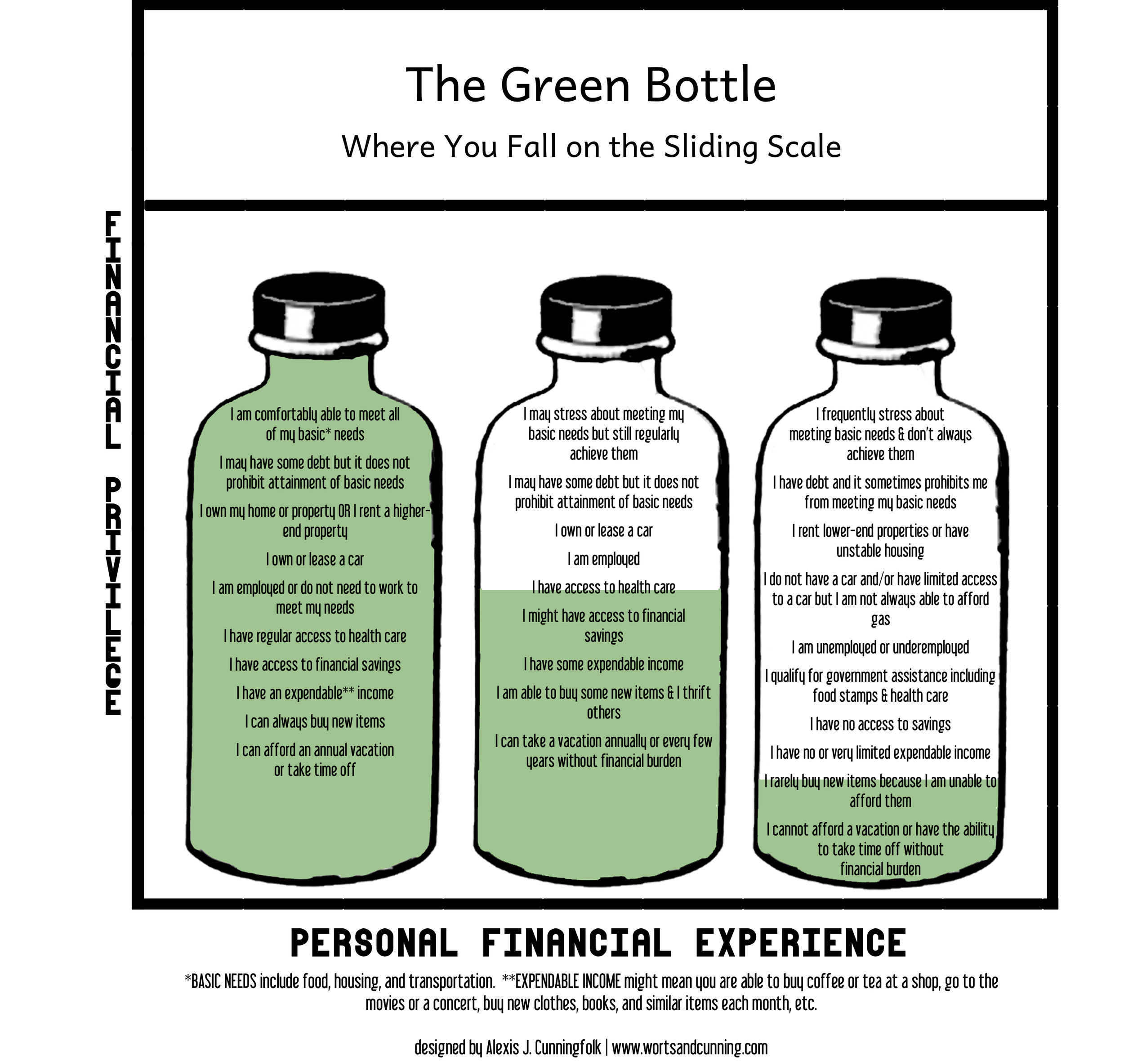
When it comes to sliding scale pricing that centers dignity, the Green Bottle Method stands out. Created by Alexis J. Cunningfolk of Worts & Cunning, this model offers a respectful, transparent way for clients to choose what to pay – without gatekeeping, guilt, or guesswork.
At its core, the Green Bottle Method invites clients to self-assess their financial reality and select a price tier accordingly. There are three “bottles” – each one reflecting a different level of financial access:
Full Green Bottle (on the left)
You can comfortably pay the full price. Doing so does not create financial strain. Paying at this level often supports access for others who need it.
The Text from the bottle:
- I am comfortably able to meet all of my basic needs (food, housing, health care, and transportation)
- I may have some debt but it does not prohibit attainment of basic needs
- I own my home or property OR I rent a higher-end property
- I own or lease a car
- I am employed or do not need to work to meet my needs
- I have regular access to health care
- I have access to financial savings
- I have an expendable income (which might mean you are able to buy coffee or tea at a shop, go to the movies or a concert, buy new clothes, books, and similar items each month, etc.)
- I can always buy new items
- I can afford an annual vacation or take time off
Half-Full Green Bottle (in the middle)
Paying requires some trade-offs (like cutting back on extras or stretching a bit), but it’s doable. This tier reflects a need for more flexibility without assuming crisis.
The Text from the bottle:
- I may stress about meeting my basic needs but still regularly achieve them
- I may have some debt but it does not prohibit attainment of basic needs
- I own or lease a car
- I am employed
- I have access to health care
- I might have access to financial savings
- I have some expendable income
- I am able to buy some new items & I thrift others
- I can take a vacation annually or every few years without financial burden
Almost Empty Green Bottle (on the right)
Paying full price would cause financial harm or prevent you from meeting basic needs. This tier offers access while honoring someone’s right to choose support without justification.
The Text from the bottle:
- I frequently stress about meeting basic needs & don’t always achieve them
- I have debt and it sometimes prohibits me from meeting my basic needs
- I rent lower-end properties or have unstable housing
- I do not have a car and/or have limited access to a car but I am not always able to afford gas
- I am unemployed or underemployed
- I qualify for government assistance including food stamps & health care
- I have no access to savings
- I have no or very limited expendable income
- I rarely buy new items because I am unable to afford them
- I cannot afford a vacation or have the ability to take time off without financial burden
Here’s what makes this method so powerful:
- It puts agency in the hands of your clients. They decide what tier fits them – no applications, no invasive questions.
- It removes shame from the equation. All tiers are framed with respect. No one’s treated like a burden for needing support.
- It’s clear, structured, and sustainable. With transparent pricing and a thoughtful explanation, it builds trust while reinforcing your boundaries.
Want to see the full explanation in the creator’s own words? Check out Alexis’s blog post here.
This method is a strong foundation for values-aligned pricing. And while it may be all you need, there are other flexible models that can complement or serve as alternatives depending on your offer and capacity. Let’s explore those next.
Which Sliding Scale Pricing Models Work Best?
Now that you’ve seen how the Green Bottle Method offers a values-aligned foundation, let’s look at a few more models that make flexible pricing sustainable, clear, and empowering. Each of these respects client agency and your business boundaries.
1. Three-Tier Value-Aligned Pricing
This model offers three fixed price points – each tied to values or circumstances, not “worthiness.” A common version includes labels like:
- Supporter – Able to pay a bit more to help subsidize access for others.
- Sustainer – Covers the true cost of the offer.
- Community Rate – For those who need reduced pricing to access the service.
Why it works:
- Encourages self-selection without requiring justification.
- Easy to communicate on sales pages or graphics.
- Can be adapted for courses, 1:1 services, or group programs.
Tips:
- Provide short descriptions to help clients choose.
- Make sure each tier gets the full experience – this isn’t a discount for less value.
2. Sliding Scale With Anchoring
In this approach, you set a “full” or anchor price – what it costs you to sustainably offer the service – and then invite clients to pay within a defined range.
Example:
Suggested price: $500
Sliding scale: $300–$500, based on financial capacity.
Why it works:
- Anchoring gives clients context for the value of your work.
- The range allows flexibility without inviting underpayment or confusion.
Tips:
- Be clear about why the full price exists (e.g., to cover business expenses and subsidize access).
- Avoid framing lower tiers as “discounts” – they’re part of a sustainable access plan.
3. Community-Supported Access Fund
This model creates a “give what you can” opportunity for clients who want to support wider access. You might offer:
- An opt-in donation at checkout.
- A built-in contribution in premium pricing tiers.
- Occasional community fundraisers or pay-it-forward options.
Funds collected can be used to:
- Offer free or low-cost spots in your programs.
- Create equity scholarships.
- Subsidize reduced-rate services.
Why it works:
- Encourages reciprocity and shared responsibility.
- Can create powerful community investment in your mission.
Tips:
- Be transparent about how funds are used.
- Consider setting limits or cycles for when support is available.
These models aren’t one-size-fits-all. The right approach depends on your offer, your capacity, and your community. But when paired with clear language and strong boundaries, each of them can help you build a business that’s both inclusive and sustainable.
How Should You Describe Your Sliding Scale Pricing?
Having a thoughtful pricing model is only half the battle. The way you talk about it matters just as much.
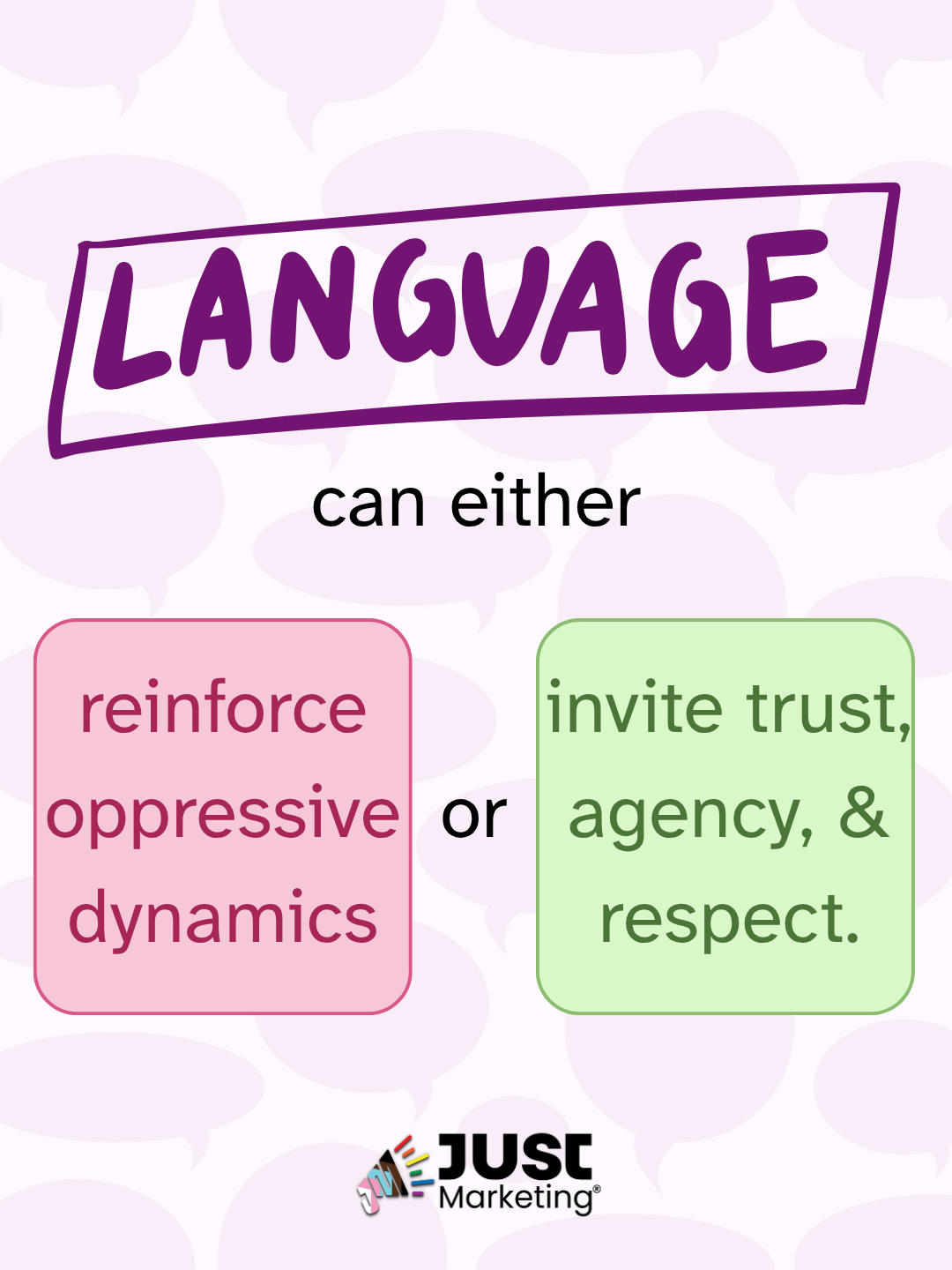
Too often, sliding scale is offered with vague language or strings attached. Clients are asked to apply, disclose financial hardship, or justify their choice. That defeats the purpose. It centers your power over their needs – and can create shame where there should be dignity.
Let’s flip that script.
1. Use clear, compassionate, and empowering language.
Here’s an example you can adapt:
“This service is offered on a sliding scale to support accessibility and economic justice. You’re invited to choose the price point that best reflects your current financial situation. No proof or explanation is required – you know your life better than anyone.”
You can also name what each price tier supports:
“Paying at the highest tier helps fund access for others and sustains this work. Choosing a lower tier ensures you get what you need without financial strain. All tiers receive the same service.”
2. Avoid language that implies scarcity, pity, or worthiness.
Skip phrases like:
- “If you really can’t afford it…”
- “Apply for a discounted spot.”
- “Please explain why you need a reduced rate.”
These create emotional labor for the client and reinforce gatekeeping – even if unintentionally.
3. Reaffirm value at every tier.
Let clients know that every participant is equally welcome, respected, and valued – regardless of what they pay. This helps prevent shame and encourages honest self-selection.
You’re not discounting your offer. You’re designing access.
When you lead with transparency and mutual respect, your pricing becomes more than a financial transaction – it becomes part of your ethical marketing and client experience. And that shift can be just as impactful as the pricing itself.
How Do You Set Boundaries Around Sliding Scale Pricing?
Sliding scale is a powerful tool – but without boundaries, it can become a fast track to burnout.
You care deeply about your community. You want to make your work accessible. And you probably have a hard time saying no when someone’s in need. That’s empathy – but without structure, it can quietly erode your energy, your confidence, and your bottom line.
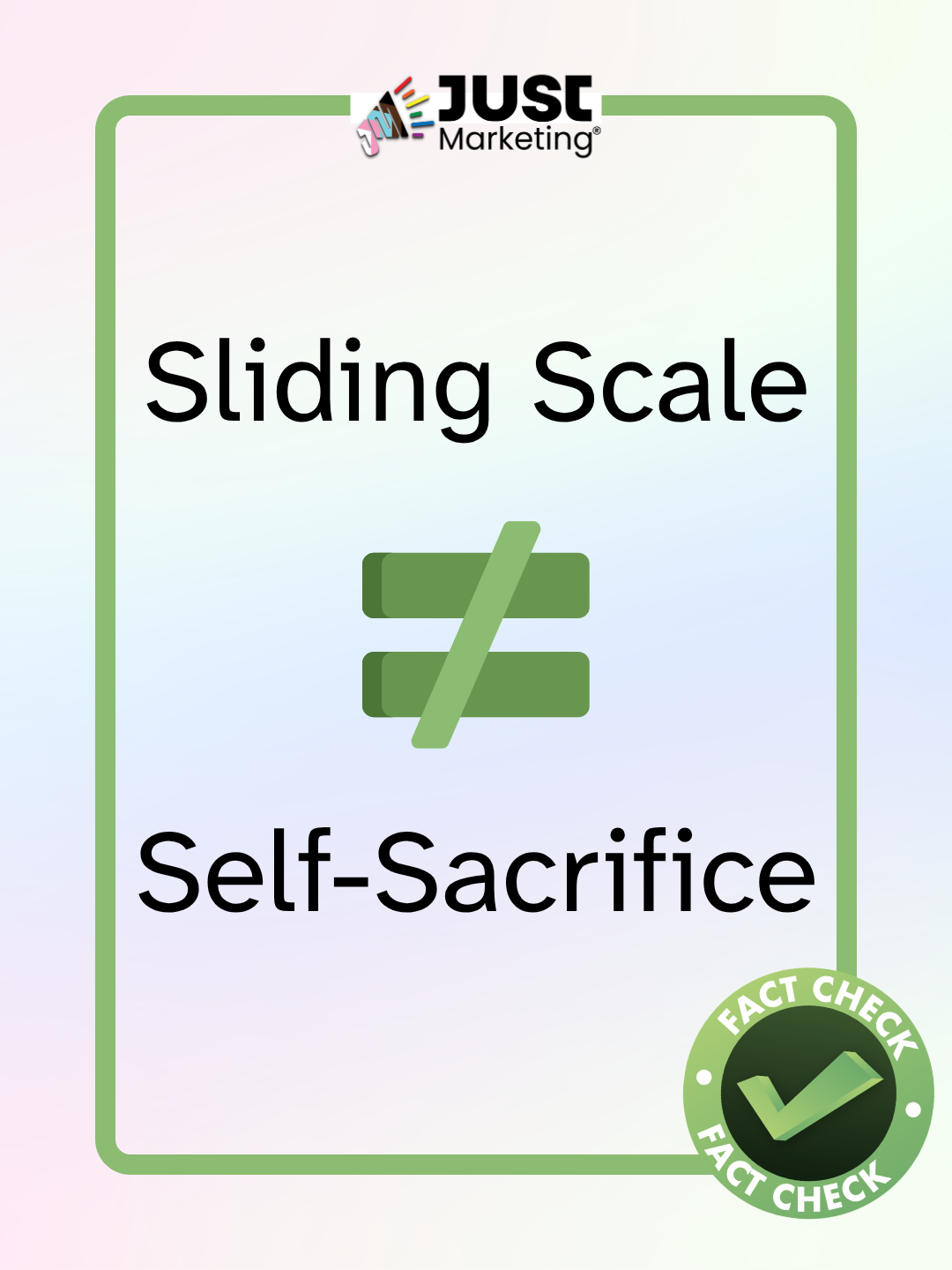
Boundaries make your generosity sustainable.
Here are a few ways to protect your energy and uphold your values:
- Cap how many lower-tier spots you offer.
Example: “I reserve 3 sliding-scale spots per quarter.” This keeps things manageable and transparent. - Use enrollment windows or deadlines.
Limiting when sliding scale access is available gives you control over your schedule and workload. - Set income thresholds if needed.
Some entrepreneurs share suggested criteria to help clients self-identify – without requiring proof. - Check in with your own capacity.
Ask yourself regularly: Is this model still working for me? If not, you’re allowed to adjust.
You’re allowed to raise your prices.
If your sliding scale model is creating strain, resentment, or confusion, that’s not a sign you’re failing – it’s a sign that your business is evolving. You can increase your rates and still build access into your pricing structure. These things aren’t mutually exclusive.
Accessibility should support everyone involved – including you.
A well-designed sliding scale model centers mutual care – not just client care.
When you create boundaries around your access practices, you’re not being less generous. You’re ensuring you can keep showing up for the long haul.
Can You Offer Sliding Scale Pricing And Still Get Paid Well?
Let’s say it plainly – you are allowed to be accessible and still get paid. Those two things aren’t in conflict. In fact, they work best together when held with intention and clarity.
Sliding scale is often misunderstood as a way to earn less, as if it’s inherently “less professional” or only for hobby businesses. That’s not just untrue – it’s harmful. This mindset devalues care work, community-centered entrepreneurship, and the labor of making things inclusive.
Your business is a business. Your work creates real impact. And your time, energy, and expertise deserve compensation.
Sliding scale is a strategy, not a sacrifice.
When done well, it becomes a tool for:
- Reducing barriers to access.
- Building trust with values-aligned clients.
- Creating long-term sustainability (because you’re not pricing from fear or burnout).
It’s not about offering less. It’s about being more intentional with how you offer value.
Your rate is not your worth.
This one’s hard – especially for service-based entrepreneurs who care deeply about their clients. But it’s true: what someone can pay isn’t a reflection of your skill, your value, or your success.
Your worth is not up for negotiation.
Your pricing? That’s just a business tool. One that you get to shape.
When access and sustainability align, everyone wins.
Sliding scale pricing done ethically means:
- Clients feel trusted and respected.
- You feel energized and affirmed.
- Your business stays grounded in justice and stability.
That’s not a compromise. That’s a win-win.
Why Is Kindness A Smart Business Strategy?
If you’ve felt torn between making your work accessible and building a sustainable business – you’re not doing it wrong. You’re just swimming upstream in a system that doesn’t make space for both. But you get to change that.
Designing your pricing with care isn’t a liability. It’s a strength that signals trust, creates community, and builds a business that’s rooted in the values you live by – justice, autonomy, sustainability, and kindness.
And let’s be honest – kindness is a radical strategy in a world that prioritizes profit over people. When you prioritize equity in your pricing, you’re not just offering a service. You’re modeling a different way to do business. A better one.
You don’t have to choose between impact and income. Valuing your time isn’t something to feel guilty about. And building something more human? That doesn’t require anyone else’s permission.
You just need a model that reflects what you believe. And you’ve got options. You’ve got language. You’ve got permission to do it your way.
Let’s Keep the Conversation Going
You’re doing this differently – that matters. And you’re not doing it alone… I’d love to stay connected!
Find me on LinkedIn or Instagram and say hi.
Curious what it’s like to work together? Explore my services to see how I support entrepreneurs like you in building ethical, values-aligned marketing systems.
And if you want helpful, judgment-free marketing tips in your inbox – join my email list. I send content that respects your time, your brain, and your bandwidth.
FAQs
Sliding scale pricing lets clients choose a price within a set range based on their current financial situation. A clear framework, like the Green Bottle Method or written tier descriptions, helps people self-select with confidence. Every client receives the same service, whichever price they choose.
The Green Bottle Method is a sliding scale framework created by Alexis J. Cunningfolk of Worts & Cunning. It describes three levels of financial access using full, half-full, and almost empty bottles. Clients read the descriptions and choose the price that fits their life, with no application required.
Self-selection works best for both you and your clients. Hardship applications ask people to share personal financial details, which can feel dehumanizing and adds review work to your plate. Clear tier descriptions give people enough guidance to choose honestly while trusting them to know their own situation.
Set boundaries that protect your capacity, like capping lower-tier spots at a few per quarter or opening sliding scale access during set enrollment windows. An anchor price that covers your true costs helps too. Check in regularly, and adjust your model or raise your rates whenever you need to.
A well-structured sliding scale signals thoughtfulness and strong values. Clear price ranges, transparent explanations, and confident language show clients you’ve designed your pricing with intention. Many values-aligned clients actively look for businesses that build access into their pricing.
Sliding scale pricing offers a range, like $300 to $500, where clients choose any amount. Tiered pricing offers two or three set price points, such as Supporter, Sustainer, and Community Rate, with short descriptions to guide the choice. Both rely on self-selection and deliver the same service at every level.