You’ve probably felt it before. That icky, pit-in-your-stomach feeling after reading a sales page or email that left you doubting yourself. Maybe it pushed your buttons – your fear of missing out, your anxiety about money, or your identity as a “real” entrepreneur. You walked away wondering if you really needed the offer or if you’d just been pressured into believing you did.
This is the gray area where emotional marketing can turn manipulative. And it’s more common than you might think.
The truth is, marketing should speak to emotions. That’s what makes it human. But there’s a big difference between connecting with your audience through empathy and coercing them through fear, scarcity, or shame. Especially when we’re speaking to folks who are already navigating systemic barriers, neurodivergence, or entrepreneurial overwhelm.
The gist: Empathy-driven sales copy acknowledges your audience’s real emotions with affirming language and honest deadlines, leaving decisions in their hands. It gives you an ethical alternative to emotional manipulation tactics like fear, false urgency, shame, and identity pressure, building the kind of trust that leads to aligned, lasting sales.
In this post, we’re unpacking the difference. You’ll learn how to recognize emotional manipulation in sales copy, how to lean into empathy without compromising your values, and how to market your work ethically, effectively, and with integrity.
What Role Does Emotion Play In Ethical Marketing?
Let’s get one thing straight. Emotion isn’t the problem. In fact, emotion is essential to how people make decisions – especially when investing in something personal, like coaching, consulting, or a values-aligned service.
Empathy in marketing means truly seeing your audience. It’s listening to their frustrations, understanding their dreams, and creating content that reflects their lived experiences. When done with care, it helps folks feel understood and supported – not broken or behind.
Where this goes sideways is when marketers exploit emotions instead of honoring them. There’s a difference between writing a message that says, “You’re not alone – this is hard, and here’s a path forward,” vs. “Everything is falling apart and you’re failing if you don’t buy this right now.”
One invites reflection and choice. The other triggers panic.
So yes, speak to feelings. Use stories. Acknowledge the messy parts of being human. But always ask yourself – am I using emotion to build trust, or to back someone into a corner?
What Does Emotional Manipulation Look Like In Sales Copy?
Not all sales copy that stirs emotion is harmful – but some tactics cross the line from connection into coercion. And many of us have unknowingly picked up these patterns from traditional marketing “gurus” who prioritize profit over people.
Let’s break down a few common ways manipulation shows up:
1. Fear-Based Messaging
This sounds like: “If you don’t do this now, you’ll stay stuck forever.”
Fear sells because it hijacks the nervous system. But using fear to pressure people into action creates a relationship rooted in anxiety, not trust.
2. False Scarcity or Urgency
This sounds like: “Only 3 spots left!” (when that’s not true) or “Cart closes in 30 minutes!” (with an evergreen funnel behind the scenes).
Urgency can be ethical – like a real deadline or limited availability. But fake scarcity is manipulative and damages credibility.
3. Shame and Insecurity
This sounds like:
- “You’re doing it wrong.”
- “Serious entrepreneurs invest in themselves.”
It plays on self-doubt, often targeting people who already feel marginalized or overwhelmed. This tactic tries to shame people into purchasing as a way to “fix” themselves.
4. Identity Pressure
This sounds like:
- “Real CEOs wake up at 5am.”
- “If you cared about your clients, you’d invest in this tool.”
This language polices identity and uses rigid standards to exclude folks who operate differently – like neurodivergent entrepreneurs or caregivers juggling invisible labor.
These tactics might convert in the short term. But they erode trust, retraumatize your audience, and attract clients who feel manipulated – not empowered.
What Is Empathy-Driven Copy?
When copy is rooted in empathy, your audience doesn’t feel pressured. They feel seen.
Empathy-driven marketing validates real emotions without using them against people. It creates space for curiosity, not crisis. And yes – it still sells, because it builds trust and safety first.
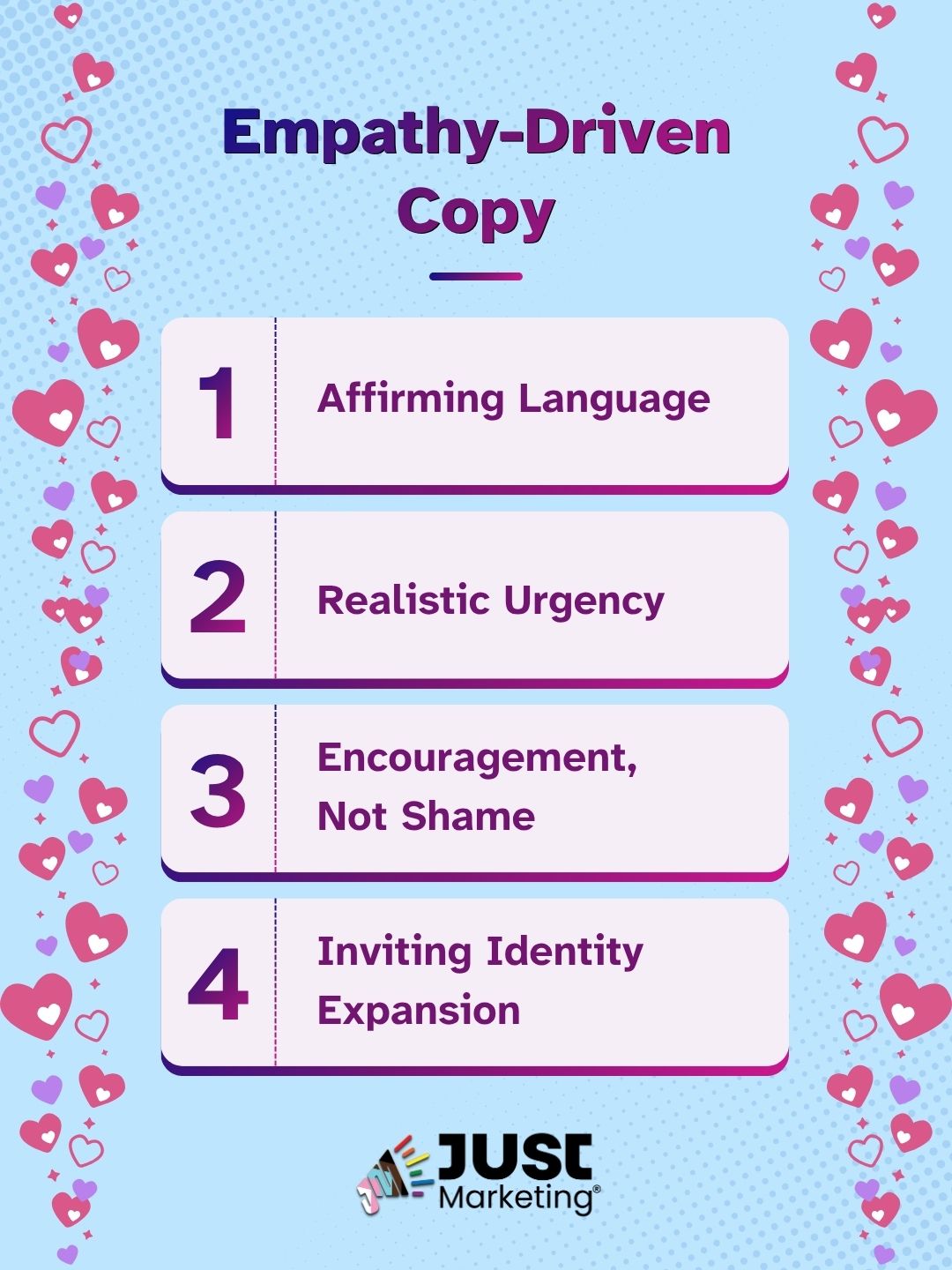
Here’s what it looks like in practice:
1. Affirming Language
Phrases like:
- “You’re not behind.”
- “It’s okay to take this at your pace.”
- “There’s no one right way to grow.”
This kind of language soothes the nervous system instead of activating it. It honors the reader’s autonomy and reminds them they’re already whole.
2. Realistic Urgency
If there’s a deadline, be transparent. If you’re limiting capacity, explain why.
Ex: “I only work with 5 clients at a time to give each one full attention – there are 2 spots left for this season.”
It’s honest. It’s respectful. And it still invites action.
3. Encouragement, Not Shame
Rather than poking at insecurities, empathetic copy uplifts.
Instead of: “Are you sick of doing everything wrong?”
Try: “Ready to try a new approach that feels better?”
4. Inviting Identity Expansion
Good copy doesn’t gatekeep what it means to be successful, productive, or “legit.”
It says: “You get to define what success looks like.”
And it welcomes neurodivergent, disabled, BIPOC, queer, and marginalized folks without forcing assimilation into harmful norms.
Empathy-based messaging might feel quieter, but its impact runs deeper. You’re not just converting customers – you’re cultivating community and consent.
How Can You Tell If Your Copy Is Manipulative?
Sometimes the difference between empathy and manipulation isn’t about what you’re saying – but why and how you’re saying it.
Use this checklist to gut-check your messaging before you hit publish:
- Am I highlighting pain or holding space for healing?
It’s okay to name hard things – but am I doing it to connect, or to push urgency? - Would this still feel respectful if someone says no?
If a reader chooses not to buy, will they walk away feeling ashamed – or empowered? - Is this urgency real, or manufactured?
Can I back up the deadline or scarcity with truth and transparency? - Am I inviting autonomy, or demanding action?
Does this copy give people room to decide for themselves, or does it push them to act out of fear? - Would I feel good saying this to someone I care about?
If the answer is no, rewrite it. Your audience is someone’s loved one. Maybe even yours. - Is my tone affirming and inclusive – or pressuring and exclusive?
Am I honoring diverse identities, access needs, and lived experiences in how I communicate?
This quick gut check doesn’t just protect your audience. It protects your integrity and helps you build a business that actually feels good to run.
What Should You Do If You’ve Used Manipulative Tactics?
First things first – take a deep breath. If you’re reading this and thinking, “Uh oh… I’ve totally used some of those tactics,” you’re not alone. Most of us have. We’ve been taught to sell that way by marketers who prioritized conversions over consent.
This isn’t about guilt. It’s about growth.
1. Acknowledge It Without Shame
You’re not a bad person for doing what you were taught. But now that you know better, you get to do better. That’s leadership.
2. Audit and Edit
Go back through your sales copy, email sequences, and social posts with fresh eyes. Where do you see pressure instead of permission? Swap shame for support. Replace scarcity with clarity. You don’t need to burn it all down – just align it with your values.
3. Be Transparent if Needed
If you’re in the middle of a launch or an active promo and something feels off, it’s okay to name that. A simple “Hey, I realized this message might have come across as pushy. That’s not how I want to show up, so I made some updates,” can go a long way.
4. Shift Your Strategy, Not Your Standards
Ethical doesn’t mean ineffective. You can still write compelling copy, sell out your offers, and grow your business – without compromising your integrity or triggering your audience.
This is a process, not a one-time fix. The goal isn’t perfection. It’s a commitment to keep checking in, learning, and choosing compassion over control.
Can Marketing Be Compassionate And Effective?
Marketing doesn’t have to feel gross to work. You don’t have to use fear, pressure, or shame to make a sale. And you definitely don’t have to abandon your values to run a successful, sustainable business.
Emotions belong in marketing. But they should be honored – not exploited.
When you lead with empathy, you invite connection, consent, and community. You build trust with the people who are actually aligned with your work. And you create space for real transformation – not just transactions.
So if you’ve been wrestling with how to write copy that feels good to you and your audience – you’re not alone. And you don’t have to figure it out in a vacuum.
Let’s Keep the Conversation Going
Let’s build a world where consent, clarity, and compassion lead the way.
Feeling this approach? Come connect with me on LinkedIn or Instagram and let’s talk about what ethical marketing looks like in real life.
Curious what it’s like to work together? Learn more about my services and how I support impact-driven businesses just like yours.
Want more tips like this, without the overwhelm? Join my email list for accessible, ADHD-friendly marketing guidance rooted in Just Marketing® values.
FAQs
Yes! Emotion plays a natural role in how people make decisions, especially for personal investments like coaching or consulting. Ethical marketing honors emotions by reflecting your audience’s real experiences, which helps people feel understood and supported as they decide what’s right for them.
Empathy acknowledges your audience’s feelings and offers a path forward while leaving the choice with them. Manipulation uses those same feelings as leverage, often through fear or shame, to push a quick purchase. A helpful test is whether readers who say no still walk away feeling respected.
Common examples include “If you don’t do this now, you’ll stay stuck forever,” fake “only 3 spots left” claims, and lines like “Serious entrepreneurs invest in themselves.” Each one pressures readers by targeting fear, scarcity, or self-doubt in place of sharing honest information about the offer.
Urgency is ethical when it’s real and explained. A program start date or limited client capacity are honest reasons for a deadline, especially when you share why. For example: “I work with five clients at a time to give each one full attention, and two spots are open this season.”
Look for lines that poke at insecurities, like “Are you sick of doing everything wrong?” Then reframe them around possibility, such as “Ready to try an approach that feels better?” Affirming phrases like “You’re not behind” help readers feel capable as they consider your offer.
Start with compassion for yourself, since many of us learned these tactics from traditional marketing advice. Then audit your sales pages, emails, and social posts, updating anything that relies on pressure. If you’re mid-launch, a short note sharing that you’ve made updates can build even more trust.