Ever feel like marketing sometimes crosses the line from helpful to… a little too pushy?
So many traditional marketing frameworks are designed to persuade at all costs – often using strategies that bypass critical thinking in favor of “conversion.” And while that might technically work, it doesn’t always feel great. Especially if you're a values-driven entrepreneur who’s here to make an impact, not manipulate.
The gist: The ACCA framework, short for Awareness, Comprehension, Conviction, Action, is a copywriting formula that educates readers about a problem before inviting them to take action. The Just Marketing® remix swaps Conviction for Consideration, giving people room to reflect and choose what's right for them.
Part of the Conversion Copywriting Framework guide.
One of those frameworks is ACCA: Awareness–Comprehension–Conviction–Action. It’s often used in educational or high-trust sales – think coaches, consultants, or service providers who want to lead with information. At first glance, it sounds pretty solid: build awareness of a problem, explain it clearly, help your audience believe in the solution, then invite them to act.
But when we look at it through a Just Marketing® lens, things get a little murky – particularly around that third step: Conviction.
In this post, we’re going to unpack the ACCA framework – what works, what feels icky, and how we can adapt it in a way that centers autonomy, accessibility, and trust.
Let’s reimagine persuasion as an invitation – one that builds connection instead of pressure.
What is the ACCA Copywriting Framework?
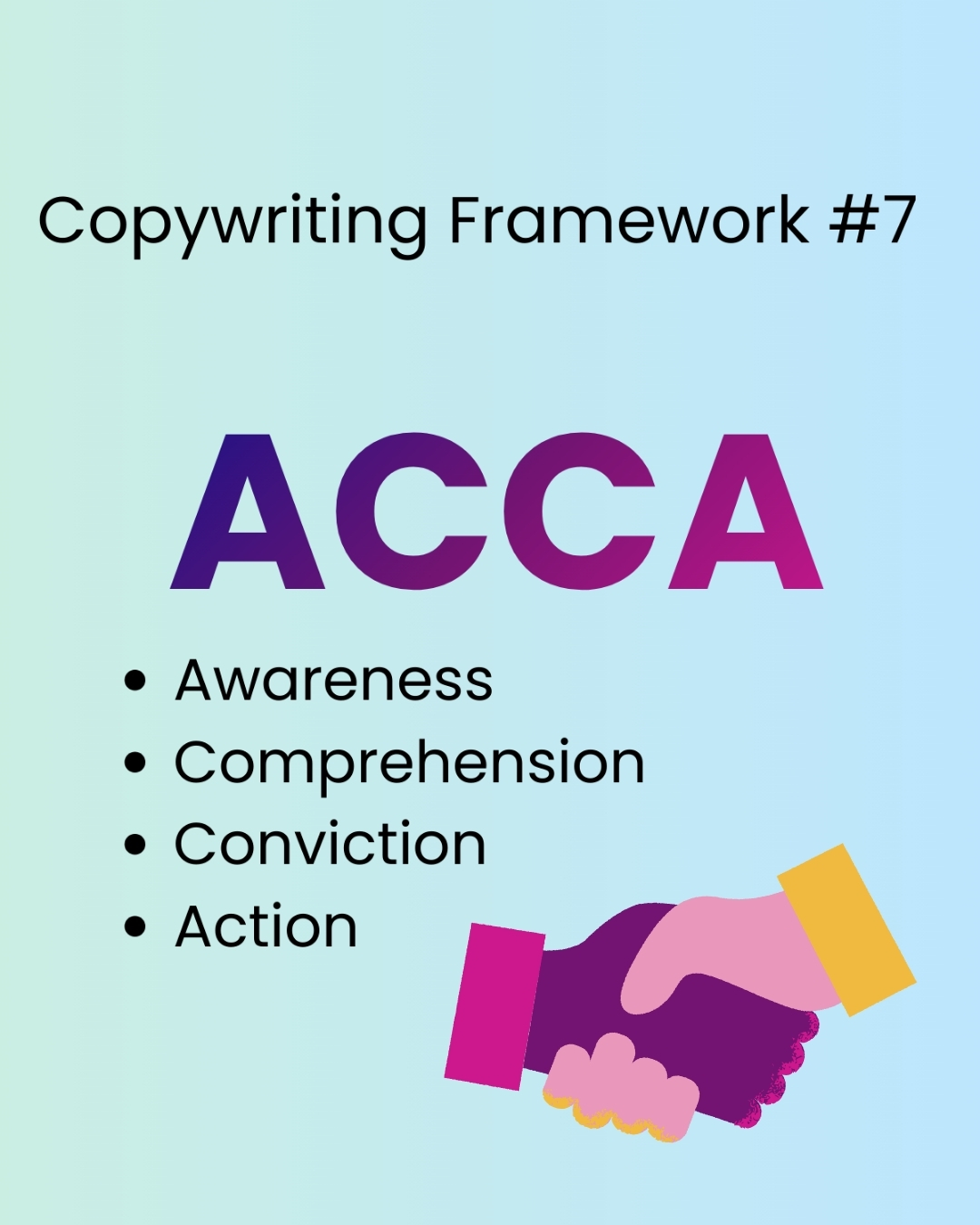
The ACCA framework stands for Awareness–Comprehension–Conviction–Action. It's a conversion copywriting formula often used in educational or high-trust sales settings – like when you're marketing coaching services, consulting packages, or any offer that requires your audience to understand a complex problem before they're ready to take action. Let’s break it down:
- Awareness: Introduce the problem or situation your audience may be experiencing – even if they haven’t named it yet. You're helping them say, “Ohhh, that is what's going on.”
- Comprehension: Clearly explain the issue, its root causes, and its impact. Your goal here is to build understanding through education – not overwhelm or jargon.
- Conviction: This is the moment you aim to shift belief – positioning your approach as the solution. You want the audience to feel confident that your offer is the right next step.
- Action: Finally, you prompt them to take that next step – whether it’s booking a call, signing up for a course, or making a purchase.
Example in Action:
Let’s say you’re a burnout coach for entrepreneurs:
- Awareness: You highlight how exhaustion, cynicism, and low motivation might be signs of burnout – not personal failure.
- Comprehension: You explain how burnout affects neurodivergent brains differently, and why traditional “self-care” advice often falls short.
- Conviction: You present your trauma-informed coaching method as a proven path to recovery.
- Action: You invite them to schedule a free clarity call.
Used thoughtfully, ACCA can be an empowering structure. It builds trust through clarity and positions you as a knowledgeable, credible guide.
But – and it’s a big but – how we use that trust matters.
What’s Problematic About ACCA?
The ACCA framework sounds harmless – educate, inspire belief, and prompt action. But when we zoom in through a Just Marketing® lens, things start to feel a little… squishy.
It’s not that ACCA is bad – education-based marketing can be powerful and ethical when done with care. The issue is how “conviction” often plays out in practice.
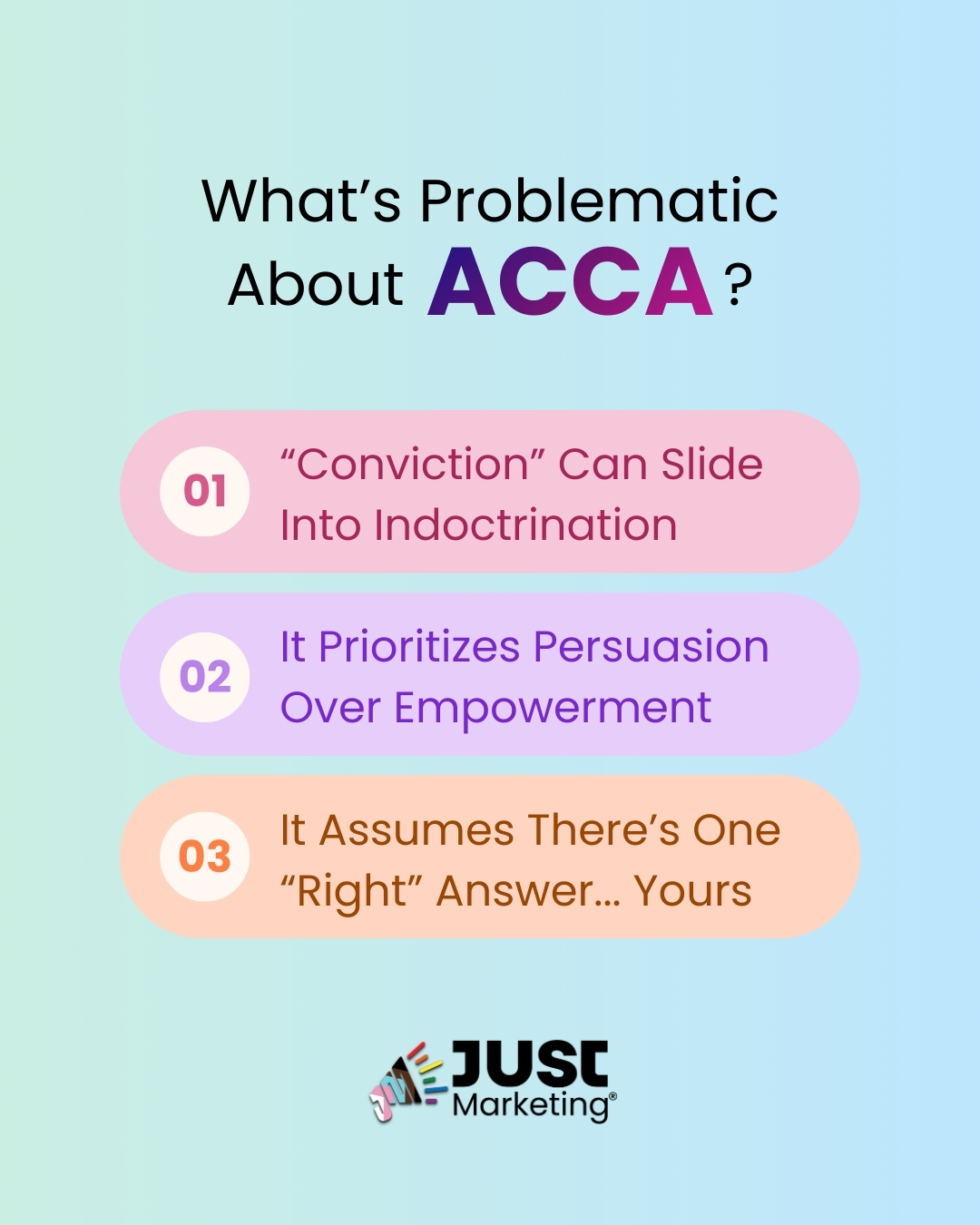
1. “Conviction” Can Slide Into Indoctrination
This is the biggest red flag. The “C” in ACCA encourages us to build conviction – aka, get the audience to believe in our solution.
But belief isn’t always the same as informed choice. When copy pushes conviction too hard, it can sound like:
“This is the only way.”
“If you don’t do this, you’ll stay stuck.”
That kind of language can override your audience’s critical thinking, nudging them toward compliance instead of consent. Even when intentions are good, it creates a power imbalance – especially for people who’ve experienced coercion or manipulation in other parts of life.
2. It Prioritizes Persuasion Over Empowerment
The traditional ACCA model assumes the marketer’s job is to convince. But what if your job is actually to empower people to make the right decision for themselves – whether that’s working with you or not?
When we focus too much on “getting the yes,” we lose sight of the deeper goal: building trust through transparency. Just Marketing® invites us to educate honestly, not persuade strategically.
3. It Assumes There’s One “Right” Answer – Yours
ACCA’s structure can unintentionally suggest that the seller holds all the truth and the buyer’s role is to accept it. That mindset doesn’t leave space for nuance, lived experience, or multiple valid approaches.
It can also exclude audiences who learn, process, or make decisions differently – like many neurodivergent folks who need more time, more context, or multiple perspectives before deciding.
Marketing isn’t about “changing minds.” It’s about sharing information, creating understanding, and offering possibilities.
When we center autonomy, accessibility, and informed consent, we don’t need to “convince” – we get to connect.
What's a More Ethical Version of ACCA?
Let’s be real: ACCA has some solid foundations. We do want to raise awareness. We do want to educate. And yes, we want to guide people toward action.
But instead of pushing for conviction, what if we created space for consideration?
Welcome to the Just Marketing® remix: Awareness – Comprehension – Consideration – Action
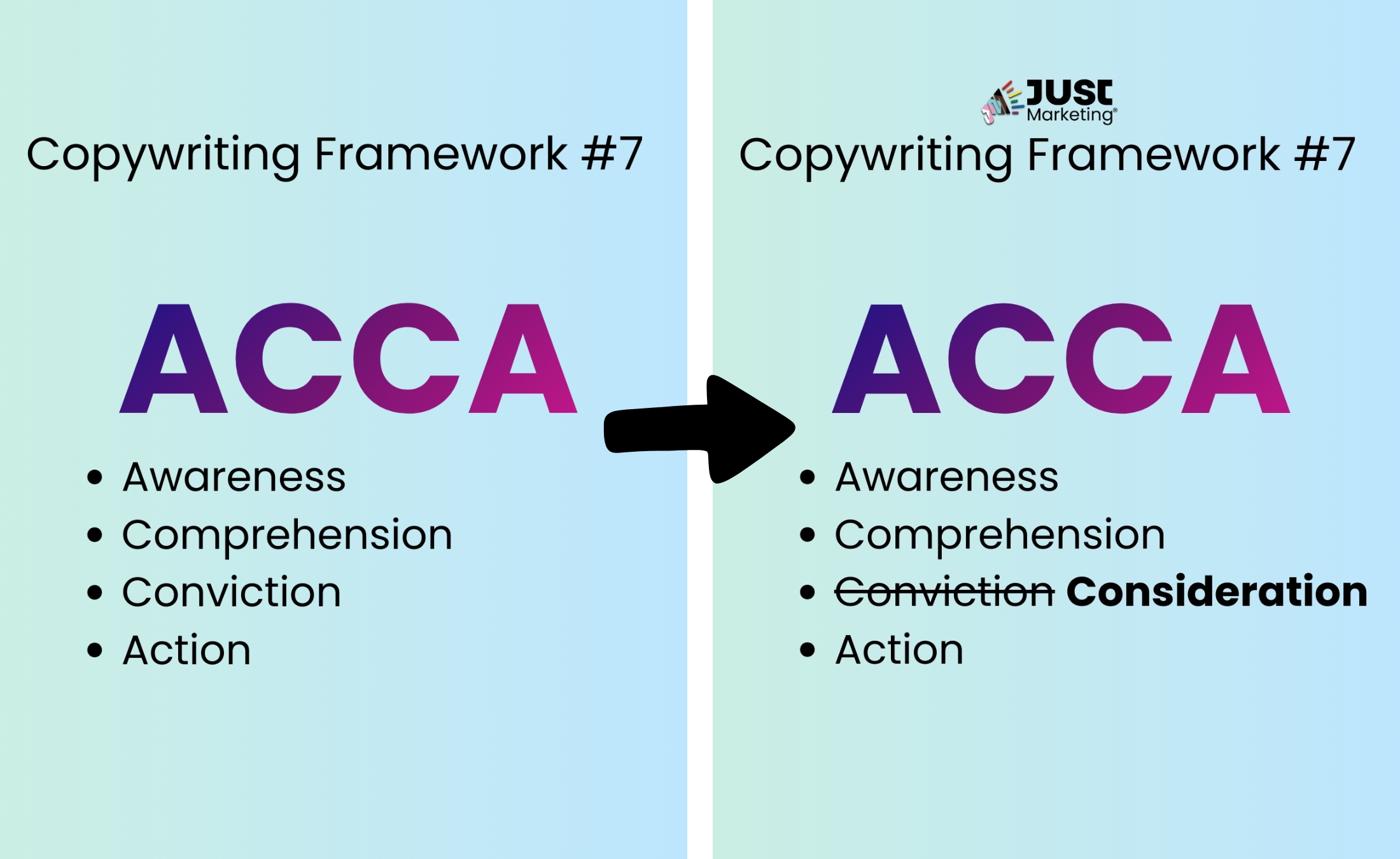
It keeps what’s helpful and ethical – and tosses what’s coercive or manipulative. Let’s break it down:
Awareness: Set the Stage Without the Spin
Start by helping your audience recognize a challenge they might be facing. Not with fear or shame, but with empathy and clarity.
Instead of: “You’re making these mistakes and don’t even know it…”
Try: “Here’s a pattern I see a lot of folks struggling with – does it sound familiar?”
- Use inclusive language
- Reflect diverse lived experiences
- Avoid painting your audience as broken or helpless
Comprehension: Make the Information Accessible
Once they’re aware of the issue, help them understand it. Break it down in a way that’s easy to follow – especially for folks with cognitive or processing differences.
Tips:
- Use plain language
- Offer multiple formats (text, video, visuals)
- Respect learning styles and pacing
This is your chance to show that you get it, and that you can support without overwhelming or confusing.
Consideration: Invite, Don’t Indoctrinate
Here’s where we pivot. Instead of pushing belief, hold space for reflection.
- What might this information mean to them?
- What questions might they still have?
- What other options could work, too?
Just Marketing® doesn’t say, “Believe me.”
It says, “Explore this – and trust yourself.”
You might offer:
- A personal story
- A client example with nuance
- A checklist or quiz to help them reflect
- Questions that encourage curiosity, not compliance
This approach honors autonomy – especially for trauma survivors and neurodivergent folks who deeply value consent and agency.
Action: Extend an Open-Handed Invitation
The last step is still action – but it’s framed as an opportunity, not a pressure-filled demand.
Instead of: “Act now or miss out!”
Try: “If this feels like a fit, I’d love to connect.”
Soft-sell calls-to-action work beautifully here:
- “Let’s explore this together.”
- “You’re invited to learn more.”
- “Curious what this could look like for you?”
Why It Works
Swapping conviction for consideration shifts the dynamic from sales funnel to human connection.
It feels better.
It builds trust.
And – spoiler alert – it often leads to more aligned clients who stick around longer.
What Does Ethical ACCA Copy Look Like?
Sometimes the best way to understand a shift is to see it in action. So let’s walk through how the ACCA framework might show up in traditional marketing – and how we can adapt it using a Just Marketing® approach.
We’ll use the example of a burnout coach who supports neurodivergent entrepreneurs.
Traditional ACCA Approach Just Marketing® Approach Awareness: “You’re probably feeling exhausted, disconnected, and behind on everything. That’s burnout – and it’s only going to get worse if you don’t take action now.” Awareness: “Burnout can be sneaky – especially when you’re juggling business, life, and a neurodivergent brain. If you’ve been feeling chronically drained, you’re not alone.” Comprehension: “Burnout happens when your brain and body can no longer keep up with the pressure. You’ve likely tried quick fixes that didn’t work. Here’s the science behind why.” Comprehension: “Here’s why burnout affects ND entrepreneurs differently – and why typical advice like ‘just rest more’ often misses the mark. Let’s unpack the real causes together.” Conviction: “My signature method has helped dozens of entrepreneurs like you reclaim their energy and focus. If you’re serious about change, this is the only thing you need.” Consideration: “There are a few different paths to healing. My method is one of them – and it’s worked well for folks who want a sustainable, shame-free approach. Does that sound like something you’d want to explore?” Action: “Spots are limited – join my program now before doors close!” Action: “If it feels like a fit, you’re invited to book a free clarity call. No pressure – just space to talk and see what support could look like.” What’s off? The tone ramps up urgency and pressure. The “only solution” framing limits autonomy. There’s no space to explore or reflect – just decide now. Why it works: Centers empathy and shared experience. Builds trust through clarity – not control. Honors consent and self-direction.
Just Marketing® doesn’t push people to a yes. It builds understanding, invites reflection, and supports agency – so when someone does say yes, it’s a wholehearted one.
Connection Over Conviction
The ACCA framework reminds us that education is powerful – but how we use that power matters.
When we shift from conviction to consideration, we move away from “marketing as manipulation” and toward marketing as a mutual conversation.
We stop trying to convince people they need us…
And start inviting them to decide what’s right for them.
This small-but-mighty shift builds deeper trust, stronger relationships, and more values-aligned clients – without pressure, guilt, or burnout (for you or your audience).
Remember: You don’t need to be pushy to be persuasive… you just need to be clear, compassionate, and committed to doing things differently.
Let’s Keep the Conversation Going
If this resonated with you, I’d love to connect:
- Follow me on Instagram and LinkedIn for more ethical marketing insights
- Join my email list for weekly resources, reminders, and real talk about Just Marketing®
- Curious about what it could look like to work together? Let’s explore the possibilities.
Because marketing can be kind, and still get results. 💜
FAQs
In marketing, ACCA stands for Awareness, Comprehension, Conviction, Action, a copywriting formula that leads readers through education toward a decision. The Just Marketing® version replaces Conviction with Consideration. (Outside of marketing, ACCA usually refers to the Association of Chartered Certified Accountants.)
AIDA stands for Attention, Interest, Desire, Action, and it focuses on sparking emotion quickly. ACCA puts more weight on helping readers understand a problem, which makes it a great fit for offers that need some explaining. Both formulas end with an invitation to act.
ACCA works beautifully for offers where people need context before deciding, like coaching, consulting, or other services that solve layered problems. It fits naturally into email sequences, webinars, blog posts, and long-form sales pages.
Consideration presents your approach as one helpful option and invites readers to reflect on whether it fits their needs. You might share a nuanced client story or a short self-check quiz. A line like “My method is one path, and it's worked well for folks who want a sustainable approach” keeps the decision in the reader's hands.
Focus on sharing honest information and helping people understand their options. Trust your readers to make their own decisions, and use invitational calls to action like “If this feels like a fit, I'd love to connect.” For another ethical framework remix, check out the GRAB framework through a Just Marketing® lens.
Use plain language and break big ideas into small, digestible pieces. Offering video or visuals alongside text helps people learn in the way that works best for them. Just Marketing® is ethical, inclusive, and accessible, so your audience feels supported and your business grows sustainably. Learn more in the complete guide to Just Marketing®.