If you’ve spent any time in the online marketing space, chances are you’ve stumbled across the PASTOR copywriting framework – a popular method developed by Ray Edwards that’s especially beloved for long-form sales pages and story-driven emails.
It’s an evolution of the classic PAS formula (Problem–Agitate–Solution), adding more emotional depth and storytelling to the mix. On the surface, it sounds like a dream for service providers and mission-driven entrepreneurs looking to build genuine connections.
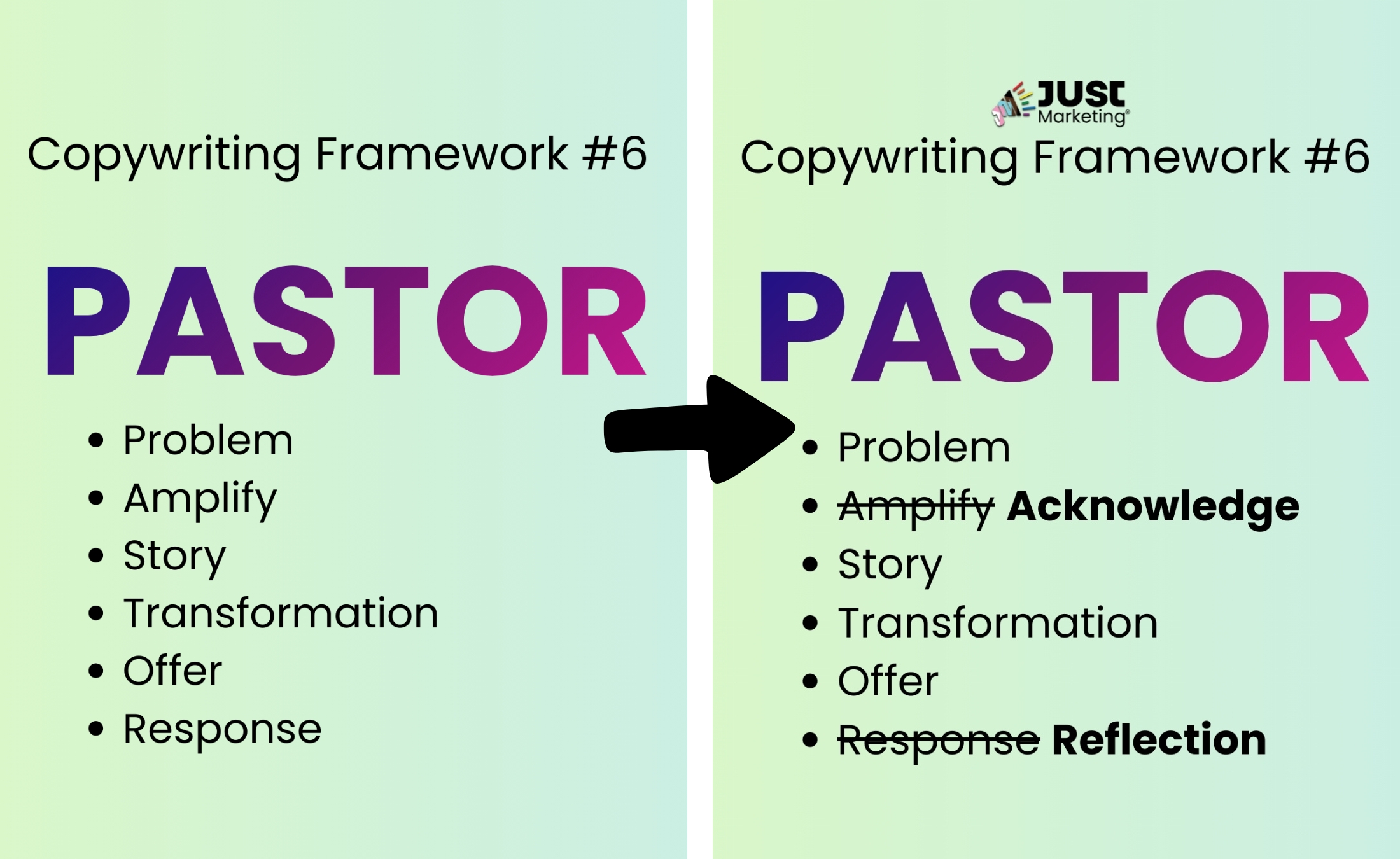
The gist: The PASTOR framework is a copywriting formula created by Ray Edwards, short for Problem, Amplify, Story, Transformation, Offer, Response, often used for long-form sales pages and emails. The Just Marketing® remix swaps Amplify for Acknowledge and Response for Reflection, so readers feel understood and can decide in their own time.
Part of the Conversion Copywriting Framework guide.
But here’s the thing: Just because something “works” doesn’t mean it works for everyone – or aligns with our values.
For folks who care about ethics, accessibility, and inclusion, the traditional PASTOR model has a few red flags. From escalating fear to pushing urgency, and even the metaphor itself, it can unintentionally create discomfort or mistrust, especially among neurodivergent audiences or those navigating trauma.
Ready to tell better stories that convert with clarity and compassion?
What Is the PASTOR Framework?
Originally created by copywriter Ray Edwards, the PASTOR framework was designed to make sales copy feel more personal, emotional, and story-driven. It’s often used for long-form content like landing pages, sales emails, and webinars – anywhere you’re walking someone through a transformation and inviting them to take action. Let’s break it down:
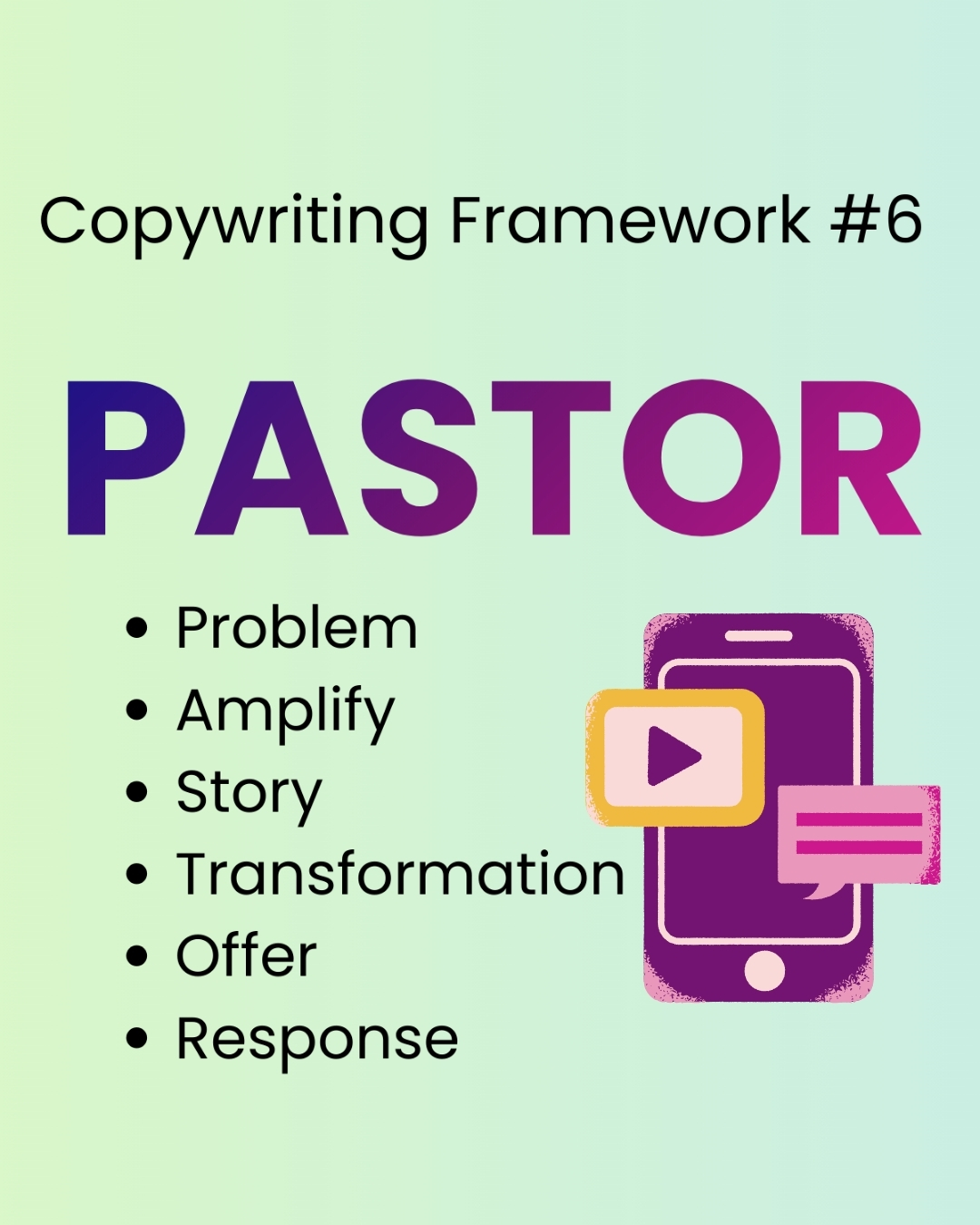
P – Problem
Identify the reader’s pain point or challenge.
Example: “You’re working long hours, but your business still feels stuck in neutral.”
A – Amplify
Describe the consequences of not solving the problem – emphasizing urgency.
“If nothing changes, you risk burnout, missed revenue, and losing the passion that started it all.”
S – Story
Share a personal or client story that makes the problem and solution relatable.
“I’ve been there too – questioning if I was cut out for this… until I found a new approach.”
T – Transformation
Paint the picture of what’s possible after the solution is implemented.
“Now I have systems that support my energy and clients I love working with.”
O – Offer
Introduce your product, service, or solution.
“That’s exactly what I help clients do in my Just Marketing® Membership.”
R – Response
Prompt immediate action – usually with a strong call-to-action (CTA).
“Spots are limited – book your discovery call today!”
This framework is praised for making the buyer the hero of their own story. And in many ways, it’s more human than the high-pressure tactics of traditional advertising. But as with most persuasive tools, intention matters. And when used without consideration for ethics, accessibility, and inclusion, even story-driven sales copy can cross the line.
Let’s look at where things can go off track – and how to keep your marketing values-aligned.
What’s Problematic from a Just Marketing® Perspective?
While the PASTOR framework offers a more nuanced, narrative-driven approach than traditional sales formulas, it’s still rooted in persuasive psychology – and that comes with potential pitfalls.
Let’s unpack a few areas where PASTOR can conflict with values like consent, inclusion, accessibility, and justice.
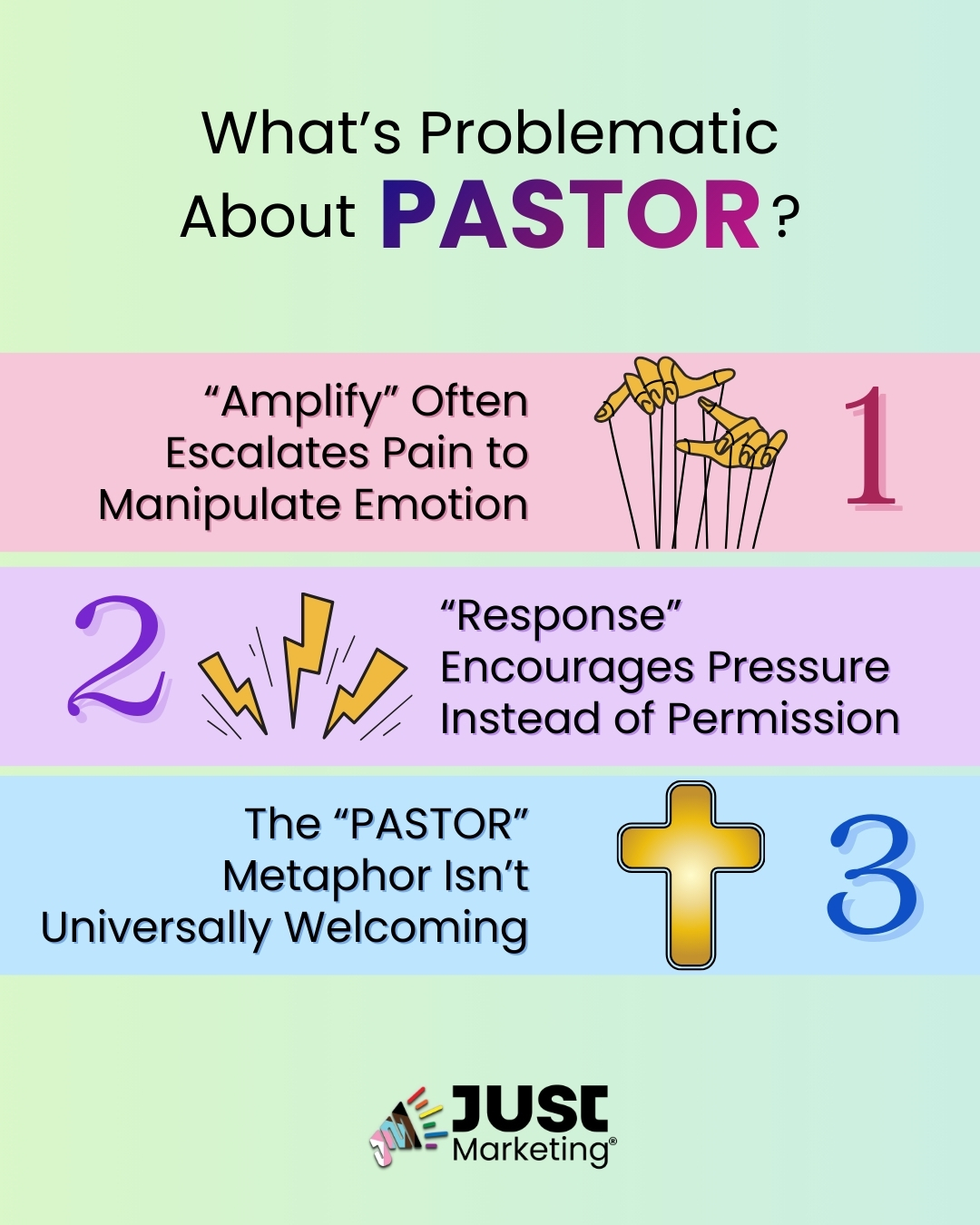
“Amplify” Often Escalates Pain to Manipulate Emotion
This step is intended to stir urgency by showing what’s at stake if the reader doesn’t act – but it often leans hard into fear, shame, or scarcity.
“If you don’t fix this now, you’ll keep spinning your wheels, burning out, and watching your competitors fly past you.”
For many folks – especially those who are neurodivergent, navigating trauma, or just plain tired – this kind of messaging feels overwhelming and disempowering.
It centers pain over possibility and risks re-traumatizing the reader instead of supporting them.
We’re not here to poke wounds – we’re here to offer tools for healing and growth.
“Response” Encourages Pressure Instead of Permission
The final step of PASTOR pushes the reader to take action – now. Often, that looks like:
- “Limited spots – book today!”
- “Don’t miss out!”
- “This deal expires in 12 hours!”
And while urgency can be valid (yes, your calendar may actually be full), manufactured scarcity or high-pressure CTAs can feel coercive, not empowering.
Especially for people who need more time, more clarity, or more spoons to make a decision, this approach can feel inaccessible and anxiety-inducing.
The “PASTOR” Metaphor Isn’t Universally Welcoming
Metaphors matter. And while Ray Edwards chose “PASTOR” to emphasize serving your audience with care, the religious undertone can:
- Alienate folks who don’t connect with Christianity.
- Feel manipulative if the “care” is just a cover for closing a sale.
- Imply a power dynamic where the business owner knows best – and the audience needs to be guided or “saved.”
That might not be the intent – but impact matters more than intent, especially in ethical marketing… If your metaphor excludes people, it’s time to reframe it.

What's a More Ethical Alternative to PASTOR?
We’re not here to throw the whole framework out. Storytelling, empathy, and transformation are powerful tools in ethical marketing – we just need to use them with consent, compassion, and care.
By reworking a few key steps, we can keep what works about PASTOR and remove what harms.
Problem → Name It with Empathy
Instead of identifying and amplifying pain, start by acknowledging your audience’s experience. Validation builds trust faster than fear ever could.
“Running your own business can feel like a never-ending to-do list. You’re doing your best – and it’s still exhausting.”
This approach centers empathy over urgency. It tells your reader: You’re not broken. You’re not behind. You’re human.
Amplify → Acknowledge (with Care)
In the traditional framework, this is where marketers crank up the pain – but you can invite awareness instead. Focus on reflection, not escalation.
“If you’re feeling stuck, you’re not alone. Many entrepreneurs reach this point before realizing they need a different kind of support.”
You’re helping your reader see their reality clearly, without making them feel worse about it.
Story → Keep It, But Make It Inclusive
Storytelling is still the beating heart of connection – but it’s important to tell stories that reflect diverse realities and accessible paths to transformation.
“When my client Alex came to me, they were juggling client work and ADHD burnout. Together, we created systems that honored their energy instead of fighting it.”
Stories like this show what’s possible – without implying one-size-fits-all success.
Transformation → Realistic & Empowering
Highlight what changes and what stays human. Transformation doesn’t mean perfection – it means growth, support, and agency.
“Alex didn’t suddenly become hyper-productive. But they started finishing projects on their own terms, with more peace and less panic.”
Real transformation feels attainable, not aspirational.
Offer → Transparent & Optional
Make your offer clear and easy to understand, but ditch the hype. Focus on how it helps, not why someone must buy it.
“If you’re craving a calmer, more consistent approach to marketing, my Just Marketing® Strategy Sessions might be the next right step for you.”
Transparency fosters confidence – and confidence fuels conversion.
Response → Reflection
This is where traditional copy pushes the sale – but we invite consideration.
“Take a moment to check in with yourself: does this feel like the kind of support you need right now?”
This shift from “Act now!” to “Reflect first.” honors your reader’s autonomy. It transforms a sales moment into a collaborative decision.
Does Ethical Sales Copy Still Convert?
When we write from a place of acknowledgment and reflection, we’re doing more than selling -we’re modeling consent-based communication.
This approach builds long-term trust, deeper loyalty, and a safer space for your audience to engage with you – which, ironically, leads to better conversions too.
Because Just Marketing® doesn’t mean being less persuasive. It means being persuasive with integrity.
Quick Recap: A Kinder, Consent-Based Copy Framework
Let’s line up the traditional PASTOR model with our Just Marketing® remix side by side:
Traditional Just Marketing® Problem Problem Amplify Acknowledge (with care) Story Story (inclusive & real) Transformation Transformation (realistic & empowering) Offer Offer (transparent & optional) Response Reflection (no pressure)
We’re not here to shame the frameworks that got us this far – we’re here to build better ones that include more people, respect boundaries, and still drive results.
Because you shouldn’t have to sacrifice your values to make a sale.
Let’s Keep the Conversation Going
If this post made you think “Finally, marketing that feels good!” – you’re my kind of human. 💛
- Let’s connect on LinkedIn and Instagram – I’m always down to talk ethical copy and inclusive marketing.
- Want more thoughtful tips like this in your inbox? Join my email list for stories, strategy, and soft-sell support.
Curious about working together? Learn more about my 1:1 services.
FAQs
Copywriter Ray Edwards developed PASTOR to make sales copy feel more personal and story-driven. It's especially popular for long-form sales pages, launch emails, and webinar scripts.
PAS stands for Problem, Agitate, Solution, and it's one of the oldest copywriting formulas around. PASTOR builds on it by adding a story and a picture of transformation before the offer, which gives readers more emotional context. Both traditionally lean on stirring up the reader's pain, which is the step the Just Marketing® remix softens.
Acknowledging means validating what your reader is already experiencing with warmth. For example: “Running your own business can feel like a never-ending to-do list. You're doing your best, and it's still exhausting.” It builds trust by helping people feel seen.
Invite readers to pause and check whether your offer fits their needs, with a line like “Does this feel like the kind of support you need right now?” If there's a real deadline or capacity limit, share it honestly with context. For more, see why countdown timers can backfire.
It depends on the job! PASTOR suits long-form, story-driven sales pages, while Star–Story–Solution works well for testimonials and case studies. For offers that need some explaining, try the ACCA framework with a Just Marketing® remix, and for short social posts, check out the ethical take on GRAB.
Yes, with your client's consent and their input on how the story is told. Keep the client as the hero, include realistic details about their progress, and let them approve the final version. Learn more about sharing client wins without exploitation.